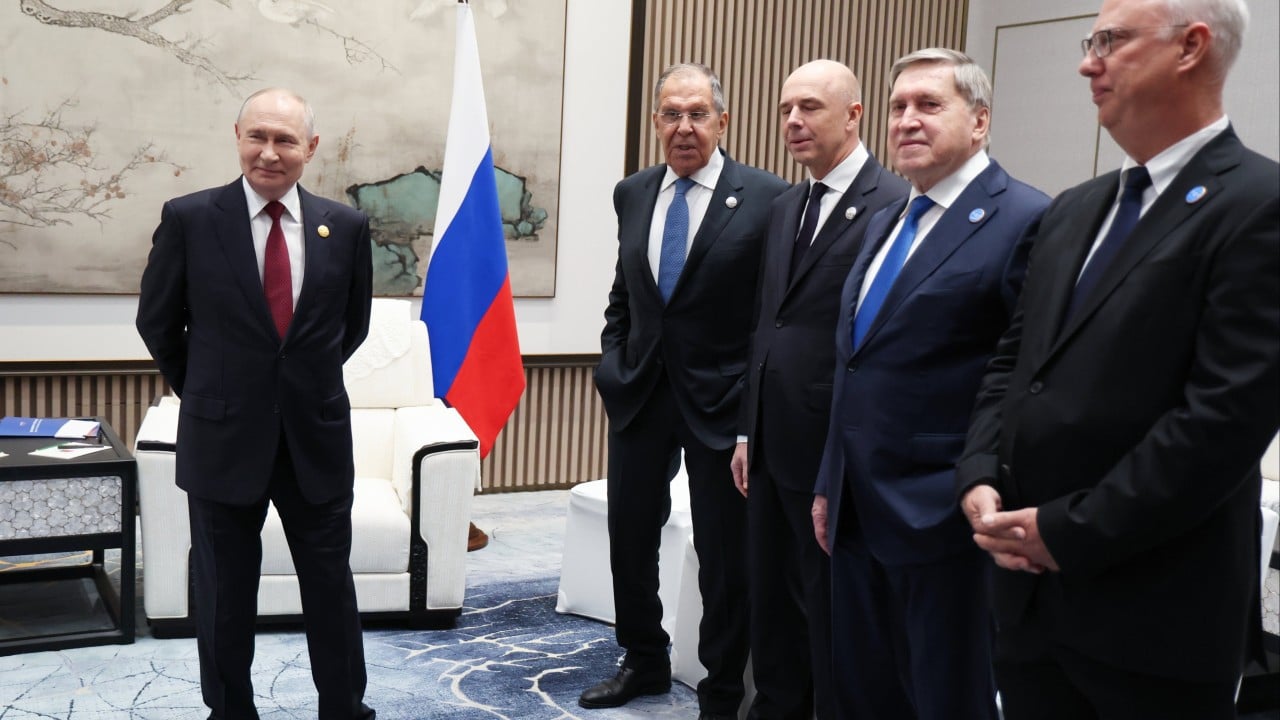
Look closely at the manifests of the planes landing in southern China this week, because the speeches will lie to you.
Politicians love grand podiums, crisp flags, and rehearsed handshakes designed for the evening news. They will talk about mutual respect, historic breakthroughs, and shared prosperity while the cameras click in rhythmic bursts. Yet if you have ever spent a cold night pacing outside a diplomatic hotel waiting for a leaked readout, you know the truth is never found at the microphone. It is hiding in the motorcade three cars back. It is sitting quietly in the second row of the negotiating room, nursing lukewarm tea and clutching a leather binder thick with numbers.
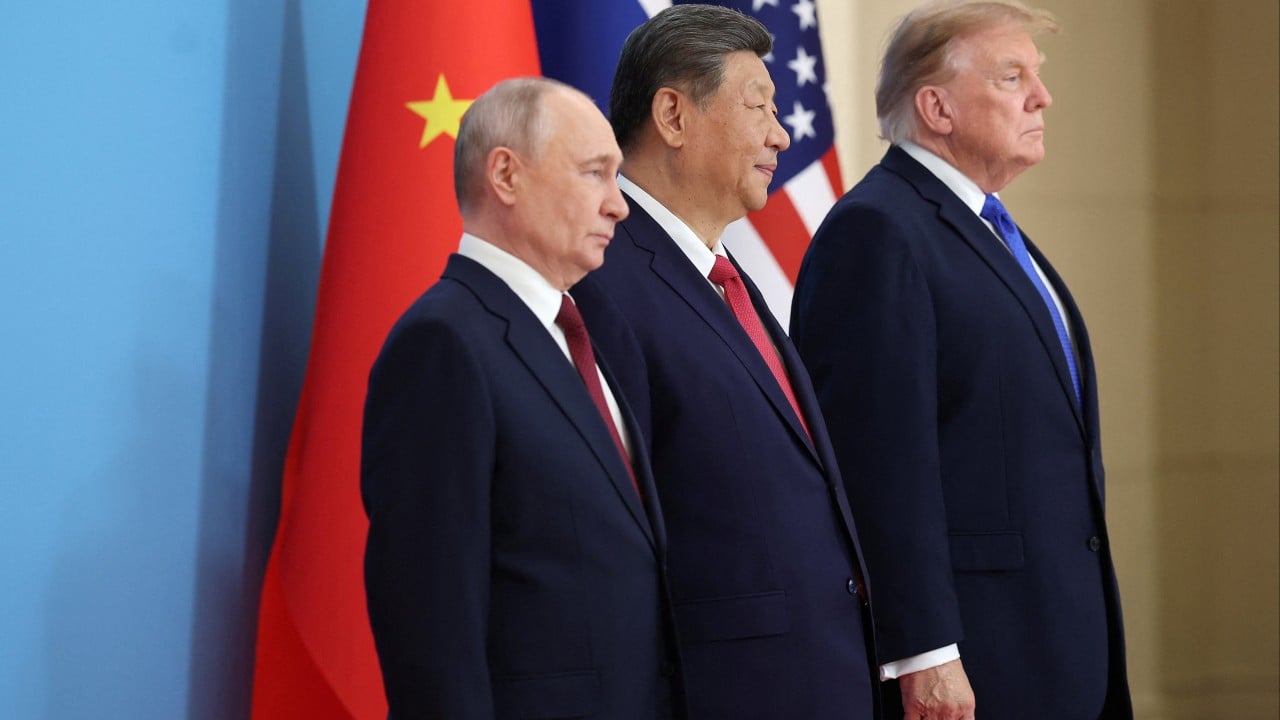
When Xi Jinping, Donald Trump, and Vladimir Putin converge on Shenzhen—a city that transformed from a sleepy fishing village into the beating silicon heart of modern manufacturing within a single human lifetime—the world naturally stares at the three men at the center of the frame. That is a mistake. To understand what is actually being traded, threatened, or quietly surrendered behind closed doors, you have to read the summit rosters like an intelligence analyst reading tea leaves. Who got a seat on the plane? Who was left shivering back in Washington, Moscow, or Beijing?
The answers reveal a starkly different world than the one printed in the official press releases.
The Architecture of a Seat at the Table
Think of a diplomatic delegation not as a group of advisors, but as a poker hand laid face down on the green felt. Every bureaucrat, billionaire, or military general brought along represents a specific card the leader intends to play when the betting gets heavy. If a president brings generals, he is signaling deterrence. If he brings central bankers, he is worried about debt and currency stability. If he brings energy barons, he is selling raw survival.
Consider a hypothetical scene inside a high-rise conference room overlooking Shenzhen Bay—a composite drawn from how these trilateral encounters actually unfold when the journalists are ushered out. Imagine a mid-level trade lawyer named David, sitting against the wall behind the American principals. He has spent eighteen months modeling semiconductor supply chains on four hours of sleep a night. Across the polished mahogany table, he isn't looking at the Russian president or the Chinese general secretary. He is watching the body language of the deputy finance minister sitting two chairs to their left. When that deputy leans forward to whisper into his boss's ear, David knows a tariff exemption is alive. When that deputy checks his watch and closes his folder, David knows millions of workers in Ohio and Guangdong are about to feel the shockwaves by Tuesday morning.
That is the human reality buried inside a dry roster list. These names are not trivia. They are the architects of what your groceries, your phone, and your heating bill will cost next winter.
Beijing’s Home-Field Blueprint
Start with the host, because choosing Shenzhen over Beijing was the first deliberate message sent before a single plane even fueled up.
Beijing is the seat of imperial history, red walls, and ideological orthodoxy. Shenzhen is the laboratory of raw technological ambition—the headquarters of Huawei, BYD, and Tencent, a city where neon skyscrapers rise out of subtropical humidity like circuit boards stood on end. By staging the summit here, Xi Jinping is forcing his guests to stare directly at China’s industrial muscle through their hotel windows.
Look at the Chinese roster, and you immediately notice a heavy tilt toward economic architects and technology czars rather than traditional foreign ministry diplomats. The presence of Vice Premier He Lifeng—the quiet, methodical operator who now holds the reins of China’s financial and trade policy—tells you that Beijing’s primary anxiety is not border skirmishes, but domestic growth and capital flows. Alongside the financial planners sit the technocrats overseeing artificial intelligence, battery production, and advanced manufacturing.
Notice, too, who is conspicuously muted on the Chinese side. The loudest "wolf warrior" diplomats—the firebrands who spent the early 2020s trading sharp barbs on social media—have been pushed toward the margins of the staging. Why? Because Shenzhen is a city built on exports, and exports require buyers. China’s leadership knows its domestic real estate market remains bruised and its youth unemployment demands factory orders. By packing the room with economic pragmatists and tech administrators, Xi is signaling a blunt, unsentimental bargain: we will talk about global stability, provided you stop choking off our access to high-end chips and Western consumer markets.
It is a defensive crouch disguised as a victory lap.
Washington’s Disruptors and Deal-Makers
Now shift your gaze to the American manifest, where traditional diplomatic protocol has been tossed out the airplane window.
In past decades, an American presidential delegation to Asia looked predictable, almost institutional. You saw career State Department regionalists, National Security Council academics who had spent thirty years studying Mandarin grammar, and cautious trade representatives who measured progress in millimeters over years.
Not this time.
The American roster arriving in Shenzhen reads less like a government cabinet and more like the board of directors of a private equity conglomerate merged with an energy superpower. Alongside Secretary of State Marco Rubio and Treasury Secretary Scott Bessent, the true gravity of the delegation pulls toward the commercial deal-makers—men like Commerce Secretary Howard Lutnick and special envoys drawn directly from Wall Street and Silicon Valley boardrooms. Even more telling is the presence of American tech executives and energy titans hovering in the outer rings of the summit, invited not as passive observers, but as active leverage.
This lineup strips away decades of polite diplomatic theater. The traditional Washington consensus—which separated national security from commercial trade, treating alliances as sacred commitments rather than balance-sheet items—is nowhere on the flight manifest. Instead, the roster announces that everything is transactional. Tariffs are not ideological tools here; they are opening bids.
Consider what happens next when a career diplomat meets a billionaire deal-maker across a negotiating table. The diplomat looks for language that saves face for both sides. The deal-maker looks for an asset he can buy at a discount before the market closes. By stacking the roster with financiers, energy executives, and tariff hawks while sidelining traditional multilateralists, Washington is telling both Beijing and Moscow that old treaties will not protect them—only hard numbers will.
Yet there is a quiet vulnerability hidden inside that aggressive posture. Bringing business leaders so close to the core of statecraft exposes the American hand: Washington desperately needs quick, visible wins on domestic manufacturing, inflation, and supply chain reshoring before the next election cycle tightens its grip.
Moscow’s Survival Ledger
And then there is the third plane on the tarmac, carrying a delegation that looks entirely different from the other two.
While Washington brings financiers and Beijing brings tech planners, Vladimir Putin’s roster is anchored by energy sovereigns, sanctions-evasion specialists, and military-industrial administrators. Look down the Russian list and you find the enduring pillars of the Kremlin’s wartime economy: Rosneft chief Igor Sechin, Gazprom executives, Central Bank Governor Elvira Nabiullina—the technocrat credited with keeping the ruble from collapsing under Western sanctions—and defense procurement officials who rarely appear in public photographs.
There is no pretense of consumer tech or global banking integration here. The Russian roster is a survival ledger.
To understand why these specific individuals are in Shenzhen, picture a cargo ship captain navigating a narrow strait at night with his transponders turned off. Russia’s economy has been rewired into a war machine sustained by selling discounted crude oil, natural gas, and raw minerals eastward while importing dual-use electronics, machine tools, and vehicles back across the border. Every person on Putin’s plane exists to keep that pipeline pumping without triggering secondary sanctions that would terrify Chinese banks into freezing Russian accounts.
Look at who is missing from the Russian lineup, too. You do not see the liberal economic reformers of the 2000s, nor the cultural envoys who once courted European capitals. They are gone, replaced by logistics fixers and state-bank intermediaries who specialize in settling trade in yuan and rubles outside the reach of the US dollar.
Putin’s presence in Shenzhen is often framed by pundits as a triumphant axis challenging Western dominance. Read the roster, however, and a more sobering picture emerges. Russia enters that conference room not as an equal economic pillar, but as a resource-rich junior partner fighting to ensure that a bilateral deal between Washington and Beijing does not leave Moscow stranded in the cold.
The Invisible Collision in the Room
Put all three rosters side by side on a desk, and the friction jumps off the page.
You have a Chinese delegation obsessed with protecting its technological ascent and export markets; an American delegation determined to extract trade concessions, protect dollar dominance, and pull supply chains back across the Pacific; and a Russian delegation fighting to lock in long-term energy buyers and bypass financial blockades.
Notice what almost none of these rosters prioritize: climate diplomacy, global public health, humanitarian aid, or multilateral arms-control treaties. Those portfolios—which dominated summit manifests twenty years ago—have been gutted or left back in capital cities. The people in Shenzhen are there to divide up the hard physical architecture of the twenty-first century: kilowatts, rare earth minerals, silicon wafers, shipping lanes, and sovereign debt.
I remember standing outside a similar summit venue years ago during a torrential rainstorm, watching black sedans glide past concrete barricades while protesters shouted through megaphones a block away. What struck me then wasn't the noise outside; it was the eerie, insulated quiet inside the perimeter. Inside those tinted windows, a handful of unelected deputies and corporate executives were deciding which ports would thrive and which factory towns would hollow out, completely detached from the rain soaking the streets outside.
That disconnect is wider today than it has ever been.
Why the Missing Names Matter Most
Sometimes the loudest signal on a summit roster is an empty chair.
When you scan the official lists released by the three governments, pay attention to the agencies that were downsized or omitted entirely. Look at the reduced footprint of traditional human rights envoys on the American side, signaling that ideological lectures have been shelved in favor of hard trade math. Look at the absence of certain purged Chinese military commanders, a quiet reminder of the ongoing anti-corruption sweeps inside the People’s Liberation Army that have left Beijing cautious about external military miscalculations while it cleans house internally. Look at the lack of senior European observers anywhere near the main bilateral sessions—a stark visual confirmation that Brussels is watching from the hallway while three giants negotiate the terms of global trade.
If you feel a knot of unease reading those omissions, you are paying attention. The world is moving away from predictable rules toward personalist, high-stakes bargaining where three leaders and their handpicked inner circles improvise the rules in real time.
What Happens After the Cameras Leave
Eventually, the motorcades will pull away from the convention center. The official communiqués will be published, filled with carefully neutered phrases about "constructive dialogue" and "areas of mutual interest." Pundits will spend forty-eight hours dissecting the firmness of a handshake or the length of a bilateral dinner.
Ignore the theater. Keep your eyes on the names from the second row.
Watch where Treasury Secretary Bessent and Vice Premier He Lifeng travel next month. Watch whether Elvira Nabiullina secures new cross-border payment channels with Chinese state banks, or whether Shenzhen’s tech executives quietly pause joint ventures to avoid Washington’s tariff hammer. Those second-tier bureaucrats and executives are the ones who actually execute the agreements once the presidents board their flights home.
Late tonight, after the banquet halls empty and the translators finally take off their headsets, a handful of exhausted aides will sit on the edge of hotel beds across Shenzhen, typing encrypted cables back to their capitals. Outside their windows, thousands of container cranes along the Pearl River Delta will keep swinging through the dark, loading boxes onto ships bound for ports in California, Rotterdam, and Vladivostok—waiting to find out whose names actually won the room.