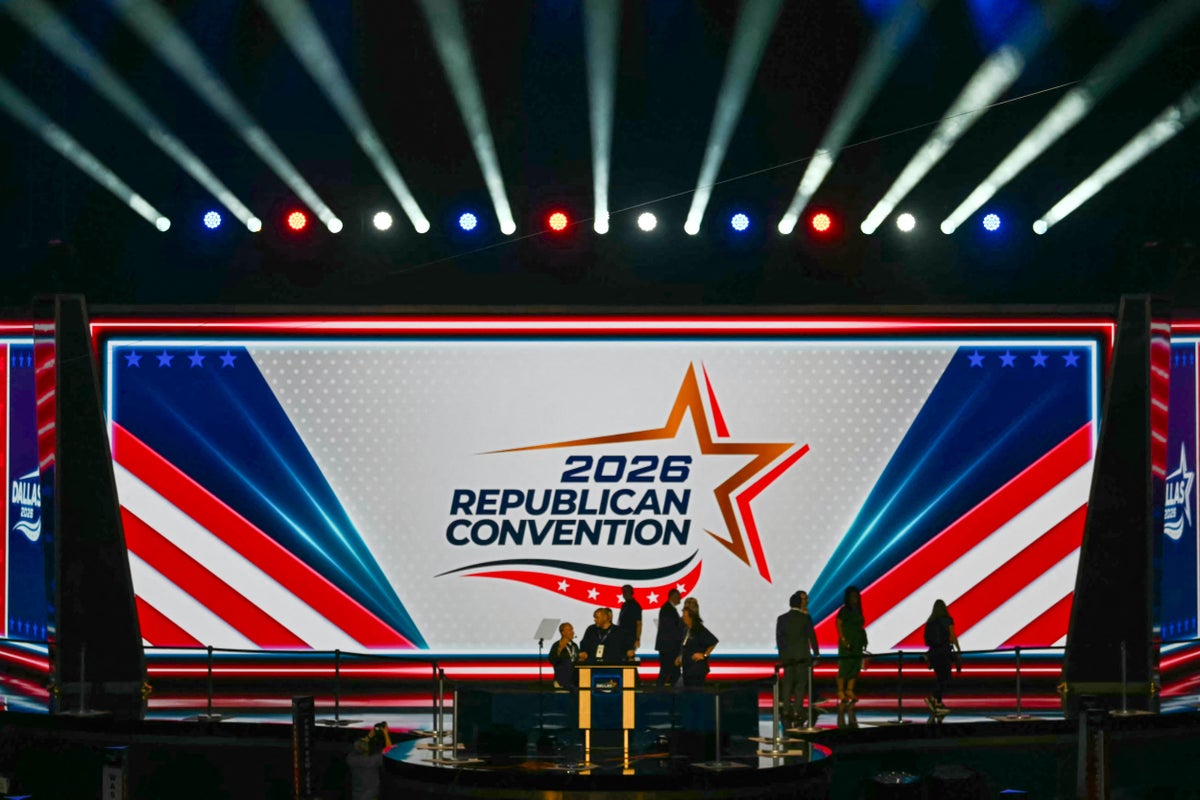
The floorboards of the arena used to groan under the sheer weight of anticipation. You could smell the cheap popcorn, the heavy sweet fog of hairspray, the sharp metallic tang of thousands of bodies packed too close together in an enclosed space. People drove three hundred miles in rusted pickup trucks just to stand in a line that looped around the concrete block like a sleeping serpent. They wore the hats. They carried the homemade signs with the sharpie letters bleeding through the cardboard.
They wanted to be part of something heavy. Something undeniable.
Today, the line is shorter.
Step inside the hall during the opening remarks of the midterm convention, and the acoustics tell a story that the loudspeakers try very hard to drown out. When a room is full, sound hits the back wall and breaks into a chaotic, rolling wave of human voice. When a room is half-empty, sound gets lost. It rattles around the upper deck, bouncing off rows of vacant plastic seats that wear red and blue ticket stubs like forgotten coats.
The speaker at the podium leans into the microphone, his voice amplified by twenty thousand watts of distortion, insisting that the room is electric. Hot. Packed to the rafters. He points toward the shadows of the mezzanine where the ushers outnumber the onlookers. He has to say it. Because if you admit the empty benches are there, you have to admit that the gravity is shifting.
Power has an echo.
To understand why a political rally stops being a tidal wave and starts being a managed production, you have to look at the math of enthusiasm. It is a fragile currency. You can print more of it, sure. You can bundle free admission tickets into local church newsletters, or text them out to phone lists scraped from old petition drives, offering a free hot dog and a front-row view of history. But manufactured urgency smells different from the real thing. It smells like desperation.
Picture a man named Arthur, standing in row thirty-four. Arthur isn't a radical. He’s sixty-two, his knees ache when the humidity drops, and he spent thirty-eight years working the night shift at a stamping plant that now makes plastic components for refrigerators. In 2016, Arthur was the guy who got to the fairgrounds at four in the morning. He brought a folding chair and a thermos of black coffee. He believed that the noise was going to break down the walls of a system that had forgotten his zip code.
Now, Arthur is sitting in row thirty-four, and there are three empty seats to his left and two to his right.
He didn't pay for his ticket. It showed up as a QR code in his text messages on Tuesday morning, sandwiched between a coupon for oil changes and an alert from his pharmacy. He came because he didn't have anything better to do on a Thursday, and the house gets quiet when you're sixty-two and the kids have moved two states away.
When the bass drops through the PA system and the heavy rock anthem starts playing over the speakers, Arthur doesn't jump up. He stands slowly, smoothing down his windbreaker, and claps his hands together three or four times. Polite. Restrained. Like he's watching a high school graduation where he only knows the kid in the second row.
This is the hidden crisis of the modern political spectacle. The high-profile names aren't showing up on the guest list anymore. The local mayors who used to fight for five minutes at the microphone now find urgent ribbon-cuttings in districts three counties over. The big donors who used to fly in on Gulfstreams send their checks quietly through intermediaries, hedging their bets, waiting to see which way the wind actually blows before they commit their signatures to public view.
You can rent a crowd, but you cannot rent conviction.
The stagecraft remains magnificent. The lights are blindingly bright, washed in patriotic reds and deep, dramatic blues that make every television broadcast look like an action movie poster. The teleprompters scroll at a steady, rhythmic clip. But look at the edges of the frame. Watch the way the camera angles are carefully compressed to keep the empty bleachers out of the shot. It’s an optical illusion built out of desperation and digital trimming.
When the speech reaches its climax—that familiar cadence about saving the country, about standing tall against the darkness, about a glorious, inevitable return—the response is loud, but it is thin. It rises sharply and then cuts off abruptly, like an engine running out of gas on a steep hill.
Arthur sits back down before the final notes of the anthem have even finished fading into the rafters. He checks his phone. He looks at the weather for Friday. He thinks about the drive home, and whether he needs to stop for milk.
The convention is still happening. The banners are still hanging. The loudspeakers are still screaming into the empty air, trying desperately to convince the people in the room that they are standing at the center of the world, even as the seats around them grow colder by the minute.


