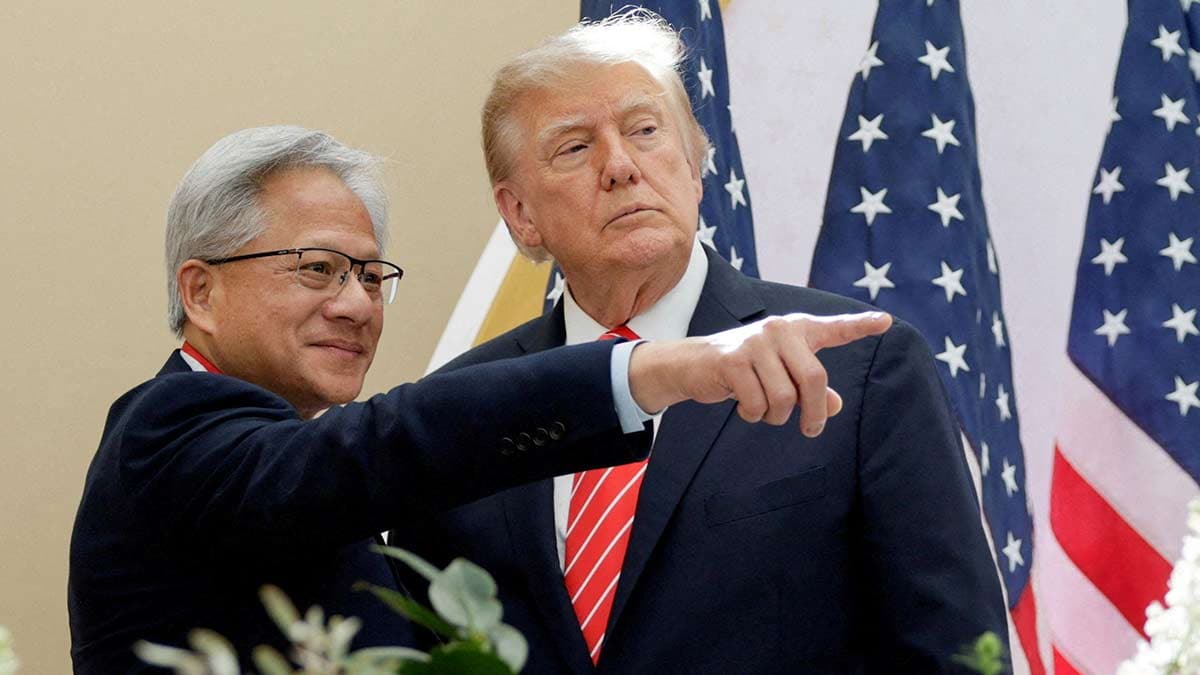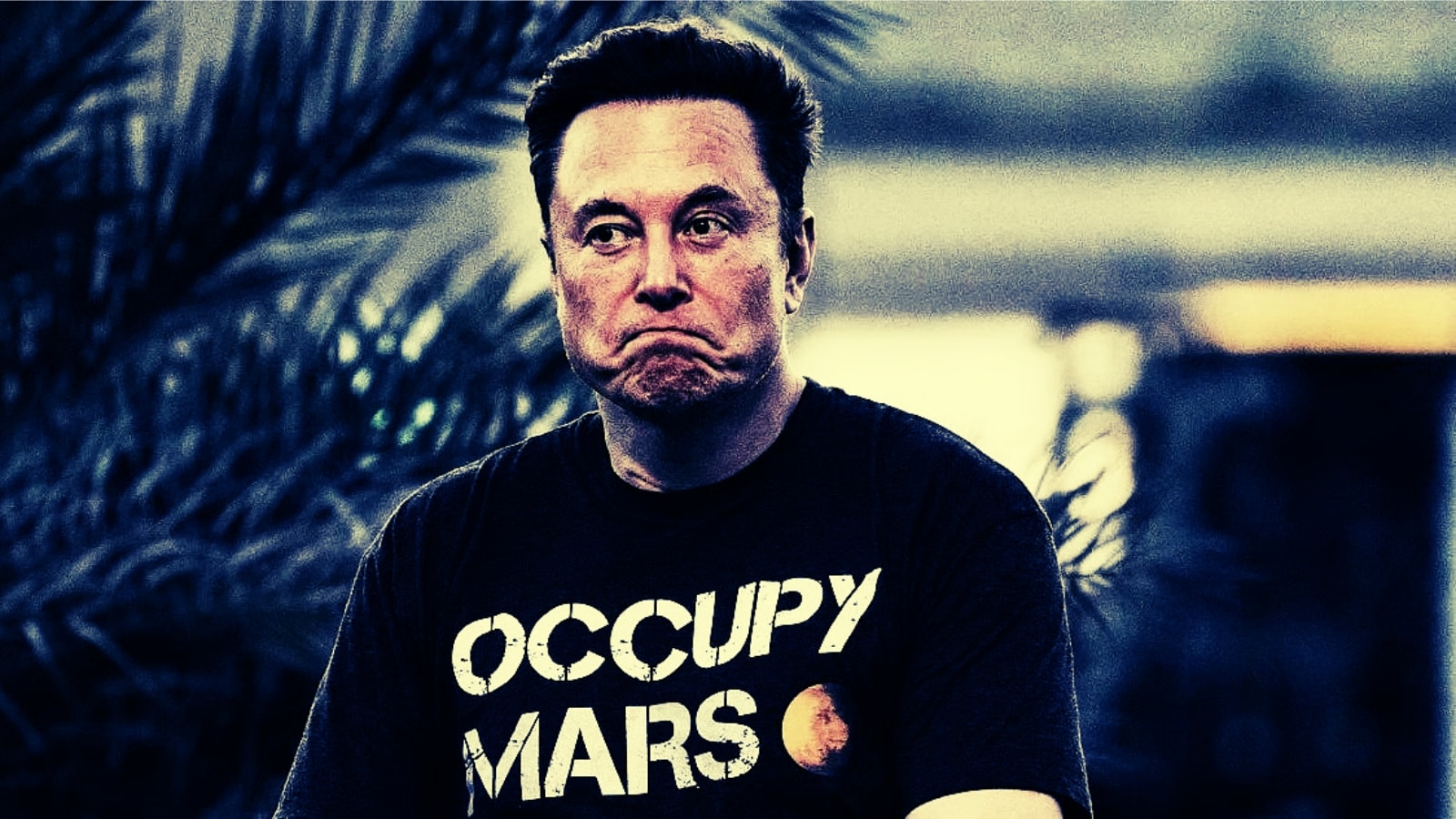
Elon Musk dropped a soundbite that made every tech bro on X nod in unison. Comparing Nvidia CEO Jensen Huang to Michael Jordan, Musk argued that you never bench your star player when they are carrying the franchise.
It sounds great on a podcast. In reality, it is a textbook case of founder narcissism masquerading as corporate strategy.
When billionaires defend each other’s permanent seats on the throne, they aren't offering objective business analysis. They are building an ideological moat around their own job security. Treating a multi-trillion-dollar semiconductor infrastructure giant like a five-man basketball roster isn't just a bad analogy. It is a dangerous misunderstanding of how industrial monopolies live and die.
The Michael Jordan Fallacy in Silicon Valley
Basketball is an individual-dominant sport played on a ninety-four-foot court where one transcendent athlete can dictate forty percent of the offense. Enterprise hardware architecture is a global supply chain war fought across cleanrooms in Taiwan, server racks in Virginia, and compiler stacks written by tens of thousands of engineers.
Jensen Huang did not single-handedly code CUDA. He did not etch the lithography on the Blackwell architecture. What he did—brilliantly, relentlessly, and with a level of paranoia that deserves genuine respect—was bet the company on parallel computing fifteen years before the rest of the market realized deep learning needed it.
He earned his leather jacket. Nobody disputes the historic nature of that run.
The problem with the "Michael Jordan" framing is that even Jordan had to retire, and when he came back to the Washington Wizards at age thirty-eight, his presence actively stunted the development of the roster around him. In corporate governance, idolizing a founder as an irreplaceable deity creates a single point of failure. When a board of directors buys into the myth that only one human being on earth can steer the ship, they stop doing their primary job: risk management.
I have watched mid-cap hardware firms and software giants burn through hundreds of millions of dollars because their boards were too terrified to challenge an aging visionary who stopped listening to frontline engineers. The founder gets insulated by layers of sycophantic vice presidents. Bad news gets filtered out before it reaches the corner office. By the time the market shifts, the company is still executing the founder’s five-year-old thesis while nimble competitors eat their margins alive.
Why Founder-Led Companies Actually Rot From the Inside
The tech press loves the "founder mode" gospel popularized by Paul Graham and Brian Chesky. The thesis is simple: professional managers ruin great companies by introducing bureaucracy, while founders preserve the original magic by staying in the weeds.
That works when you are scaling from fifty employees to five thousand. It breaks down when you become systemic infrastructure for the global economy.
At Nvidia’s current scale, the threats are no longer about technical vision. Every hyperscaler on the planet—Microsoft, Google, Amazon, Meta—is pouring tens of billions of dollars into custom silicon specifically to break Nvidia’s stranglehold on data center margins. Regulators in Washington, Brussels, and Beijing are dissecting every bundle, every allocation decision, and every software lock-in mechanism Nvidia deploys.
The skills required to out-innovate ATI in 2004 are fundamentally different from the skills required to navigate antitrust breakups, sovereign AI diplomacy, and customer rebellion in the late 2020s.
The Trap of the Unquestioned Visionary
- Confirmation Bias at Scale: When a CEO makes a contrarian bet that pays off to the tune of trillions of dollars, their internal calibration breaks. They stop viewing their instincts as educated guesses and start treating them as infallible prophecy.
- Talent Hoarding and Bottlenecks: Nvidia famously operates with a flat organizational structure where dozens of executives report directly to Huang. That works when the CEO possesses superhuman stamina and technical fluency. The moment that energy dips by even ten percent, decision-making across the entire organization grinds to a halt because nobody underneath was ever empowered to make high-stakes calls independently.
- Succession Vacuum: A leader who refuses to groom a peer-level successor isn't protecting the company; they are holding it hostage. Look at what happened to Apple when Steve Jobs finally stepped aside. Jobs spent years quietly building an operational machine under Tim Cook so the company wouldn't implode upon his exit. Most founders refuse to do that because building your replacement forces you to confront your own mortality.
Did Jensen Huang Actually Leave Nvidia?
Let’s address the elephant in the room. The rumors, hypothetical scenarios, and clickbait headlines swirling around "Nvidia's exit of Jensen Huang" confuse speculative succession planning with an actual coup. Huang isn't getting fired tomorrow by an activist hedge fund. The board wouldn't dare, and the stock would crater twenty percent before the press release finished printing.
The real conversation happening in institutional investor circles isn't about kicking Huang out the door. It is about what happens when key man risk becomes an uninsurable liability.
When institutional funds hold trillions of dollars in a single ticker, they don't care about inspirational sports metaphors. They care about governance hygiene. If a single medical emergency, personal scandal, or sudden retirement announcement can wipe out half a trillion dollars in retirement funds overnight, the board has failed its fiduciary duty.
Musk’s defense of Huang is entirely self-serving. Musk runs Tesla, SpaceX, xAI, and X simultaneously while fighting Delaware courts over compensation packages and board independence. To Musk, any suggestion that a visionary founder should be subject to institutional checks, succession timelines, or eventual replacement is an existential threat to his own empire. When he defends Huang, he is really defending his own refusal to install a credible number two at Tesla.
The History Books Disagree With Elon Musk
If you look at the actual data on corporate longevity rather than Silicon Valley folklore, keeping a founder in the CEO chair forever rarely ends in a fairy tale.
- Intel: Gordon Moore and Robert Noyce stepped back at the right time, handing the reins to Andy Grove—an operational realist who pivoted Intel from memory chips to microprocessors and built one of the greatest manufacturing monopolies in history. When Grove finally left, his successors failed to adapt, proving that the transition was the magic, not permanent founder rule.
- Microsoft: Bill Gates stayed in the CEO seat too long, fighting the browser wars with tunnel vision while missing mobile, search, and social. Steve Ballmer, another insider loyalist, doubled down on legacy Windows protectionism. It took an outsider-minded internal operator like Satya Nadella to dismantle the toxic internal culture and turn Microsoft into a cloud powerhouse.
- Cisco: John Chambers led Cisco to briefly become the most valuable company on earth during the dot-com boom, then stayed for over a decade of flat stock performance while cloud networking outflanked his hardware-centric worldview.
Compare those to the rare exceptions where founders stayed indefinitely, and you usually find companies that became hollowed-out monuments to one person's ego. Look at Larry Ellison at Oracle. Oracle survived and thrived financially, sure, mostly through aggressive acquisition and brutal enterprise licensing, while steadily losing developer mindshare to newer, founder-led cloud startups.
The Nuance Nobody Wants to Hear
Does kicking out a brilliant founder automatically fix a company? Of course not. Bringing in a generic MBA caretaker from a consumer packaged goods company to run a deep-tech semiconductor firm is corporate suicide. Look at what happened when Apple brought in John Sculley, or when Intel handed the keys to finance-first executives like Bob Swan while Taiwan Semiconductor Manufacturing Company (TSMC) sprinted ahead in process node leadership.
The choice isn't between "keep the founder forever" and "hire a clueless bean counter." That is a false binary pushed by founders who want you to think they are the only adults in the room.
The real play—the one almost no founder has the humility to execute—is structured evolutionary succession.
How Smart Boards Actually Handle Irreplaceable Founders
- Separate Architecture from Operations: A founder’s true value rarely lies in approving quarterly procurement budgets or managing regional sales quotas. Moving a visionary founder into a Chief Architect or Executive Chairman role preserves their technical veto power while forcing the company to build an independent operational leadership team.
- Force Visible Deputies: If Wall Street cannot name at least two internal executives capable of running the company tomorrow morning, the CEO is failing at leadership. Tim Cook, Jeff Williams, and Craig Federighi were known quantities long before Apple needed them to step up.
- Enforce Hard Governance: Boards need independent directors who aren't college buddies, early angel investors, or fellow billionaires who owe the CEO favors. You need people willing to tell the most powerful person in the room when their latest obsession is a dead end.
The Brutal Truth About Peak Dominance
Every monopoly looks invincible at the top of the S-curve. In 1999, nobody could imagine a world where Intel and Microsoft didn't dictate the terms of computing forever. In 2007, Nokia owned forty percent of the global mobile phone market and looked untouchable.
Nvidia is currently sitting at the exact peak of that curve. Every dollar of AI capital expenditure flows through their data center GPUs. Their gross margins sit north of seventy percent—numbers that belong in luxury software, not physical silicon manufacturing.
At this altitude, the greatest danger isn't competition from AMD or custom ASICs built by Broadcom. The greatest danger is the belief inside Santa Clara that the man who got them here is the only person capable of keeping them there.
Admitting that a founder has an expiration date isn't disrespect. It is basic math. Human beings age, energy fades, and the blind spots created by massive success eventually grow larger than the vision that produced it.
Elon Musk wants you to believe that great companies are extensions of a single superhero's willpower, because without that myth, his own empire loses its mystique. The reality of industrial history is far colder: franchises outlive their MVPs only when management has the guts to build a roster that can win after the star leaves the court.