Power does not hide in the shadows. It rents out the museum and expects you to look away.
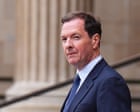
When headlines erupted over George Osborne allegedly believing a high-profile tour with venture capitalist Peter Thiel through a famous historic textile artifact exhibit would remain entirely under wraps, the media manufactured a collective gasp of astonishment. Observers wagged their fingers at the sheer amateur hour of it all. How could a former Chancellor of the Exchequer and a Silicon Valley mega-investor walk among medieval embroidery without triggering every radar detector within a fifty-mile radius?
The lazy consensus says they were sloppy. The consensus says they forgot that smartphones exist, that museum docents talk, and that power leaves footprints.
That consensus is entirely wrong.
I have spent years watching how high-net-worth operators, politicians-turned-bankers, and tech oligarchs maneuver through public spaces. They do not make naive errors about visibility. They calculate optics with the precision of artillery officers. If George Osborne and Peter Thiel walked into a crowded heritage site together, they knew exactly what they were doing. The surprise wasn't that someone noticed. The surprise is that anyone believes privacy was ever the objective.
The Myth of Accidental Exposure
Let us dismantle the core falsehood driving this entire news cycle: the notion that billionaires and former politicians desire total obscurity when they meet.
Absolute privacy is boring. Absolute privacy yields zero leverage. When two titans of overlapping spheres—statecraft and speculative capital—decide to spend an afternoon staring at centuries-old needlework, they are not seeking a quiet monastic retreat. They are sending a signal. They are broadcasting an alignment.
Think about the mechanics of modern elite networking. If Thiel and Osborne wanted a genuinely covert summit, they would not stroll through a public tourist attraction in Normandy. They would meet in a private dining room in Mayfair with the security cameras disabled, or on a yacht anchored three miles outside international territorial waters, or inside a secure bunker in Zurich. There are a thousand ways for men with billion-dollar rolodexes and former government security details to coordinate completely invisible rendezvous.
They chose a museum. They chose a monument built to commemorate an invasion, a conquest, a shifting of empires. That is not an accident of scheduling. That is poetry written by people who understand the power of semi-public theatre.
When a politician who now collects advisory fees and manages sovereign wealth funds links up with a Silicon Valley contrarian who funds political insurgency and surveillance tech, they want a paper trail. They want the whisper network to activate. They want the journalist to file the report, because the report functions as an advertisement to every other player in global finance: We are talking. We are aligning. Get in line or get out of the way.
The Architecture of Elite Optics
To understand why this matters, we have to look past the surface-level embarrassment and examine how power actually communicates.
In traditional corporate governance, boards issue press releases. In the shadow-state economy where former politicians pivot to venture capital and deep-tech investing, the communication style changes. It becomes feudal. It relies on court gossip, coded sightings, and calculated proximity.
When Osborne hosted Thiel, or vice versa, they were performing a ritual older than the medieval linen panels they were inspecting. They were demonstrating access. Access is the primary currency of elite circles. If you can walk through a museum with Peter Thiel, you are signaling to prospective clients, sovereign wealth funds, and regulatory bodies that you possess a direct pipeline to the most controversial, well-capitalized mind in American technology.
Conversely, for Thiel, being seen with a former British Chancellor signals that his operations have high-level European establishment clearance, regardless of how much anti-establishment rhetoric his public speeches contain. It is a hedge. Tech libertarians love to pretend they are tearing down the Westphalian nation-state, yet they never miss an opportunity to break bread with the men who used to write the tax codes for G7 economies.
The media falls for this trap every single time. Reporters treat these encounters as security lapses or social blunders. They frame the story around the absurdity of powerful men getting caught. By doing so, the media acts as the free publicity department for the elite. The story spreads across global feeds, reinforcing the myth that these two figures are at the center of the geopolitical chess board, moving pieces while the rest of us argue about inflation.
Dismantling the People Also Ask Fallacy
If you type inquiries about high-level political and tech figures into search engines, you encounter a predictable loop of questions.
Why do politicians meet with tech investors in secret?
Can billionaires maintain privacy in public spaces?
What do venture capitalists discuss with former government ministers?
Let us correct the premise of every single one of those questions.
They do not meet in secret, because secrecy has diminishing returns once you reach a certain tier of wealth and notoriety. Public spaces are deliberately chosen platforms. Billionaires do not accidentally lose privacy; they manage visibility. And as for what they discuss, they are not hashing out petty local tax disputes. They are aligning on macroeconomic trends, AI regulation, defense tech procurement, and the reshaping of sovereign borders through digital infrastructure.
When you ask whether they can maintain privacy, you are assuming they want it. They do not. Privacy is for people who need protection. Power needs visibility to project gravity. If a tech titan and a former statesman walk into a room and no one sees them, did the alliance even happen? In the attention economy, an unrecorded meeting is a wasted asset.
The Real Cost of the Performance
While the public consumes these stories as political gossip or light entertainment, the real-world implications are systemic.
When former state actors seamlessly transition into private equity and venture capital advisory roles, the revolving door between public service and private accumulation spins at terrifying speeds. Osborne spent years steering the British economy through austerity, cutting public services, and setting macroeconomic policy. Today, he moves through elite financial networks, trading on the relationships and institutional prestige he built while on the public payroll.
Pairing that institutional pedigree with Peter Thiel—a man whose firm Palantir holds massive government contracts across defense and intelligence agencies globally—is not a casual cultural outing. It is a masterclass in modern institutional capture.
Thiel understands better than almost anyone that the most lucrative businesses of the twenty-first century sit at the intersection of state procurement and disruptive software. Who better to help navigate the labyrinthine corridors of European government bureaucracy than a former Chancellor who knows every regulator, every central banker, and every prime minister by their first name?
The museum visit was a handshake disguised as a holiday.
Why the Narrative Needs to Change
We need to stop infantilizing our ruling class. Every time a major newspaper runs a breathless exposé about a billionaire getting spotted at a tourist hotspot with a former politician, and frames it as an oopsie-daisy moment of poor security, we exhibit a profound failure of political literacy.
These men are not bumbling tourists dropping their ice cream cones. They are strategic actors testing boundaries, signaling alliances, and maintaining relevance. They want you to think they are clumsy because incompetence invites forgiveness, whereas calculated maneuvering invites scrutiny.
If an executive at a major tech firm accidentally leaks a product roadmap, that is a failure. If a billionaire and a former Chancellor let slip that they are touring historical monuments together, that is a trial balloon. They are testing the reaction. They are measuring how much airtime the alliance commands. They are watching to see which regulators twitch.
Unconventional Rules for Reading the News
If you want to survive the onslaught of modern media spin, apply these three rules whenever you see headlines about elite socialization:
- Assume intent. Never attribute to clumsiness what can easily be explained by strategic signaling. If a powerful person is in public view, someone wanted them there.
- Follow the balance sheet, not the itinerary. Do not care about where they met. Care about what regulatory hurdles, defense contracts, or sovereign investments changed hands six months before and six months after the photo was snapped.
- Ignore the cultural window-dressing. The media will always focus on the colorful details—the historic building, the unexpected location, the amusing quotes. That is the noise. Strip away the setting and look strictly at the leverage being exchanged.
The next time a headline breaks about high-powered elites getting caught in plain sight, do not waste your time laughing at their supposed lack of operational security. Recognize that you are watching a commercial broadcast. They want you to look. They want you to talk about it.
They are writing history on the walls, and they need an audience to read it. Stop being a passive spectator in a game designed to keep you distracted by the scenery while they rewrite the rules of global capital.


