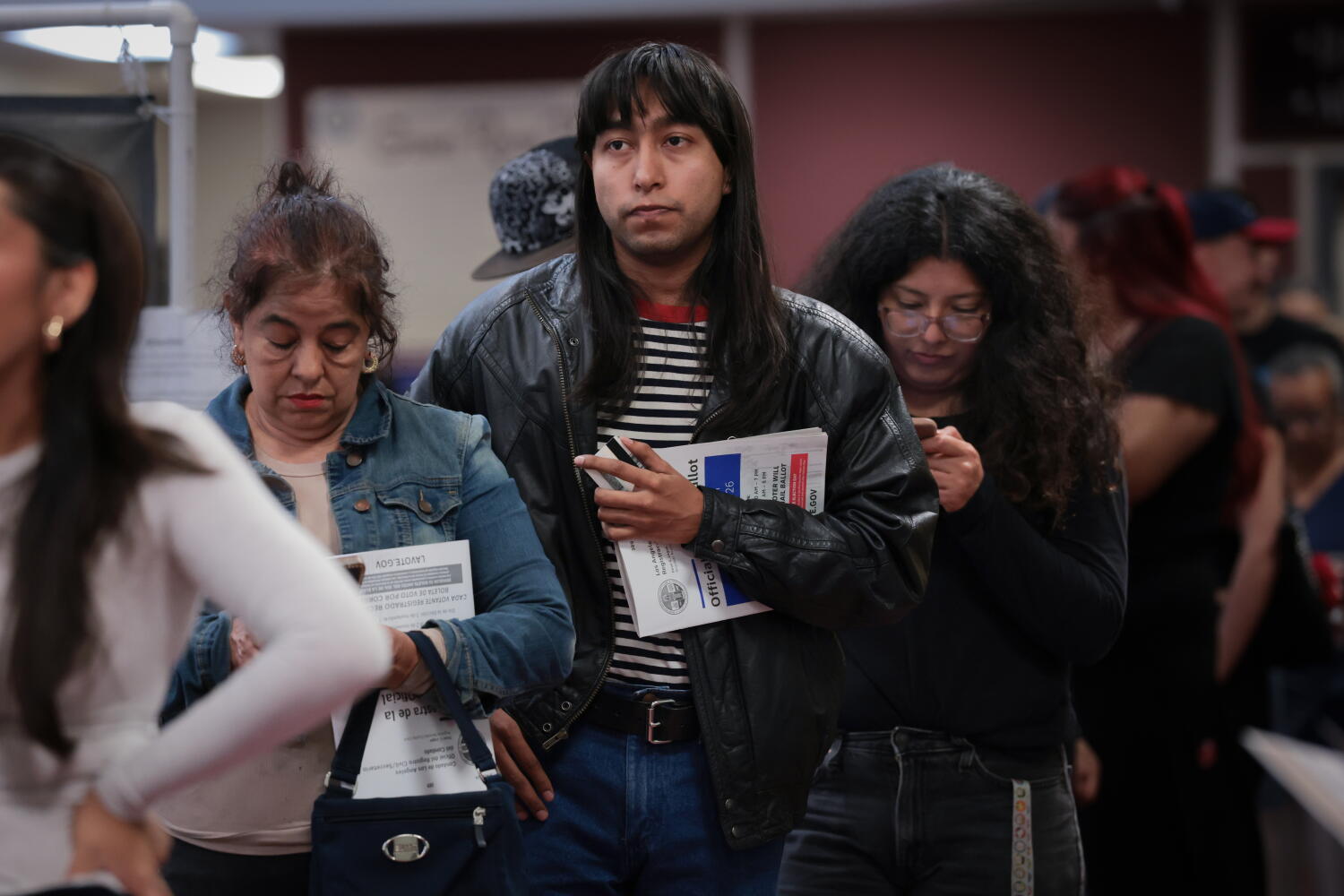
Standard political commentary treats the Latino electorate as a monolithic voting bloc driven by uniform cultural cues, an analytical failure that obscures the actual mechanics of Democratic electoral victories. Blue wins in contested districts do not result from passive demographic shifts; they are engineered through targeted resource allocation, precinct-level turnout elasticity, and issue-specific persuasion models that account for wide regional and generational variance. Understanding how Latino voters secure these margins requires stripping away broad demographic generalizations and examining the operational inputs—specifically voter registration conversion, differential turnout rates, and localized economic messaging—that determine electoral outcomes in tight races.
The Fallacy of the Monolithic Electorate
Political analysts frequently aggregate Hispanic and Latino voters into a single variable, assuming shared linguistic or cultural heritage translates into uniform policy preferences. This approach introduces severe modeling errors. In operational campaign management, the Latino electorate functions as a collection of distinct sub-populations segmented by national origin, generational tenure, geographic density, and socioeconomic status. Read more on a related issue: this related article.
A third-generation Mexican American household in Maricopa County, Arizona, responds to entirely different economic and social stimuli than a first-generation Venezuelan household in Miami-Dade County, Florida, or a Puerto Rican family in the Interstate 4 corridor of central Florida. Treating these groups as interchangeable leads to inefficient capital deployment. When campaigns rely on broad, culturally generic outreach, they experience high rates of message rejection and low conversion efficiency.
To map how blue victories actually materialize, strategists separate the electorate into three functional tiers: Further analysis by Al Jazeera highlights similar views on the subject.
- High-Propensity Core: Voters with established participation records across both presidential and midterm cycles. These individuals require minimal persuasion spend; campaign operations focus on friction reduction, such as mail-in ballot tracking and early voting reminders.
- Episodic Participants: Registered voters who engage primarily during high-salience presidential elections but drop out during off-year or local contests. Securing victories in down-ballot races depends on activating this segment through localized, high-touch field operations.
- Eligible Non-Voters: Citizens of voting age who remain unregistered or disengaged. Converting this group requires the highest expenditure per vote, involving sustained civic infrastructure rather than short-term campaign advertising.
Democratic victories in swing districts rarely stem from sudden shifts in the High-Propensity Core. Instead, they rely on altering the turnout ratio among Episodic Participants while maintaining a defensive margin among working-class voters who face aggressive economic counter-messaging from conservative opponents.
The Turnout Elasticity Equation
In competitive districts where victory margins frequently fall below two percentage points, electoral outcomes are governed by turnout elasticity—the degree to which specific campaign interventions increase voting probability among targeted subgroups. Latino voters exhibit higher turnout elasticity than older, non-Hispanic white demographics, largely because the Latino electorate skews significantly younger.
Age distribution acts as a primary structural variable in electoral modeling. A substantial proportion of eligible Latino voters falls within the 18-to-29 age bracket, a cohort characterized historically by lower baseline registration and turnout rates. When Democratic campaigns secure narrow victories in states like Nevada, Arizona, or Pennsylvania, the mathematical driver is rarely a massive swing in candidate preference among older voters. Rather, it is a measurable uptick in participation among younger, episodic voters who break heavily for Democratic candidates when they actually cast a ballot.
This dynamic creates an operational bottleneck for campaign managers. High elasticity means that targeted outreach yields substantial returns, but it also means that neglect leads to rapid vote share collapse. Unlike high-propensity retirees who vote regardless of campaign contact, elastic voters require repeated, multi-channel verification to overcome institutional friction—such as confusing registration deadlines, restrictive voter identification laws, or limited polling locations in high-density neighborhoods.
Campaigns solve this friction problem through relational organizing and early-vote banking. Relational organizing replaces traditional cold-canvassing by strangers with structured peer-to-peer contact, utilizing trusted community networks to verify registration and confirm voting plans. Early-vote banking systematically removes confirmed Democratic voters from active persuasion universes once their ballots are recorded, allowing field teams to reallocate finite canvassing hours toward increasingly difficult, low-propensity targets during the final two weeks of an election cycle.
Economic Pocketbook Issues Versus Identity Framing
A persistent error in media analysis is the assumption that immigration policy serves as the sole or primary determinant of Latino vote choice. Empirical polling and post-election precinct analyses consistently demonstrate that pocketbook economics—specifically inflation, housing affordability, healthcare costs, and wage growth—rank as the dominant drivers of voter behavior.
When Democratic candidates fail to anchor their messaging in tangible economic outcomes, their margins among working-class Latino men and non-college-educated households erode rapidly. In sectors such as construction, logistics, hospitality, and manufacturing, voters evaluate candidates based on perceived competence in managing inflation and interest rates rather than rhetorical solidarity on cultural issues.
Successful Democratic campaigns secure Latino support by framing policy proposals around direct material utility:
- Cost-of-Living Mitigation: Connecting legislative actions—such as insulin price caps, child tax credit expansions, or infrastructure job creation—directly to household balance sheets.
- Small Business Access: Emphasizing capital access, regulatory relief, and federal contracting opportunities for Latino entrepreneurs, a rapidly growing demographic segment with strong sensitivity to tax and labor regulations.
- Healthcare Infrastructure: Focusing on Medicaid expansion and clinic accessibility in underserved urban and rural counties where uninsurance rates remain disproportionately high.
Immigration remains a relevant secondary variable, particularly in border districts and states with large mixed-status families, yet its strategic function differs from standard media narratives. Voters prioritize balanced approaches that pair pathways to citizenship for long-term residents with orderly border management. Candidates who adopt extreme positions on either side alienate pragmatic middle-tier voters. Blue victories occur when campaigns neutralize immigration as a wedge issue by demonstrating administrative competence while keeping primary media buys focused on economic security.
The Structural Impact of Year-Round Field Infrastructure
Electoral wins attributed to Latino voters are frequently the delayed output of non-partisan civic organizations operating outside the standard six-month campaign window. Traditional political campaigns operate on boom-and-bust capital cycles, flooding districts with television advertisements in September and October before dismantling local offices the day after Election Day. This transactional model generates diminishing returns in communities accustomed to institutional neglect.
In states that transitioned from reliably red to competitive battlegrounds over the past decade, the decisive factor was the establishment of permanent, year-round organizing infrastructure. These networks—comprising labor unions, community advocacy groups, and tenant associations—engage residents on immediate local issues such as school board governance, municipal utility rates, and workplace safety during non-election years.
This continuous presence alters the baseline political environment through two mechanisms:
- Trust Accumulation: When organizers assist residents with tangible civic issues outside an election cycle, subsequent voter mobilization efforts carry higher credibility. Cold outreach from a partisan campaign carries high skepticism; outreach from an established neighborhood entity bypasses initial defensive barriers.
- Data Hygiene: Continuous community contact produces superior voter files. Traditional commercial voter files often contain outdated addresses and inaccurate phone numbers for renters and younger demographics who relocate frequently. Year-round field operations update contact records incrementally, drastically reducing wasted canvass attempts during peak campaign periods.
When a partisan campaign enters a district supported by mature civic infrastructure, its cost per marginal vote drops significantly. The campaign does not need to build foundational awareness from zero; it simply activates an existing communication pipeline. Conversely, in states where Democratic committees rely solely on late-cycle media buys without underlying field networks, Latino turnout stagnates, and overall vote margins collapse regardless of top-of-ticket spending.
Media Fragmentation and Information Ecosystem Vulnerabilities
Securing Latino votes requires navigating a fractured information environment that differs structurally from general-market media consumption. While legacy Spanish-language television networks retain influence among older demographics, younger and bilingual voters consume information predominantly through encrypted messaging applications, algorithm-driven video platforms, and localized digital audio.
This fragmentation creates severe vulnerabilities to targeted disinformation and unverified narratives. Because platforms like WhatsApp operate on closed, peer-to-peer encryption, false claims regarding economic policy, public safety, or candidate positions circulate rapidly without triggering standard public fact-checking mechanisms. In recent election cycles, conservative operations exploited this asymmetry by seeding tailored audio and video clips directly into community group chats months before Democratic campaigns launched counter-messaging.
To secure victories against these headwinds, winning Democratic operations abandon broad, translated general-market ads in favor of native digital architecture:
- Cultural Transcreation Over Translation: Direct translation of English-language scripts produces stilted, ineffective messaging. Effective campaigns build creative assets from the ground up using regional dialects, relevant cultural references, and locally recognizable messengers.
- Micro-Targeted Audio and Digital: Allocating budget toward Spanish-language and bilingual podcasts, terrestrial radio hosts, and localized YouTube pre-roll ads that mirror the specific consumption habits of target counties.
- Rapid-Response Monitoring: Deploying dedicated digital teams to track emerging narratives within regional social networks and deploying verified counter-content through trusted local surrogates within hours rather than days.
Failure to adapt to this media reality explains why Democratic vote shares can drop by double digits in specific counties even while overall national spending increases. Money spent on uncalibrated broadcast television fails to reach the elastic segments of the electorate that decide close races.
Geographic Concentration and the Electoral College Multiplier
The strategic value of Latino voters in securing blue victories is magnified by their geographic distribution across key Electoral College and Senate battlegrounds. Unlike voting blocs concentrated heavily in non-competitive coastal states, rapidly growing Latino populations sit directly inside the decisive swing states that determine federal majorities.
In Arizona and Nevada, Latino voters represent roughly one-fifth to one-quarter of the active electorate. In these states, a three-point shift in either turnout or candidate preference mathematically overwhelms almost any counter-movement among rural white voters. Similarly, in states with smaller overall Latino percentages—such as Pennsylvania, Wisconsin, and Georgia—the concentration of these communities within specific metropolitan counties provides the exact margin required to flip statewide totals.
For example, in Pennsylvania, the growth of Latino populations in the Lehigh Valley (Allentown, Bethlehem, and Reading) creates a decisive counterweight to conservative trends in the central rural counties. Securing a blue victory statewide does not require winning a majority across all rural precincts; it requires maximizing turnout and holding a 65-to-70 percent vote share within these specific urban and suburban industrial corridors.
This geographic reality dictates strict resource prioritization. Campaign strategists map precinct-level demographic growth against historical partisan performance to identify high-leverage zones—areas where modest increases in voter registration yield disproportionate returns in statewide vote margins.
Operational Limitations and Strategic Vulnerabilities
Relying on Latino voter mobilization as a guaranteed path to blue victories carries substantial operational risks. Demographic growth does not automatically equate to partisan alignment, a deterministic fallacy that has repeatedly undermined Democratic forecasting.
The primary limitation of current Democratic strategy is ideological misalignment on social and economic governance. A significant portion of the Latino electorate holds culturally conservative views regarding religion, family structure, and law enforcement, alongside strong entrepreneurial skepticism toward heavy state regulation. When national party messaging drifts toward academic progressivism or perceived hostility toward policing and small business autonomy, it creates friction that local field organizers cannot easily overcome.
Furthermore, incumbency fatigue affects elastic voters disproportionately. When economic conditions deteriorate—through inflation, high mortgage rates, or stagnant real wages—episodic voters do not necessarily switch parties in large numbers; instead, they abstain. Because Democratic victory margins in battleground districts depend on high participation from these exact cohorts, economic downturns impose an asymmetric penalty on Democratic candidates.
To maintain competitive viability in future cycles, Democratic campaign operations must transition from episodic mobilization to permanent structural integration. Strategists must reallocate a minimum of 30 percent of traditional late-cycle broadcast television budgets into year-round local organizing grants, bilingual digital rapid-response infrastructure, and localized economic messaging tailored to non-college-educated workers. Treating Latino voters as a permanent, complex constituency requiring continuous material engagement—rather than a reliable demographic firewall to be activated every four years—is the only viable mechanism for sustaining electoral majorities in contested districts.