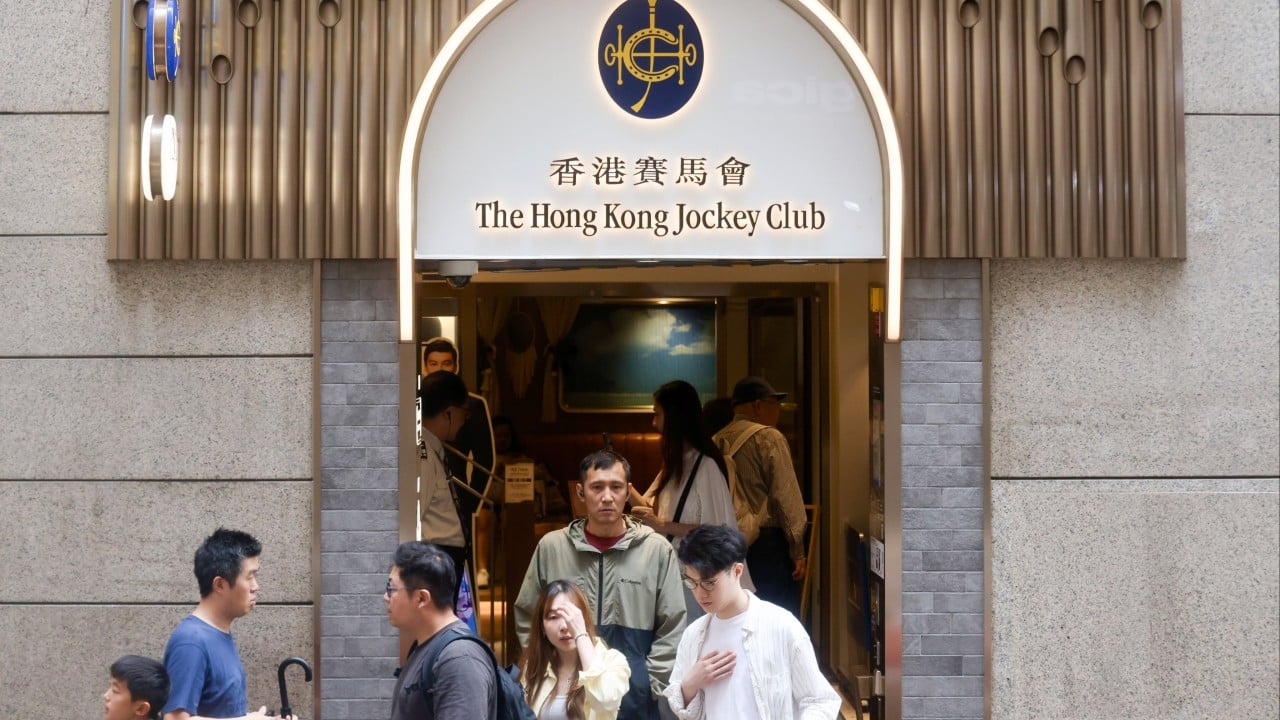
The humidity in Hong Kong has a way of turning paper soft, making the edges of a betting slip feel like a wilted leaf between your fingers. Walk past any Jockey Club branch in Central or Sham Shui Po this week and you will see it. The line snakes out the door. It spills onto the sidewalk, a silent procession of retirees in polyester shirts and office workers who have loosened their ties against the stifling heat. They aren't just buying a ticket. They are buying a temporary reprieve from reality.
This is the Easter Snowball. The jackpot sits at HK$80 million.
To the rational mind, the math is a cold shower. The odds of picking all six numbers correctly in the Mark Six are approximately 1 in 14 million. You are statistically more likely to be struck by lightning while winning an Olympic gold medal than you are to hold the winning ticket on Saturday night. But logic is a poor shield against the intoxicating scent of eighty million dollars. In a city where a parking space can cost more than a villa in Tuscany, that sum isn't just wealth. It is a portal to a different dimension.
Consider a man we will call Mr. Lam. He has worked the same accounting desk for twenty-four years. His life is measured in MTR stops and dim sum lunches. When he holds that small, printed slip, the gray walls of his cubicle begin to dissolve. For the forty-eight hours leading up to the draw, Mr. Lam is no longer an accountant. He is a philanthropist. He is a traveler. He is the man who finally tells his boss exactly what he thinks of the quarterly audit.
That is the true product the Jockey Club sells: the "What If."
The Weight of a Small Piece of Paper
The air inside the betting halls is thick with a specific kind of tension. It is different from the frantic energy of the horse racing tracks. There, the air is loud with shouting and the slapping of newspapers. The Mark Six crowd is quieter. More reverent. People hunch over small tables, pencils scratching against paper as they consult "lucky" numbers—birthdays, anniversaries, or the house number of a childhood home long since demolished for a luxury high-rise.
There is a collective superstition that blankets the city during a Snowball draw. Some people refuse to buy their tickets from the same branch twice. Others seek out the "luckiest" outlets, like the one on Stanley Street which has reportedly produced dozens of first-prize winners over the decades. They wait in line for forty minutes, convinced that the physical location of the machine somehow influences the random tumbling of colored balls in a plastic drum miles away.
We do this because the human brain is not wired to understand 1 in 14 million. We are wired to understand "Someone has to win." We look at the total prize pool and see a mountain of gold, forgetting that the mountain is built on the crushed hopes of millions of others who contributed their HK$10 to the pile.
The Jockey Club itself is a strange beast in the machinery of Hong Kong. It is the city's largest taxpayer and its biggest benefactor. When you lose—and you almost certainly will—the money doesn't just vanish into a corporate vault. It flows into parks, senior centers, and youth programs. There is a bittersweet irony in the fact that the dreams of the gambler often fund the reality of the community. You are losing your money so that a neighborhood three districts away can have a new library. It is a involuntary form of social grace.
The Ghost in the Machine
What happens when the balls stop spinning?
The draw itself is a televised ritual. The machine, transparent and clinical, tosses the numbered spheres in a chaotic dance. One by one, they drop. 12. 24. 41. Each number is a door closing for millions of people. By the time the sixth number and the "extra" ball are announced, the collective sigh of the city could power a wind turbine.
The HK$80 million jackpot creates a ghost. It is the ghost of the life you almost had. For a few seconds after the draw, people stare at their tickets, squinting, hoping they misread a 7 for a 1. Then, the slips are crumpled. They litter the floors of the betting branches like fallen snow. The accountant goes back to his ledger. The retiree goes back to the park. The portal closes.
But the most fascinating part of the Mark Six isn't the winner. It is the losers.
The "near miss" is a psychological trap that keeps the engine running. If you matched three numbers, you won a small prize—perhaps HK$40. It is just enough to convince you that you were "close." You weren't. You were still miles away from the jackpot. Yet, that small taste of success acts as a chemical hook. It reinforces the belief that next time, the sequence will align. The Easter Snowball melts, but the hunger for the next draw—the Dragon Boat Snowball, the Summer Snowball—remains frozen in place.
Wealth in this city is often viewed as a meritocracy, a result of grinding hours and ruthless networking. The Mark Six subverts that. It offers the only avenue where the delivery driver and the CEO have the exact same standing. The machine does not care about your resume. It does not care about your pedigree. In those few moments of the draw, everyone is equal.
The Price of a Dream
There is a hidden cost to this hope, one that isn't printed on the ticket. It is the subtle erosion of contentment. When we focus so intensely on the HK$80 million windfall, the life we actually lead can start to feel like a waiting room. We stop investing in the small, incremental improvements of our reality because we are waiting for the lightning bolt to strike.
The excitement of the Easter draw is a fever. It breaks on Saturday night.
If there is a winner, their life will change in ways that are often more terrifying than they are beautiful. Sudden wealth is a heavy burden; it carries the weight of a thousand new "friends" and the paranoia of losing what was so easily gained. They become the local legend, the person who "made it out."
The rest of us find a different kind of solace. We walk out into the humid night, the HK$10 or HK$20 gone, but the fantasy still fresh in our minds. We talk about what we would have done. We argue about which numbers were "due" to come up. We participate in the great, recurring narrative of the city.
The line at the Stanley Street branch will be shorter on Monday. The posters for the Easter Snowball will be peeled off the windows, revealing the glass underneath. But the slips will still be there, tucked into wallets and pockets, silent witnesses to a city that refuses to stop dreaming, even when the math says it should.
Beneath the neon lights and the towering skyscrapers, we are all just waiting for our numbers to be called, holding onto a small piece of paper as if it were an anchor in a storm.
The machine keeps spinning. The balls keep dancing. And somewhere, in a small apartment overlooking a crowded street, someone is already picking their numbers for Tuesday.
They are sure their luck is about to change.
They have to be.