Justice delayed is justice denied. When that delay stretches across eight years in a high-profile clerical abuse case involving vulnerable Indigenous men, it stops looking like a simple bureaucratic hurdle and starts looking like an institutional failure.
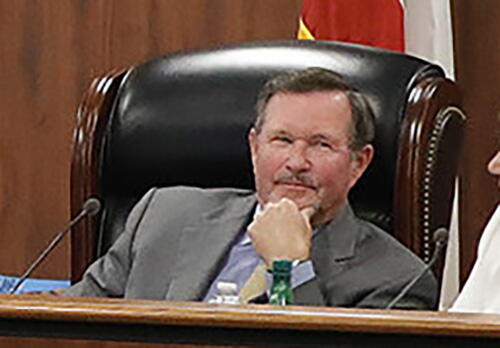
Former Broome Bishop Christopher Saunders was finally sentenced to six and a half years in prison after a Western Australian District Court jury convicted him of 13 out of 19 charges. The offenses, spanning from 2008 to 2019, took place in a remote corner of Australia's northwest coast. Yet, while the criminal gavel has finally fallen, the timeline raises uncomfortable questions about how religious institutions and secular law enforcement interact when predators wear clerical collars.
Archbishop Timothy Costelloe, president of the Australian Bishops Conference, recently addressed the sprawling eight-year gap. His defense relies heavily on a familiar institutional script: the church had to step back and let the police take the lead to protect the integrity of the secular justice system.
On paper, that policy sounds reasonable. Since the devastating findings of the Royal Commission into Institutional Responses to Child Sexual Abuse, Australian churches understand that internal investigations cannot be allowed to muddy criminal proceedings. Stepping aside is supposed to prevent accusations of a cover-up.
The reality on the ground was far messier. Church and law enforcement officials first caught wind of these specific allegations back in 2018. The Vatican forced Saunders to retire early in 2021, but the police investigation stalled out twice because investigators struggled to secure enough solid evidence. Victims, many of them young Indigenous men targeted through financial vulnerability, alcohol, and cigarettes funded by the church, faced immense barriers in coming forward.
Critics aren't buying the narrative that stepping back equates to active cooperation. When an investigation stalls twice, waiting passively doesn't look like respect for the law. It looks like institutional paralysis.
Archbishop Costelloe admitted that cynicism surrounds the church's handling of the matter. It is hard not to be cynical when a powerful bishop operates with near-total autonomy in a remote diocese for over a decade while allegations quietly circulate. Even when the Vatican launched its own internal probe in 2022 and handed over a massive 200-page dossier to Western Australian police the following year, the gears of justice ground forward at a glacial pace.
Now that Saunders is behind bars with a parole eligibility date set for February 2031, church leaders are signaling plans to resume their own in-house canonical procedures. Critics rightly ask why these internal mechanisms take a backseat for years instead of running concurrently or aggressively pursuing truth independently.
Trust isn't rebuilt by pointing out that the police took a long time. Trust is built by ensuring that marginalized communities—such as the Indigenous populations of the Kimberley region—never have to wait nearly a decade for basic protection and accountability. The process worked in the end, but the road there was entirely too long.
Australian bishop acknowledges 8-year delay in justice in Indigenous abuse case but defends process
This video provides footage and direct statements from Archbishop Timothy Costelloe explaining the church's stance on the lengthy investigation and institutional protocols.