Real estate publicists love a celebrity ghost. Put a pop star’s name on a press release, slap an eight-figure price tag on a townhouse, and wait for the financial press to regurgitate the listing copy without asking a single hard question.
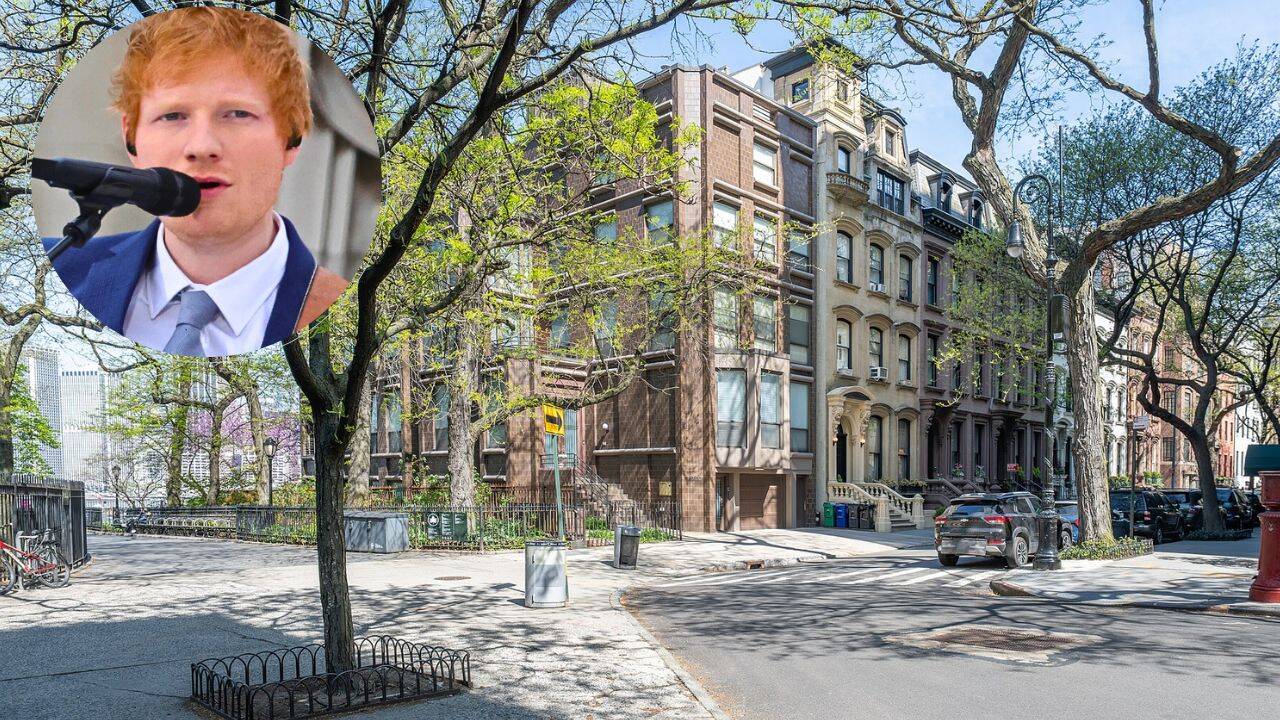
That is exactly what is happening with the $12.5 million listing of Ed Sheeran’s former rental in Brooklyn Heights. Every lifestyle outlet is running the same breathless headline. They point to the 19th-century Greek Revival architecture, the proximity to the Promenade, and the fact that a global stadium headliner once paid rent there. They treat the celebrity pedigree as an automatic value multiplier. For a deeper dive into similar topics, we suggest: this related article.
It is lazy journalism, and worse, it is terrible real estate math.
When you strip away the acoustic guitar nostalgia, you are looking at a classic New York luxury trap. A celebrity lease is not a stamp of institutional quality. It is a temporary logistical convenience for someone with tour bus schedules and security details. Treating a short-term celebrity rental like a permanent trophy asset is how high-net-worth buyers lose seven figures in carrying costs and illiquidity. For further context on this topic, comprehensive analysis can also be found at BBC.
The Myth of the Celebrity Halo Effect
The consensus among mainstream property reporters is simple. Famous person sleeps in building, building becomes historic, price goes up.
In reality, the "celebrity premium" in residential real estate almost never survives the closing table. I have watched dozens of ultra-luxury listings sit on the market for two or three years because the seller anchored their asking price to a famous former occupant rather than neighborhood comparables. Buyers at the $10 million to $15 million tier are not souvenir hunters. They do not pay a 25% markup because a Grammy winner once ordered takeout in the foyer.
When Ed Sheeran rented in Brooklyn Heights, he was doing what touring musicians always do. He needed privacy, a discreet entrance, and zero long-term commitment. Renting at $20,000 or $30,000 a month is pocket change for an artist grossing hundreds of millions on a global tour. It is an operating expense.
Buying that exact same property for $12.5 million is an entirely different financial animal. You are no longer buying flexibility. You are locking up massive capital in an illiquid asset where the maintenance, property taxes, and opportunity cost will bleed you dry if you overpay for a headline.
Why Touring Artists Rent Instead of Buy
To understand why this listing is mispriced for the average wealthy buyer, you have to understand how celebrity real estate actually works.
A-list entertainers rarely buy primary residences in dense urban cores unless they plan to gut-renovate them into fortified compounds. When they stay in New York for an album cycle, a residency, or a string of East Coast dates, they lease.
- Zero Friction: A lease allows an artist to wire a lump sum, move in with suitcases, and vanish the moment the tour moves to Europe. There is no co-op board approval, no mansion tax, and no broker commission on the exit.
- Security Over Layout: Celebrities prioritize sightlines from the street and private garage access over functional family floor plans. What works for a singer hiding from paparazzi often feels dark, awkward, or cramped for an actual family living there year-round.
- Tax Efficiency: For touring entities, temporary housing near work hubs can often be structured cleanly through business management, whereas owning personal residential real estate in New York City triggers some of the most punitive local tax regimes in the country.
When the landlord turns around and uses that tenant’s fame to justify a $12.5 million exit, they are banking on the buyer confusing a celebrity’s temporary convenience with permanent architectural value.
The Brutal Math of Brooklyn Heights Townhouses
Let us look at the actual mechanics of buying a $12.5 million property in Brooklyn Heights. Ignore the press release and look at the ledger.
First, New York State and New York City will immediately penalize you just for showing up. Between the progressive New York Mansion Tax—which scales aggressively once you cross the $10 million threshold—and standard closing costs, title insurance, and legal fees, you are lighting roughly $500,000 to $600,000 on fire on day one. You never get that money back.
Second, look at the physical reality of 19th-century Brooklyn Heights real estate. Most of these homes were built between 1830 and 1860. They are landmarked by the Landmarks Preservation Commission.
Landmarked status sounds romantic until you need to replace a rotted window frame, repair a brownstone facade, or upgrade an aging HVAC system. You cannot simply hire a contractor and get to work. You are submitting architectural drawings to a city board, waiting months for public hearings, and paying triple the normal rate for historically accurate materials.
Imagine a scenario where you buy a $12.5 million historic townhouse assuming it is "turnkey" because a celebrity lived there recently. Two winters later, moisture penetrates the rear brick facade, and the boiler fails. Suddenly, you are writing a $400,000 check just to keep the building dry and warm, while the city dictates the exact shade of mortar your masons are allowed to use.
Does Celebrity Pedigree Actually Increase Resale Value?
No. In fact, it frequently delays a sale and forces deeper price cuts.
This is the part brokers refuse to say out loud. When a property launches with heavy celebrity publicity, it attracts looky-loos, press inquiries, and unqualified buyers who want a tour just to see where a famous person lived. Serious buyers—the hedge fund partners, tech founders, and multi-generational New York families who actually have $12.5 million in liquid cash—hate the circus.
Data from major New York brokerage reports consistently shows that overpriced "trophy" listings suffer from days-on-market rot. Once a townhouse sits unsold for 270 days, every buyer in the neighborhood knows it is stale. Even if the seller eventually drops the price to $10.5 million—closer to where the square footage and condition actually belong—the listing carries the stench of desperation.
The only time a celebrity name adds tangible value is when the celebrity physically altered the property in a way that cannot be replicated—think Frank Lloyd Wright designing the interiors, or a legendary fashion designer spending $15 million on bespoke millwork. Simply signing a twelve-month lease and hanging a few guitars on the wall adds zero dollars to the appraisal.
What Smart Buyers Look For Instead
If you have $12.5 million to spend in Brooklyn, you are in rarefied air. You have enough capital to dictate terms, yet buyers routinely hand away their leverage because they fall in love with a story.
Stop shopping for narratives and start auditing fundamentals.
- Width Over Fame: In Brooklyn townhouse real estate, width is the only metric that truly dictates luxury. A standard 18-foot-wide townhouse feels like a hallway with rooms attached. A 22-foot or 25-foot-wide townhouse changes the entire spatial experience, allowing for grand staircases, proper side-by-side rooms, and real natural light. Never pay a 25-foot price for a 20-foot building just because a singer rented it.
- Mechanical Age, Not Cosmetic Paint: Landlords preparing a property for a high-end celebrity rental do cosmetic refreshes. They paint the walls white, sand the floors, and stage it with rented designer furniture. Look past the staging. Check the date on the roof, the amperage on the electrical panel, and the piping in the cellar. Cosmetic luxury hides structural neglect.
- True Privacy vs. Perceived Privacy: Brooklyn Heights is a tourist destination. On any given Saturday, hundreds of people walk past the historic blocks on their way to the Promenade. If you want genuine privacy, look at carriage houses on quiet mews streets or properties in Cobble Hill and Boerum Hill with deeper lot lines and mature rear gardens.
- Price Per Square Foot Without the PR Tax: Pull the closed sales—not the active listings—within a four-block radius over the past 18 months. Strip out the anomalies. Calculate the median price per square foot for renovated single-family homes. If the celebrity rental is asking 20% above that median, walk away or bid strictly on the comps.
The Downside of Being the Contrarian Buyer
Taking a cold, analytical stance in the ultra-luxury market is not without friction. If you refuse to pay the celebrity markup, you will lose out on properties to emotional buyers. Sometimes, a wealthy fan or an impulsive buyer with more money than sense will step up and pay the asking price simply for the bragging rights at dinner parties.
Furthermore, strictly following comparable sales data means you rarely get the absolute loudest, most publicized trophy on the block. You end up buying the quiet, architecturally superior house three streets over that never made the Sunday real estate section.
That is a trade you should make every single time.
Ego is the single most expensive line item in New York real estate. Let the next buyer pay a multi-million-dollar surcharge for the privilege of telling their friends that Ed Sheeran once stood in their kitchen. Keep your capital, buy the better building down the block, and let someone else fund the landlord’s retirement.