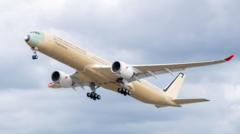
Commercial aviation approaches a structural boundary with the implementation of point-to-point ultra-long-haul (ULH) routes connecting London and Sydney non-stop. This 10,500-mile city pair stretches the limits of current aerodynamic design, material science, and human physiology. While market positioning frames these direct operations as a triumph of convenience, an objective financial and operational audit reveals a fragile equilibrium. The success of ultra-long-haul travel depends entirely on compounding variables: a hyper-premium cabin configuration, extreme fuel weight penalties, and unprecedented human fatigue management.
To evaluate the viability of these 22-hour flights, the aviation sector must move past marketing narratives and analyze the hard engineering and economic constraints that govern the upper limits of commercial flight.
The Fuel Weight Penalty and Revenue Payload Compression
The core economic challenge of ultra-long-haul aviation is governed by the Breguet range equation, which dictates that range extension requires an exponential increase in fuel load, which in turn requires burning more fuel just to carry that fuel. This reality distorts the traditional relationship between maximum takeoff weight (MTOW) and revenue-generating payload.
On a standard long-haul flight, fuel accounts for roughly 30% to 40% of the aircraft’s total weight at takeoff. For a non-stop London-to-Sydney operation utilizing modified widebody aircraft like the Airbus A350-1000, fuel weight scales to nearly 50% of MTOW. This reality forces structural compromises:
- The Weight Displacement Ratio: Every additional ton of fuel required to guarantee safe reserve margins over a 22-hour flight displaces an equivalent weight of cargo or passengers.
- The Efficiency Decay Curve: During the initial hours of flight, the aircraft operates at its lowest efficiency because it is structurally bloated by its own fuel load. The engines burn a disproportionate volume of fuel simply to sustain altitude with this dead weight.
- Cargo Elimination: To make the non-stop route mechanically feasible, belly cargo—typically a highly profitable secondary revenue stream for international airlines—must be reduced to near zero.
Because cargo is eliminated, the entire financial burden of the flight falls on the passenger cabin. This shifts the revenue model entirely toward high-yield premium travelers.
The Premium Configuration Mandate
Standard commercial aircraft configurations maximize seat density to lower the break-even cost per seat-mile. Ultra-long-haul routes invert this strategy. To keep the aircraft light enough to achieve the required range, the total passenger count must be stripped by roughly 30% to 40% compared to a standard configuration of the same airframe.
A optimized ULH cabin reduces total seat count to roughly 140 to 175 seats, prioritizing First Class, Business Class, and Premium Economy. Economy seating is significantly curtailed or modified with expanded pitch. This configuration alters the break-even economics:
[Traditional Configuration: ~300+ Seats]
High Density -> Lower Ticket Price Dependency -> Cargo Subsidized

[Ultra-Long-Haul Configuration: ~150 Seats]
Low Density -> High Weight Reduction -> 100% Passenger Revenue Dependent -> Premium Pricing Premium Required (~20-30% Tariff)
The corporate travel market must bear a consistent 20% to 30% premium over multi-stop itineraries to justify the route's operating costs. If macroeconomic downturns compress corporate travel budgets, the high-yield passenger volume drops, rendering the flight economically non-viable due to the fixed, unyielding fuel burn costs.
Physiological Structural Limits and Fatigue Risk Mitigation
The human body presents a complex, non-linear challenge to 22-hour direct flights. Circadian rhythm disruption and prolonged exposure to low-humidity, pressurized cabin environments create compounding physiological stress for both passengers and crew.
Crew Rotation Dynamics and Regulatory Bottlenecks
Managing crew fatigue on a flight exceeding 20 hours requires a complete restructuring of traditional labor deployment and regulatory flight time limitations. A standard long-haul operation utilizes a primary and relief crew. A London-to-Sydney direct route necessitates an expanded operational crew matrix, typically featuring four pilots (two captains and two first officers) operating on highly structured, scientifically validated rest rotations.
The internal operational vulnerabilities of this framework include:
- Sleep Quality Degradation: Micro-assessments of pilot sleep patterns in onboard crew rest compartments show a marked decrease in slow-wave and REM sleep due to engine acoustic signatures and low-frequency turbulence.
- Cognitive Decline At Destination: The final two hours of the flight—the critical descent and landing phase in complex airspace—coincide with the period of maximum crew fatigue, creating a heightened risk profile.
- Strict Duty Limitations: If an aircraft is diverted or delayed on the tarmac prior to departure, the crew risks running out of legal duty hours mid-flight, forcing operational cancellations that cost hundreds of thousands of dollars per incident.
Passenger Well-Being Protocols
To make 22 hours in an enclosed tube tolerable, aircraft manufacturers must introduce specific structural and environmental counter-measures. The cabin altitude is lowered to roughly 6,000 feet (compared to 8,000 feet on legacy aluminum aircraft) by utilizing carbon-fiber composite fuselages that handle higher pressure differentials without structural fatigue.
Humidity levels must be actively managed and raised to roughly 15% to 20% to prevent mucosal dehydration, which exacerbates jet lag and reduces immune response. This moisture injection adds weight to the airframe via water storage and condensation traps, highlighting how passenger comfort directly conflicts with the goal of weight reduction.
Asset Utilization and Network Vulnerability
The macroeconomics of fleet management dictate that an aircraft is only generating revenue when it is in the air. However, ultra-long-haul routes introduce severe structural rigidities into an airline's network strategy.
The Capital Utilization Paradox
An aircraft dedicated to a 22-hour route is effectively locked into a rigid, binary schedule. A single round-trip rotation, including ground time for cleaning, refueling, and catering, consumes nearly 48 hours of asset availability.
- Fleet Inelasticity: If a specialized ultra-long-haul aircraft suffers a mechanical failure at an outstation like London Heathrow, substituting a standard configuration aircraft is impossible; the replacement airframe lacks the range to make the return flight non-stop.
- Disruption Propagation: Delays on a 22-hour route cascade forward through the airline's entire weekly schedule. A two-hour weather delay at departure can disrupt downstream crew rotations and airport slot compliance for days.
- Geopolitical and Airspace Risk: The flight path between London and Sydney crosses highly volatile geopolitical zones. If a specific airspace closes unexpectedly, forcing a detour that adds 60 to 90 minutes to the flight time, the aircraft may no longer possess the fuel reserves to execute the flight safely non-stop. This reality forces a technical refueling stop, destroying the entire economic justification and time-saving value proposition of the premium ticket.
Strategic Execution Framework
To successfully integrate non-stop London-to-Sydney operations into a global network, airlines must move away from treating these flights as standard routes. Instead, they need to run them under a highly specialized operational model.
                  ┌────────────────────────────────────────┐
                  │ ULH Strategic Operational Framework   │
                  └───────────────────┬────────────────────┘
                                      │
         ┌────────────────────────────┼────────────────────────────┐
         ▼                            ▼                            ▼
┌──────────────────┐        ┌──────────────────┐         ┌──────────────────┐
│ Dynamic Hedging  │        │ Variable Pricing │         │ Crew Scheduling  │
│  75%+ Fuel Load  │        │  Dynamic Tariff  │         │ Biometric Tracking│
└──────────────────┘        └──────────────────┘         └──────────────────┘
Alines must execute three foundational operational strategies:
First, implement a dynamic fuel hedging strategy specifically isolated for these ultra-long-haul tail numbers. Because fuel consumption represents more than half of the operating cost of these flights, conventional system-wide hedging is insufficient. The route requires dedicated fuel reserves locked in at price caps that protect the itinerary from sudden oil price spikes.
Second, apply a variable passenger pricing engine that drops economy capacity in favor of premium premium-economy and business slots based on seasonal corporate travel demand. The cabin architecture should feature modular zoning, allowing operators to adjust seating configurations during major maintenance checks to rebalance weight and revenue potential based on macroeconomic indicators.
Third, deploy biometric tracking and personalized environmental controls for crew members. By using wearable health tech to monitor sleep quality in real-time during rest cycles, airlines can dynamically adjust operational command structures in the cockpit during the flight's final hours. This approach mitigates cognitive decline risks and establishes a data-driven baseline for ultra-long-haul safety standards.