The relocation of the Kennedy Center Honors outside its permanent architectural home for the first time in history represents a structural stress test for cultural institutions. When a premiere national showcase is forced to decouple from its designated physical asset, it exposes the underlying financial models, logistical vulnerabilities, and spatial dependencies that are usually masked by institutional momentum. This operational shift is not merely a scheduling adjustment; it is a forced pivot that lays bare the mechanics of high-profile event production, brand equity preservation, and venue-dependent revenue streams.
The Spatial Dependency Trap
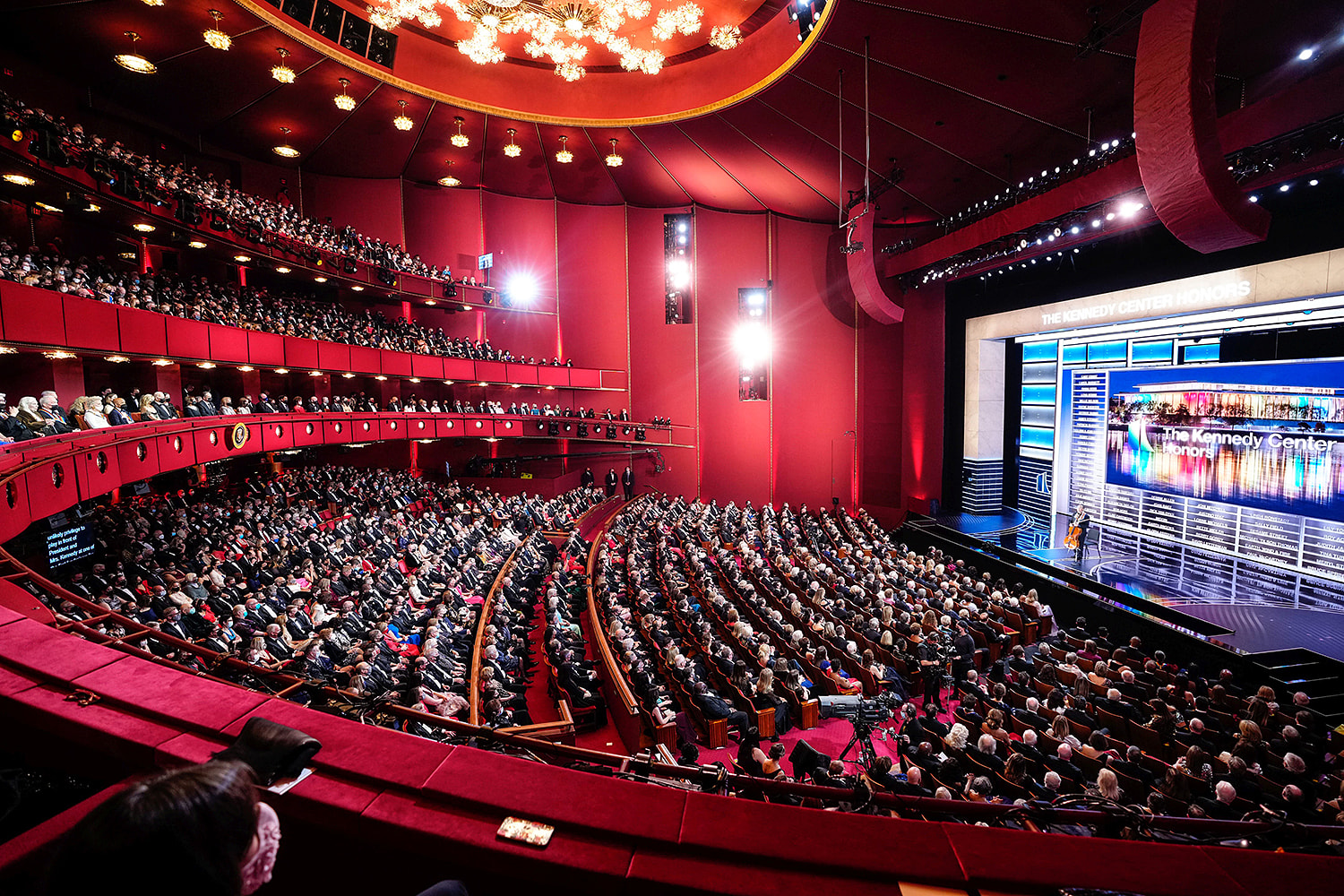
Cultural institutions frequently build their brand equity around a singular, monumental physical location. The Kennedy Center Opera House functions as both a stage and a structural anchor for the Honors broadcast. When an organization relies on a fixed spatial asset for its flagship product, it assumes a fixed-cost and fixed-environment risk profile. Meanwhile, you can explore other events here: Why The Death Of The Green Wave Is The Best Why Roman Polanski is the Acid Test Hollywood is Failing.
The structural mechanics of this vulnerability manifest across three distinct vectors:
- Acoustical and Broadcast Calibration: High-end televised arts events require deeply customized spatial engineering. Audio dispersion, lighting rigs, and camera sightlines are hard-coded into the architecture of the permanent venue over decades of iteration. Moving off-site forces a complete recalibration of these variables, introducing execution variance that seasoned production teams seek to avoid.
- Stakeholder Expectation Management: Elite cultural galas trade on exclusivity and institutional permanence. A change in venue alters the perceived value proposition for donors, honorees, and attendees who purchase tickets based on an established sensory and social environment.
- Regulatory and Union Agreements: Permanent cultural venues operate under long-standing collective bargaining agreements with local stagehand unions, security frameworks, and municipal permitting structures. Dislocating the event requires establishing new operational pacts under compressed timelines, raising the friction coefficient of execution.
The Cost Function of Institutional Displacement
Analyzing the decision to move the ceremony requires evaluating the operational cost function. When an event of this magnitude shifts venues, the financial equation alters across fixed and variable expenditures. To see the bigger picture, we recommend the detailed article by The Hollywood Reporter.
$$Total Cost = F_{base} + V_{transport} + R_{friction} + \mathbb{E}(Risk)$$
Where $F_{base}$ represents standard production overhead, $V_{transport}$ captures the logistics of moving personnel, sets, and equipment, $R_{friction}$ accounts for the inefficiencies of operating in a non-optimized facility, and $\mathbb{E}(Risk)$ denotes the probabilistic cost of broadcast disruption or brand dilution.
Under normal operating conditions, $R_{friction}$ approaches zero because the host venue's permanent staff and systems are optimized for the workflow. Dislocation spikes $R_{friction}$ exponentially. To offset this, executive leadership must balance the marginal cost of relocation against the opportunity cost of cancellation or postponement. In elite event management, postponing a globally televised broadcast damages long-term syndication value and advertising commitments far more than absorbing the financial inefficiency of a move.
Logistics as a Strategic Bottleneck
The logistical complexity of executing a multi-act, star-studded performance gala outside a purpose-built facility creates a strict execution bottleneck. Unlike touring theatrical productions that spend weeks in tech rehearsals at each new stop, a one-off televised gala operates on a zero-tolerance timeline.
The logistical framework breaks down into interdependent phases:
- Site Auditing and Retrofitting: Assessing a temporary venue's load-bearing capacities, power grids, and rigging points to support broadcast-grade technical loads.
- Replication of Front-of-House Experience: Translating the VIP arrival, red carpet, and seating hierarchy into a spatial layout that may not naturally accommodate high-security logistics.
- Broadcast Integration: Aligning outside broadcast trucks, fiber optic lines, and redundant power sources with an exterior facility's infrastructure.
Failing at any single node in this sequence jeopardizes the live or live-to-tape broadcast, threatening millions of dollars in media rights and corporate sponsorship obligations.
Brand Equity Preservation Under Duress
When a legacy institution alters its operational footprint, public relations strategies typically default to defensive messaging. However, from a strategic positioning standpoint, forced relocation offers an unscripted opportunity to demonstrate organizational resilience.
Institutions that successfully navigate physical displacement transition their brand narrative from static monumentality to dynamic adaptability. The risk, conversely, is dilution. If the alternative venue fails to project the requisite prestige, the event risks looking diminished, signaling to sponsors and cultural elites that the institution's core draw is fragile.
To insulate brand equity during structural shifts, leadership must over-index on production value within the new environment. If the physical architecture cannot provide automatic prestige, the programming, talent curation, and broadcast execution must compensate for the deficit.
Strategic Forecast
The precedent set by decoupling the Kennedy Center Honors from its flagship venue establishes a new baseline for cultural risk management. Future institutional planning will increasingly incorporate modularity into flagship events, treating physical venues as variable rather than permanent inputs. Organizations that fail to build operational flexibility into their production models will remain structurally vulnerable to deferred maintenance, municipal disruptions, and facility downtime. The strategic imperative moving forward is not preserving the building at all costs, but decoupling the cultural product from spatial dependencies while retaining its elite market positioning.