The Department of the Interior’s 2026–2030 strategic plan marks a fundamental shift in American land management: transitioning the federal government from a perpetual land steward to an active liquidator of the public domain. By explicitly targeting a net reduction in the roughly 500 million acres under Interior jurisdiction, the administration is attempting to resolve urban housing bottlenecks, industrial energy demand, and fiscal management overhead through asset divestiture. However, surface-level reporting misses the structural reality: federal land sales operate as an asymmetric, one-way ratchet constrained by statutory hurdles, municipal infrastructure deficits, and the fiscal mechanics of western states.
To evaluate whether Interior Secretary Doug Burgum’s blueprint can actually shrink the federal estate, one must analyze the policy through the mechanisms of public finance, statutory law, and land-use economics. You might also find this connected story insightful: The Real Reason Brazil Fined Facebook $1.3M Over Election Orders.
The Three Pillars of the 2026–2030 Divestiture Strategy
The administration's objective to decrease federal ownership rests on three operational mechanisms outlined in the November 2026 strategic framework.
- Asset Triage and Core Consolidation: Agency officials propose shedding peripheral parcels so the department can concentrate capital and personnel on what it terms "nationally significant" lands. In portfolio management terms, this is an attempt to offload high-maintenance, fragmented acreage—often isolated Bureau of Land Management (BLM) checkerboard parcels—to reduce operational liabilities and deferred maintenance backlogs.
- Acquisition Freeze and Capital Redirection: Decreasing the net federal estate requires halting expansion while executing sales. The strategic plan calls for redirecting dedicated conservation funds previously earmarked for purchasing new federal acreage, ensuring the inventory cannot grow through traditional acquisition channels.
- Targeted Transfer for Housing and Compute Infrastructure: Rather than broad, unguided auctions, the policy aligns land disposal with two specific economic pressures: the national housing deficit, estimated by Housing and Urban Development Secretary Scott Turner at roughly 7 million homes, and the physical footprint required for artificial intelligence data centers and their accompanying power generation. Under this framework, transfers are prioritized for states, tribes, local governments, and strategic infrastructure developers.
The Fiscal Asymmetry of Western Land Ownership
The primary economic argument for divestiture stems from the geographic concentration of the federal estate. Across the American West, federal agencies control vast percentages of state territory—approaching 80 percent in Nevada. Standard municipal finance theory highlights a structural distortion in these jurisdictions: local governments cannot levy property taxes on federally owned land. As extensively documented in detailed articles by NPR, the results are widespread.
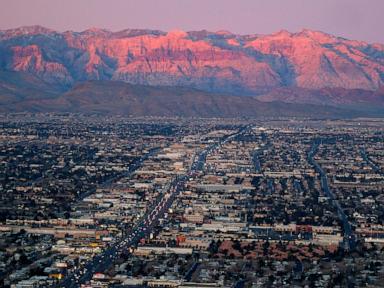
To offset this missing tax base, Congress relies on the Payments in Lieu of Taxes (PILT) program and revenue-sharing formulas tied to timber, grazing, and mineral extraction. Yet PILT disbursements rarely match the ad valorem property tax revenue generated by private commercial or residential development. For rapidly growing metropolitan areas like Las Vegas or Salt Lake City, surrounding federal parcels act as an artificial supply constraint, driving up land values within the urban growth boundary and compressing housing affordability.
Selling or transferring peripheral BLM parcels to states and municipalities theoretically corrects this market distortion. It unlocks developable acreage, expands local property tax rolls, and shifts the burden of land administration from federal taxpayers to local jurisdictions.
The hidden cost function, however, is infrastructure capitalization. Raw BLM desert or scrubland lacks water rights, wastewater treatment capacity, electrical grid interconnects, and road networks. When a municipality acquires federal land for housing—as previously explored on a smaller scale under the Biden administration and aggressively expanded under Burgum and Turner—the immediate fiscal impact is not a windfall, but a massive capital expenditure liability. In arid western basins already operating under strict Colorado River water allocations, unlocking land without securing senior water rights creates stranded development assets rather than affordable housing.
Statutory Constraints and the Congressional Bottleneck
A strategic plan issued by an executive agency is an administrative roadmap, not self-executing legislation. Executing large-scale federal land sales requires navigating a rigid statutory architecture that severely limits unilateral executive action.
- The FLPMA Mandate: Since the passage of the Federal Land Policy and Management Act (FLPMA) of 1976, the default policy of the United States is that public lands remain in federal ownership unless disposal serves a specific, narrowly defined national interest. Under FLPMA, the BLM can sell small, isolated tracts that are difficult or uneconomic to manage, provided they pass rigorous environmental reviews and land-use planning amendments. Large-scale divestitures—such as Utah Senator Mike Lee’s prior proposal to sell over 2 million acres—cannot be executed through administrative rulemaking alone.
- Congressional Authorization: Major transfers or sales require explicit congressional authorization. Following the November 2026 midterm elections, legislative math poses a severe obstacle. Ranking Democrats on the House and Senate natural resources committees, including Senator Martin Heinrich and Representative Jared Huffman, have pledged unified opposition to privatization.
- The Bipartisan Western Coalition: Opposition to federal land sales is not strictly partisan. Western Republicans frequently break ranks when divestiture threatens public access for hunting, angling, and recreation. Former Interior Secretary and Montana Representative Ryan Zinke immediately objected to the November 2026 plan, reflecting a durable political reality in the Mountain West: rural voters oppose federal overreach in regulation, yet fiercely protect public access to federal acreage. Private ownership inevitably results in locked gates, eroding the outdoor recreation economy that underpins rural western counties.
The One-Way Ratchet and Resource Privatization
Beyond housing, the 2026–2030 plan explicitly links land disposal and resource extraction to the buildout of "Super Intelligence data centers" and domestic energy production. Here, the economic mechanism shifts from urban real estate to industrial permitting arbitrage.
Developing energy infrastructure, mining operations, or hyperscale data centers on federal land triggers the National Environmental Policy Act (NEPA), Endangered Species Act consultations, and lengthy public comment periods. Even with recent Senate legislation aimed at accelerating federal energy permitting, multi-use mandates on public lands expose industrial operators to litigation from conservation groups.
Transferring title from the federal government to private entities or state land boards alters the regulatory baseline. Once a parcel exits the federal estate, federal multi-use mandates evaporate, and NEPA review generally applies only if a distinct federal nexus—such as a Clean Water Act permit—remains. For data center developers seeking gigawatt-scale power interconnects and rapid construction timelines, privatized land eliminates federal surface-management friction.
This dynamic creates an irreversible structural asymmetry—a one-way ratchet. Federal land sold at current market rates is permanently removed from the public ledger. Because the strategic plan simultaneously halts acquisition funding, the federal government cannot rebalance its portfolio by acquiring high-value ecological corridors elsewhere. Furthermore, because future administrations are not bound by a predecessor's four-year strategic plan, any divestiture that is not finalized and legally transferred before January 2029 faces immediate reversal. This creates a compressed, high-stakes window where the administration must prioritize speed over comprehensive valuation.
Strategic Forecast and Execution Pathways
Given the statutory barriers in Congress and the resistance from western sportsmen coalitions, the Interior Department will fail to achieve a massive, multi-million-acre reduction in the federal estate through direct legislative sales. Instead, stakeholders—including state land boards, municipal planners, energy developers, and conservation organizations—should anticipate execution through three lower-friction administrative channels:
- Targeted FLPMA Disposals Near Urban Peripheries: The BLM will accelerate administrative sales of small, fragmented parcels immediately adjacent to expanding western cities under existing FLPMA authority, framing them strictly as affordable housing initiatives to neutralize bipartisan pushback.
- Long-Term Ground Leases Over Fee-Simple Sales: Where transferring outright title proves politically or legally impossible, the Interior Department will pivot to 50-to-99-year industrial leases for hyperscale data centers and energy generation, achieving functional privatization without triggering the statutory tripwires of a permanent land sale.
- State and Tribal Land Exchanges: The administration will utilize equal-value land swaps with state trust land offices and tribal nations to consolidate checkerboard ownership. This allows states to acquire high-development-potential parcels near infrastructure corridors while handing isolated interior parcels back to federal agencies, bypassing the optics of selling public land to private corporations.
For municipal leaders and private developers evaluating these parcels, the critical metric is not the federal auction price, but the fully burdened cost of water adjudication and grid interconnection. Acquiring discounted federal acreage without secured utility capacity will simply transfer a management liability from the Department of the Interior's balance sheet onto local taxpayers.