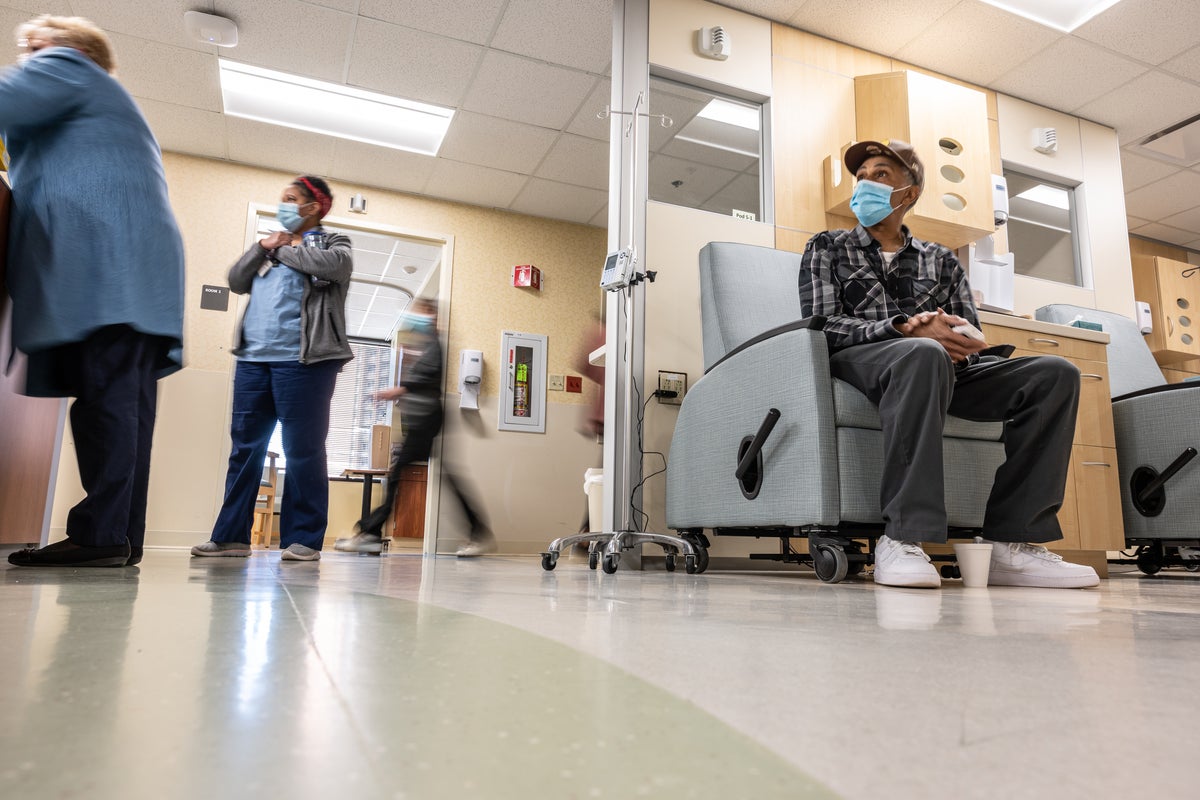
Five people just walked out of a medical facility in eastern Congo alive. In almost any other medical context, five recoveries wouldn't make international headlines. But when the pathogen in question is a rare, hyper-deadly variant of Ebola with zero approved vaccines or specific treatments, those five people represent something massive. They represent a blueprint for survival.
The World Health Organization chief Tedros Adhanom Ghebreyesus recently landed in Bunia, the capital of the conflict-ridden Ituri province in the Democratic Republic of the Congo. He was there to open a new Ebola treatment center and mark these recoveries. It is a rare moment of optimism in what has quickly devolved into a brutal, complex public health emergency. If you liked this post, you should look at: this related article.
The current outbreak involves the Bundibugyo virus. It is a strain that hasn't caused a major epidemic in years, meaning global stockpiles of Ebola tools are practically useless right now. The medical community is essentially playing catch-up against a clock that moves entirely too fast.
The Threat of the Bundibugyo Variant
Most people hear "Ebola" and think of the Zaire strain. That is the variant responsible for the catastrophic West African outbreak a decade ago and the major 2018 epidemic in eastern Congo. Because of those crises, scientists developed highly effective weapons like the Ervebo vaccine and monoclonal antibody treatments. For another angle on this story, check out the recent coverage from CDC.
Bundibugyo is an entirely different beast.
Those shiny new vaccines don't work against it. The existing therapeutics don't work either. When the outbreak quietly began in late April, local health facilities ran initial diagnostic tests designed for the Zaire strain. The results came back negative. Because of that diagnostic mismatch, the virus circulated completely unchecked for weeks in mining communities like Mongbwalu before anyone realized what they were actually dealing with.
Right now, the numbers are sobering. Official reports indicate more than 900 suspected cases and over 220 deaths in the Congo alone. Neighboring Uganda has already logged confirmed cases and a death, prompting frantic border tracking. The World Health Organization puts the current mortality rate between 30% and 50%. Basically, if you catch it, you have a coin-flip's chance of dying without rapid intervention.
Inside the Survival Strategy
If there are no drugs and no vaccines, how did those five patients walk out of the Bunia facility?
The answer lies in aggressive, high-quality symptomatic care. It sounds basic, but it requires meticulous clinical execution. Ebola kills primarily through dehydration, electrolyte imbalance, and organ failure caused by severe vomiting and diarrhea.
Medical teams on the ground are achieving these recoveries by implementing a strict protocol.
- Immediate Intravenous Fluid Replacement: Keeping up with the catastrophic fluid loss to protect kidney function.
- Electrolyte Correction: Carefully balancing potassium, sodium, and calcium levels to prevent cardiac arrest.
- Secondary Infection Control: Deploying broad-spectrum antibiotics and antimalarials because patients often suffer from co-infections.
- Nutritional Support: Forcing the body to maintain energy levels even when the gastrointestinal tract is under total siege.
Dr. Davin Ambitapio, a physician working at the new Bunia center, pointed out that this specific variant does not seem quite as aggressive as past Zaire outbreaks, provided clinicians catch it early. The real medicine here isn't a breakthrough molecule. It is timing and basic clinical infrastructure.
Guns, Rumors, and False Negatives
Treating a hemorrhagic fever is hard enough in a sterile, modern hospital. Doing it in eastern Congo is a logistical nightmare. The region is a patchwork of active conflict zones.
In Ituri and North Kivu, health workers aren't just fighting a virus. They are navigating territory controlled by armed groups like the Allied Democratic Forces and the M23 rebel militia. These conflicts have already displaced hundreds of thousands of people, creating a highly mobile, vulnerable population that makes contact tracing nearly impossible.
Then there is the human element. Public health responses often fail because outsiders march into traumatized communities waving syringes and demanding changes to deeply sacred traditions.
In eastern Congo, standard Ebola safety protocols dictate that victims must be buried in body bags by teams in full protective gear. To locals, this looks like strangers stealing their loved ones and denying them proper burial rites. The friction has turned violent. At least three health centers have faced direct attacks from angry residents.
When people are terrified of the medical response, they hide their sick. They treat them at home, exposing entire families. By the time a patient finally arrives at a triage point, they are often too far gone for standard supportive care to save them.
The Real Priorities for Containment
International aid is finally hitting the tarmac. Cargo planes from the European Union recently dropped off metric tons of masks, gloves, and boots in Bunia. The United States boosted its funding commitment to over $112 million. But throwing money at an epidemic doesn't fix a broken pipeline.
If the international community wants to keep this from turning into a continental crisis, the playbook needs to shift immediately.
First, testing capacity has to expand directly into rural mining zones. Waiting days for samples to travel down treacherous roads to Kinshasa for genetic sequencing kills patients. Doctors need rapid, decentralized diagnostic toolkits that specifically flag the Bundibugyo strain on day one.
Second, community leaders must run the risk communication strategy. Western aid workers or government officials from the capital shouldn't be the ones explaining burial adjustments to grieving families. Local elders, religious leaders, and trusted traditional healers need to be integrated into the response. If the community doesn't own the containment strategy, the strategy fails.
Finally, the Africa CDC and global partners have to fast-track clinical trials for Bundibugyo candidate vaccines. The Africa CDC head recently stated they hope to have candidate options deployed by the end of the year. That timeline needs to shrink.
The five recoveries in Bunia prove that Ebola is not an automatic death sentence, even without a silver-bullet cure. Survival is entirely possible through basic, aggressive medical care. The hurdle isn't the science. It is the logistics, the security, and the trust required to get sick people through the clinic doors before it's too late.