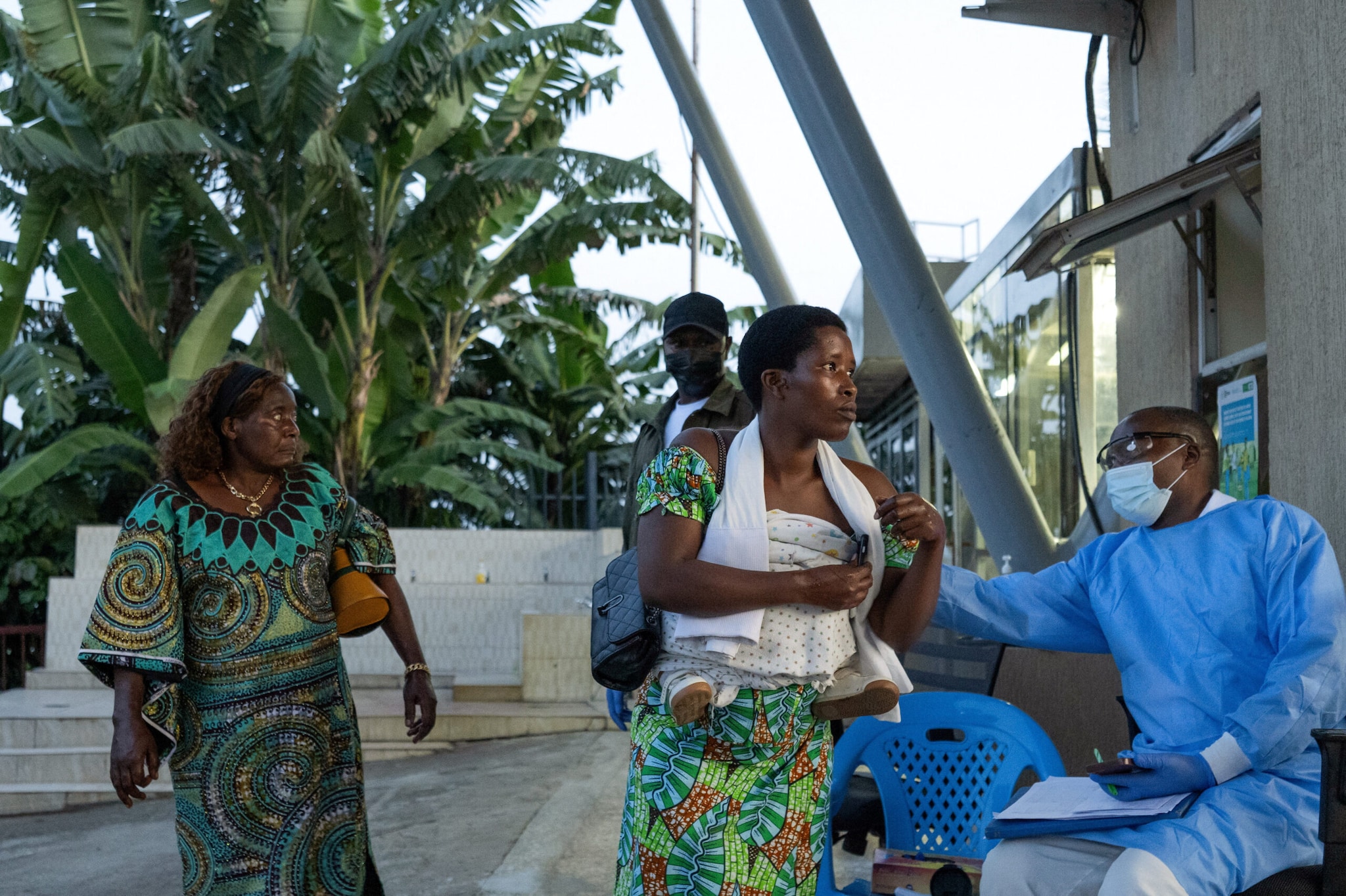
The World Health Organization has convened an emergency committee meeting following a rapid escalation of a new Ebola outbreak in the Democratic Republic of the Congo and neighboring Uganda. The suspected death toll has spiked sharply to at least 131 people out of 513 suspected cases, health authorities confirmed. This sudden surge forced the WHO to declare the outbreak a Public Health Emergency of International Concern. Unlike recent epidemics that relied on stockpiled medical defenses, this specific crisis involves the rare Bundibugyo strain, for which there is no approved vaccine or therapeutic treatment, creating a critical vulnerability in global health security.
Why the Bundibugyo Strain Changes the Playbook
For nearly a decade, global health agencies treated Ebola outbreaks with a degree of structural predictability. When the highly prevalent Zaire strain surfaced, response teams deployed Merck’s Ervebo vaccine, alongside proven monoclonal antibody treatments, to effectively ring-fence infections.
This outbreak shatters that safety net.
The Bundibugyo virus is genetically distinct. It possesses a fatality rate that can climb up to 50 percent, yet the scientific community has largely left it on the shelf of neglected tropical diseases. The current diagnostic framework is severely lagging, forcing health workers to rely heavily on symptom-based clinical definitions rather than definitive laboratory confirmation. Out of hundreds of cases, only a small fraction have undergone full laboratory testing.
Confronting an aggressive hemorrhagic fever without medical countermeasures changes the entire strategy. Containment shrinks back to the brutal basics of 20th-century epidemiology: absolute isolation, manual contact tracing, and relying on basic personal protective equipment to keep health workers alive.
Conflict, Gold, and the Failure of Early Warning Systems
Public health never occurs in a vacuum. The geographic epicentre of this outbreak is northeastern Ituri province, a volatile region bordering Uganda and South Sudan.
Ituri is a highly active gold-mining hub. This creates an economic ecosystem where thousands of informal miners, traders, and migrant laborers constantly crisscross borders through unmonitored jungle tracks. Compounding the issue, parts of the region, including the vital provincial capital of Goma, are actively controlled or threatened by armed militia groups like the Rwanda-backed M23.
[Epicentre: Ituri Gold Hub] ──> Highly Mobile Mining Populations
                                  │
                                  ├──> Spread to North Kivu (Butembo)
                                  │
                                  └──> Cross-Border Transmit (Kampala, Uganda)
The political reality on the ground actively crippled early containment efforts. Congolese Health Minister Samuel Roger Kamba openly admitted that the initial community alerts circulated far too slowly. In many remote mining communities, early hemorrhagic symptoms were misattributed to local mystical origins or poisoning rather than a viral pathogen.
By the time formal medical channels recognized the pattern, the virus had already established a foothold in major commercial centers. Suspected cases are now tracked in Butembo, a dense trading hub roughly 200 kilometers from ground zero, and cross-border transmission has already claimed a life in the Ugandan capital of Kampala.
The Global Escalation and Medical Casualties
The vulnerabilities of this response are amplified by the rising infection rate among frontline medical staff. When an Ebola strain slips into local clinics undetected, healthcare workers inadvertently become vectors. This internal amplification has triggered panic within local health zones and prompted the WHO to immediately release $3.9 million in emergency contingency funding.
The crisis has also broken through international borders via the humanitarian apparatus itself.
An American physician working for the aid organization Serge in Bunia tested positive for the virus after exposure during clinical duties. The US Centers for Disease Control and Prevention confirmed the infection, initiating an emergency evacuation protocol to transport the doctor and six other exposed American personnel to specialized isolation facilities in Germany. In tandem, Washington has implemented strict border measures, banning entry for foreign nationals who have recently traveled through the DRC, Uganda, or South Sudan.
The Containment Deficit
The emergency assembly in Geneva faces a stark operational truth: sending money and shipping traditional crates of supplies will not solve a logistical deadlock caused by active warfare and deep systemic mistrust.
Six tons of emergency medical cargo arrived in Kinshasa to reinforce local hospitals, but moving these supplies across broken infrastructure and through militia-held checkpoints remains a logistical nightmare. International experts are currently debating whether existing Zaire-strain vaccines can offer any cross-protective efficacy against the Bundibugyo variant, though the historical data suggests minimal protection.
Relying on unproven medical interventions is a gamble born of desperation. If the emergency committee cannot establish secure humanitarian corridors and deploy rapid, field-ready diagnostic labs to Ituri immediately, the virus will continue to outpace the bureaucratic timeline of global public health agencies. Containment hinges entirely on local community trust, a resource currently as scarce as an effective vaccine.