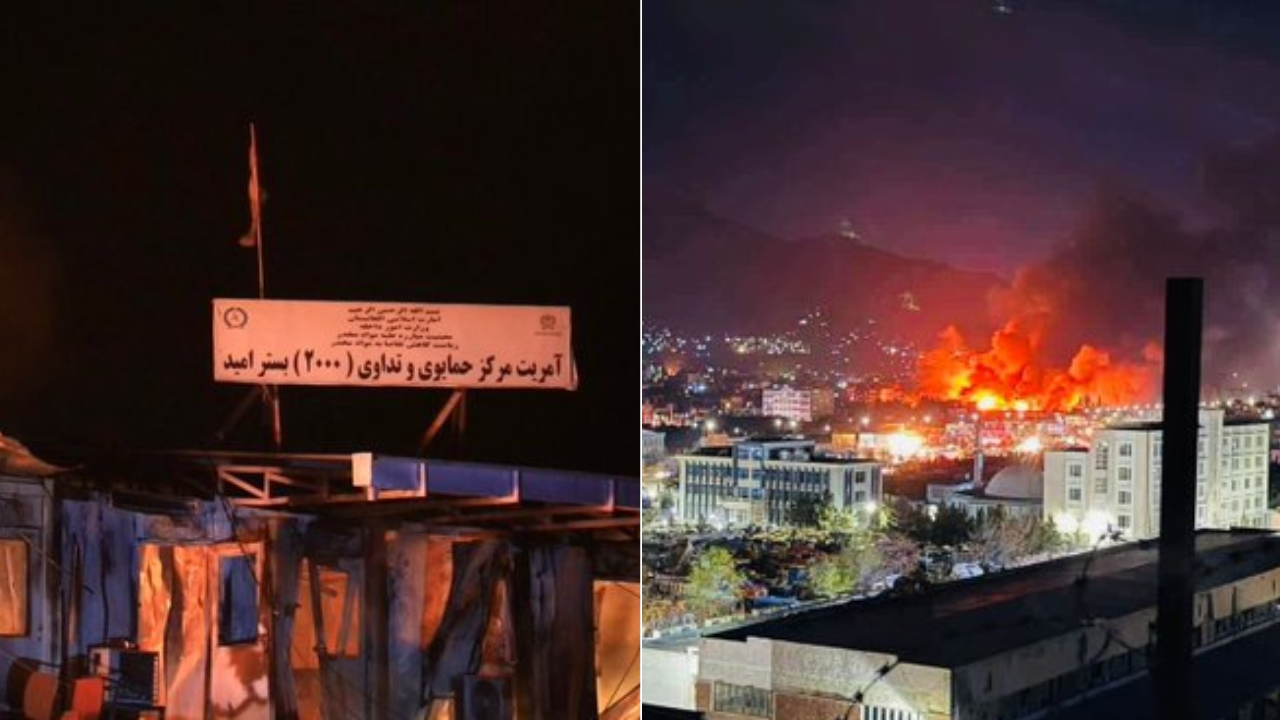
The air in Khost doesn't just sit; it clings. It is a thick, chalky veil of fine sediment that tastes of old stone and sun-scorched earth. On a typical Tuesday, the only sound breaking the stillness is the rhythmic low hum of prayers or the occasional rattle of a motorbike. But when the sky tore open, that silence didn't just break. It evaporated.
In the blurred geometry of modern warfare, a coordinate is just a string of numbers typed into a console miles away from the heat. To a pilot or a drone operator, a building is a shape. A "military infrastructure" target is a box to be checked. But on the ground, those numbers represent the thin line between a recovery ward and a graveyard. When Pakistani jets crossed the border into Afghan airspace, the mission was framed as a surgical strike against terror. The reality left behind in the rubble of a drug rehabilitation center tells a story that no official press release can sanitize.
Four hundred people.
To visualize that, do not think of a statistic. Think of a crowded wedding hall. Think of every seat in a medium-sized theater filled with brothers, fathers, and sons. Now, imagine that room collapsing in a roar of white heat and grey concrete. The victims weren't soldiers. They were men in the middle of the hardest fight of their lives—the fight to reclaim their humanity from the grip of poppy-borne shadows.
The Architecture of a Mistake
The facility in Khost was a place of fragile hope. In a region where the drug trade is both a curse and a dark economy, rehab centers are the only sanctuary for those trying to crawl out of the abyss. These men were at their most vulnerable, stripped of their defenses, huddling together to survive withdrawal.
Then came the impact.
Precision is the word often used by military spokespeople. They speak of "intelligence-led operations" and "neutralizing threats." When Pakistan launched these strikes, the stated objective was the elimination of Tehrik-i-Taliban Pakistan (TTP) hideouts. The narrative was simple: militants are using Afghan soil to launch attacks across the border, and we are taking out the source.
The math of the aftermath, however, refuses to add up.
When a rehab center is struck instead of a munitions dump, the intelligence isn't just flawed. It is catastrophic. The "military infrastructure" Islamabad claimed to hit was, in fact, a collection of beds, medical supplies, and men who were barely strong enough to stand, let alone hold a rifle.
The Invisible Stakes of a Border at War
The relationship between Pakistan and Afghanistan is a jagged scar that refuses to heal. For decades, the Durand Line has been less of a border and more of a suggestion—a porous stretch of mountains where families, militants, and shadows cross with ease.
But something shifted recently.
The patience in Islamabad has worn thin. As domestic terror attacks within Pakistan spiked, the finger-pointing toward Kabul became more aggressive. The Taliban government in Afghanistan maintains they aren't harboring anyone. Pakistan insists they are. This isn't just a diplomatic spat; it is a tinderbox.
Consider the hypothetical life of a man named Ahmad. Ahmad isn't a fighter. He is a carpenter from Khost who lost his shop and found solace in a needle. His family scraped together enough money to put him in the rehab center. They thought he was safe there. They thought the walls of a medical facility were a universal signal of "neutral ground."
When the missiles hit, Ahmad didn't die for a cause. He died because his bed happened to be located in a region that someone, somewhere, decided was a "zone of interest."
This is the hidden cost of cross-border strikes. It isn't just the immediate loss of life. It is the total erosion of trust. Every time a civilian structure is hit, the very militants the strikes are meant to deter find a fresh crop of grieving brothers ready to listen to their rhetoric. You cannot bomb an ideology out of existence if your bombs are providing that ideology with its most potent recruitment footage.
The Geometry of Ruin
The scene after the dust settled was one of surreal stillness. Rescue workers didn't find bunkers. They found plastic water bottles, torn prayer beads, and the unmistakable, lingering scent of antiseptic mixed with cordite.
Four hundred deaths make this one of the deadliest single incidents in the ongoing friction between these two nations. It forces a question that most officials would rather avoid: At what point does the "collateral damage" outweigh the strategic gain?
If the goal was to make Pakistan safer, the result has likely achieved the opposite. The Afghan sky is now a source of terror for the locals, and the Taliban leadership in Kabul—already isolated—now has a blood-stained grievance to brandish on the international stage.
Logic suggests that if you want to stop a fire, you don't throw gasoline on the neighbor's house. Yet, the regional strategy seems stuck in a loop of escalation.
- An attack happens inside Pakistan.
- Intelligence points to a border region in Afghanistan.
- Air assets are deployed for a "quick win."
- The "quick win" results in a tragedy that fuels the next ten years of resentment.
Beyond the Official Ledger
The official reports will list 10 things to know. They will talk about the flight paths, the weight of the ordnance, and the diplomatic protests filed in the hours following the smoke. They will debate whether the TTP was actually present or if they had moved days before.
None of that matters to the families in Khost.
To them, the world is now smaller and darker. They see a neighbor who is willing to bypass the complexity of human life for the simplicity of a "target neutralized" report. They see a world that watches the death of 400 people in a rehab center and moves on to the next news cycle within forty-eight hours.
The tragedy in Khost is a reminder that in the theater of war, the most expensive thing you can lose isn't a jet or a missile. It is the moral high ground.
When the sun sets over the mountains tonight, the dust will finally settle. The craters will remain. The beds will stay empty. And the men who were trying to find a way back to life have instead been buried by a "precision" that couldn't tell the difference between a patient and a predator.
Blood dries quickly in the Afghan heat, but the stains on the conscience of a region do not wash away with the next rain.


