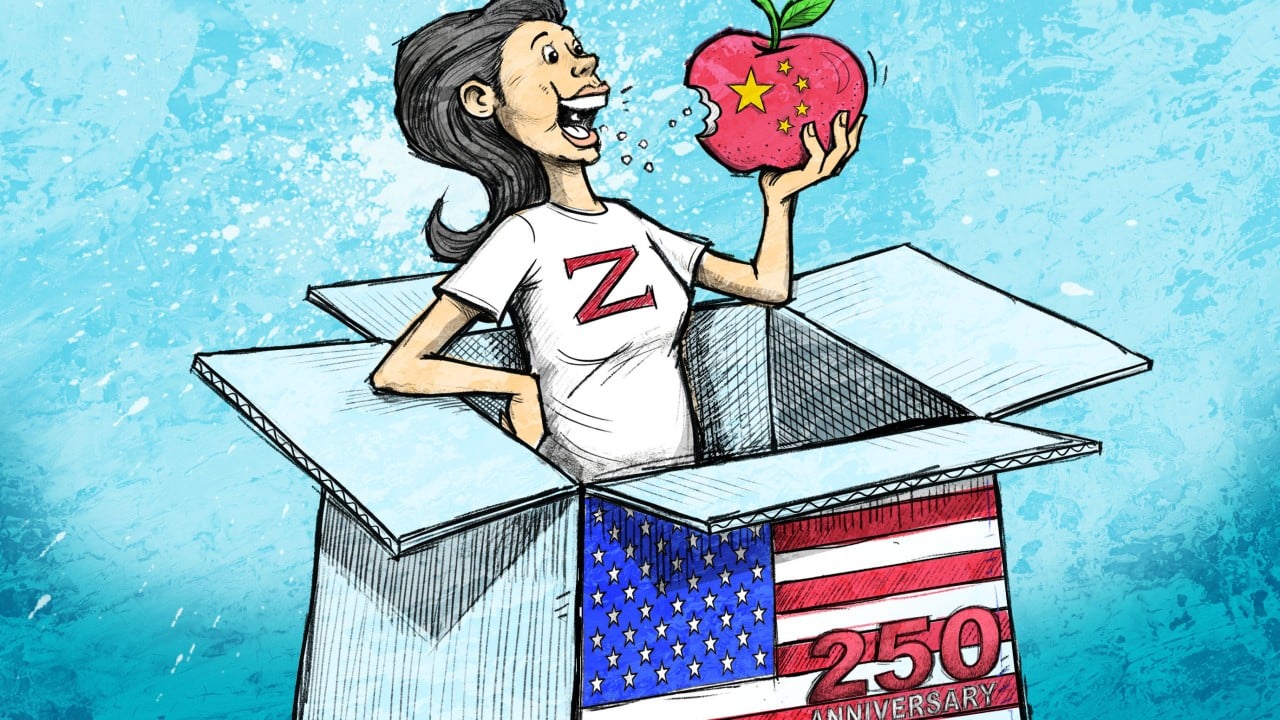
As the United States marks its semiquincentennial, a quiet, high-stakes ideological battle is playing out within the fastest-growing demographic in the country. Young Asian Americans are finding themselves caught between a rising tide of domestic xenophobia and the aggressive diaspora-targeting strategies of an increasingly assertive Chinese state. The comfortable narrative of the immigrant success story is fracturing under the weight of geopolitical rivalry. For the generation coming of age today, identity is no longer just a matter of cultural heritage or personal expression. It has become a geopolitical battleground.
The New Era of Geopolitical Suspicion
Living as a hyphenated American has always required balancing two worlds. But the current polarization between Washington and Beijing has transformed that balance into a tightrope walk. A toxic mix of domestic political rhetoric and sweeping national security initiatives has revived old tropes of the perpetual foreigner.
This is not abstract paranoia. The legacy of programs like the Department of Justice’s China Initiative, despite its official termination, continues to cast a long shadow over academia, research labs, and corporate offices. Young professionals entering fields like aerospace, artificial intelligence, and advanced computing report an unspoken chill. They face stricter vetting, subtle exclusion from sensitive projects, and the persistent, exhausting requirement to prove their loyalty to a country that still views their surnames with suspicion.
Simultaneously, the Chinese government has intensified its own efforts to project soft power and cultivate influence among overseas Chinese communities. Through state-backed cultural programs, youth summer camps, and highly sophisticated digital campaigns on platforms like WeChat and Xiaohongshu, Beijing seeks to conflate ethnic pride with political loyalty to the Chinese Communist Party. For a young person struggling to feel fully accepted in the United States, the warm embrace of a rising global superpower can look deceptively welcoming.
The Fractured Diaspora
The mistake most analysts make is treating Asian Americans, or even Chinese Americans, as a monolith. The reality on the ground is a complex web of ideological, generational, and regional divisions that defy simple categorization.
The Generational Divide
Older immigrants who left China in the late twentieth century often hold deeply ingrained memories of political instability or economic hardship. Their relationship with the homeland is frequently colored by these experiences, leading to either fierce anti-communism or a pragmatic desire to maintain family ties while keeping their heads down.
In contrast, their American-born children view the world through a radically different lens. They did not experience the hardships of early reform-era China, nor do they share their parents' single-minded focus on economic assimilation. They are highly educated, politically active, and deeply attuned to systemic inequalities within American society. When they criticize US foreign policy or call out domestic anti-Asian racism, they are not acting as agents of a foreign power. They are exercising their rights as American citizens. Yet, to outside observers and conservative commentators, this critique is frequently mischaracterized as disloyalty.
The Information Ecosystem Disruption
The digital spaces where these identities are forged are profoundly compromised. While older generations rely heavily on traditional Chinese-language media and WeChat networks often flooded with Beijing-friendly narratives, younger diaspora members live on TikTok, Instagram, and X.
On these American platforms, they encounter a different kind of pressure. Algorithms amplify extreme viewpoints, forcing complex geopolitical realities into binary boxes. A young filmmaker trying to celebrate Chinese traditional dress can be accused of carrying water for a totalitarian regime by Western users, while simultaneously being attacked by Chinese nationalists online for not being patriotic enough. The space for nuanced, independent identity is shrinking by the day.
The Transnational Repression Reality
The pressure is not just digital or psychological. It manifests in concrete, often frightening ways through state-sponsored harassment that reaches directly into American neighborhoods and universities.
Transnational repression has emerged as a major national security concern, yet its primary victims are the very people often suspected of complicity. Chinese international students and young green-card holders on American campuses face constant surveillance by state-aligned student groups. Speaking out in a seminar about human rights in Hong Kong, Xinjiang, or Tibet can result in immediate, chilling consequences for family members back home.
This creates a pervasive culture of self-censorship. Young activists find themselves isolated, unable to trust their peers and deeply disillusioned by the inability of American institutions to protect them. The university, long idealized as a bastion of free speech, becomes a minefield of potential betrayal.
Redefining the American Experiment
The challenges facing this generation are a symptom of a broader structural failure. The United States is struggling to separate legitimate national security concerns regarding the Chinese state from the civil liberties of its own citizens.
When political leaders use sweeping, incendiary language to describe the threat posed by Beijing, they inadvertently paint a target on the backs of millions of Americans. The historical precedents are grim, from the Chinese Exclusion Act to the internment of Japanese Americans during World War II. While the current environment has not reached those extremes, the underlying mechanism of collective punishment remains dangerously active.
To navigate this landscape, young Asian Americans are moving away from traditional assimilation models. They are rejecting the pressure to be model minorities who remain silent on political matters. Instead, new grassroots organizations and intellectual circles are forming to articulate a distinct identity, one that is fiercely critical of both American systemic racism and Chinese authoritarianism.
This independent path is fraught with difficulty. It satisfies neither the hawks in Washington nor the nationalists in Beijing. It requires a high degree of political literacy and emotional resilience to maintain a position that refuses to be co-opted by either side of a new Cold War.
The true test of the American project as it enters its next century will not be measured solely by its economic output or military readiness. It will be measured by its capacity to protect and integrate citizens of diverse heritages without demanding the erasure of their cultural identities or subjecting them to perpetual loyalty tests. For young Asian Americans, the struggle to define their place in this country is not a distraction from the geopolitical contest of the twenty-first century. It is the defining front line.