Most dry hair recommendations treat a structural degradation problem as if it were a simple water shortage. When a strand of hair feels rough, brittle, or dull, reaching for a richer mask or a heavier oil addresses sensory friction for a few hours, yet leaves the underlying fiber vulnerable to the exact same environmental and mechanical stressors that caused the dryness in the first place.
A typical roundup of eight hydrating hair treatments clusters products around consumer feel, price tiers, or routine convenience—pairing whipped butters, moisturizing shampoos, bond builders, humectant masks, finishing oils, and leave-in sprays on a single shelf. That merchandising logic confuses plasticity and lubrication with internal water retention and structural integrity. Hair above the scalp is dead keratinized tissue. Once a fiber's outer lipid barrier erodes or its internal protein network fractures, water alone cannot heal it.
Evaluating dry hair treatments requires a mechanistic framework rather than a shopping list. Effective hair care operates across four functional layers: Barrier Preservation (protecting the hydrophobic lipid coat), Swelling Control (managing water ingress and hygral stress), Surface Lubrication (reducing inter-fiber friction), and Internal Reinforcement (addressing chemical or thermal bond disruption). Understanding how each product category maps onto these mechanisms—and where each one hits a hard ceiling—turns trial-and-error shopping into a repeatable system.
Deconstructing the Standard Hydrating Roundup
Retail roundups of dry hair treatments generally rely on three implicit assumptions: that "dryness" means a single uniform deficiency across all hair types, that adding richer ingredients automatically equals deeper hydration, and that combining multiple conditioning products compounds benefits linearly. In cosmetic chemistry and fiber mechanics, each of these assumptions breaks down under scrutiny.
First, perceived dryness is a symptom produced by multiple distinct pathways. A strand with an intact cortex but a stripped surface lipid layer—such as 18-methyleicosanoic acid covalently bound to the cuticle—loses natural hydrophobicity and surface slip, creating tangles and dullness even before deep structural damage occurs. Conversely, bleached or heat-stressed hair often exhibits elevated porosity and disrupted internal keratin bonds, allowing water to enter rapidly and exit just as quickly while leaving the fiber mechanically weak. Grouping a hyaluronic acid rinse-out mask, a peptide leave-in, a heavy butter mask, and a finishing oil under the same "hydrating" umbrella masks completely different biochemical jobs.
Second, richer textures do not automatically equal superior moisture retention. Heavy plant butters and dense oils sit largely on the exterior surface. On fine hair, excessive surface lipids weigh down the fiber shaft and reduce volume; on high-porosity hair, surface occlusion without proper cleansing or structural support can coat a weakened fiber without restoring elasticity.
Third, layering multiple conditioning or moisturizing steps introduces diminishing returns and potential trade-offs. Hair fibers absorb water and swell—increasing in diameter and undergoing radial stress as the water-attracting cortex and endocuticle expand against the outer cuticle scales. Prolonged wet exposure or excessive conditioning cycles can contribute to repeated swelling-and-drying stress, commonly referred to in hair care as hygral fatigue. Adding more wet conditioning time is not a universal fix when excess water exposure itself stresses compromised fibers.
The Four-Pillar Framework for Dry Hair Interventions
To judge any hydrating treatment rigorously, separate established cosmetic science and fiber physics from educated hypotheses about consumer routines. It is a well-established fact that human hair has a layered architecture—an outer cuticle of overlapping scales, an underlying cortex responsible for mechanical strength, and surface lipids that influence friction, gloss, and water interaction. It is a practical, evidence-informed hypothesis—rather than a guaranteed universal rule—that matching a product's primary mechanism to a strand's specific damage profile produces more consistent results than rotating random "hydrating" picks.
Pillar 1: Cleansing and Lipid Preservation
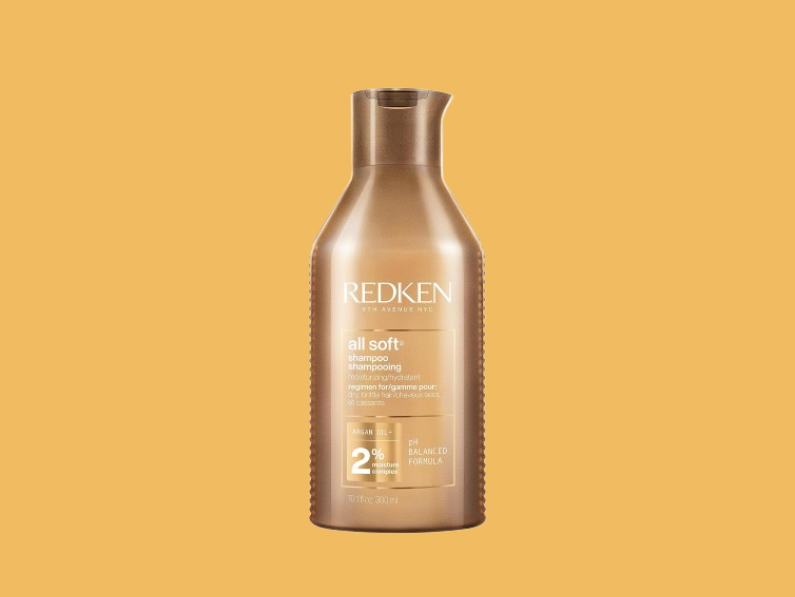
Cleansing is the hidden bottleneck in dry hair management. Harsh surfactants and frequent washing strip away surface lipids and increase mechanical friction during wet manipulation, leaving hair rough immediately after rinsing. A gentler, conditioning-oriented shampoo helps reduce detergent stripping and preserves surface smoothness compared with aggressive cleansing.
- What it solves: Excessive surfactant stripping and baseline friction during the wash step.
- Operational limitation: A mild shampoo cannot rebuild already-fractured internal keratin structures or seal split ends once damage has occurred. If scalp buildup or heavy product residue accumulates, overly gentle cleansing can leave hair feeling coated or flat over time.
Pillar 2: Humectants, Water Binding, and Swelling Dynamics
Humectant-rich masks and lightweight hydrators—such as formulas featuring hyaluronic acid derivatives or glycerin—aim to bind water and improve pliability without heavy residue. Because water acts as a plasticizer for keratin, controlled hydration makes hair feel softer and more flexible.
- What it solves: Short-term suppleness and lightweight conditioning for hair that gets weighed down easily by heavy butters or oils.
- Operational limitation: Water and humectants behave differently depending on ambient humidity and fiber condition. In very dry environments, humectants without an occlusive balance can struggle to hold moisture on the fiber, while excessive water uptake and prolonged wetness in porous or chemically treated hair can heighten swelling stress.
Pillar 3: Cuticle Slip, Emollients, and Occlusive Sealing
Conditioners, leave-in treatments, and finishing oils rely on cationic conditioning agents, emollients, and lipids—such as argan oil, squalane or hemisqualane, algae extracts, and plant butters—to smooth the cuticle, increase slip, and reduce friction during combing and styling. Lowering friction is critical because wet or tangled hair breaks easily under mechanical tension.
- What it solves: Tangling, surface roughness, frizz, and mechanical snagging during detangling and styling.
- Operational limitation: Surface smoothing and lipid coating improve how hair behaves and feels, but they act primarily as protective and lubricating layers rather than internal structural repairs. Over-application on fine textures creates limpness, and heavy occlusion without periodic clarification can cause buildup.
Pillar 4: Bond and Structure Reinforcement
When dryness stems from bleaching, permanent coloring, chemical services, or high heat, moisture alone often feels fleeting. Peptide-based treatments, bond-focused masks, and protein-supporting care target weakened structural links within the hair fiber so strands resist snapping under tension.
- What it solves: Brittleness and fragility in chemically processed or heat-damaged hair where standard conditioners wear off quickly.
- Operational limitation: Structural treatments are not magic erasers for split ends or severe cuticle loss. Even strong bond or peptide care works best alongside gentle handling and heat control; overusing rigid protein-heavy regimens without adequate conditioning slip can leave some hair feeling stiff rather than supple.
Cause-and-Effect Chains Most Routines Miss
Dry hair rarely comes from a single mistake; it usually emerges from a chain reaction between water, heat, and mechanical force.
The first chain is porosity-driven water cycling. Chemical lightening or heat exposure roughens the cuticle and increases porosity. More porous hair takes on water readily, swells when wet, and contracts as it dries. Repeating that cycle—especially when hair stays wet for long stretches or gets brushed aggressively while soaked—lifts cuticle edges further and accelerates breakage.
The second chain is friction compounding fragility. Dry, unlubricated strands catch on one another and on brushes, combs, or rough towels. Each snag pulls on already-stressed fibers, chipping cuticles and creating frayed ends that look even drier. Adding UV exposure or high-temperature styling tools on top of unsealed, high-porosity hair accelerates surface degradation further.
The third chain is routine mismatch. Someone with fine, low-to-medium porosity hair who layers heavy butters and dense oils may fight buildup and flatness, leading them to wash more frequently with stronger cleansers—which strips lipids again and restarts the cycle. Conversely, someone with heat- or color-damaged hair who relies solely on a light hydrator may still experience snapping because internal structural support and slip are missing.
Diagnostic and Execution Protocol for Dry Hair
To apply these mechanics without guesswork, run a disciplined four-step diagnostic and execution cycle rather than buying products one by one.
- Diagnose the primary failure mode. Check how the hair behaves when wet and dry. If hair tangles easily, feels rough on the surface, and lacks slip without recent chemical bleaching, lipid depletion and cuticle friction are primary suspects. If hair stretches, snaps easily, or loses shape after coloring, bleaching, or frequent hot-tool use, structural weakening is a major factor alongside surface dryness.
- Select a minimal two-to-three-part system. Pair a gentle cleanser suited to your scalp and strand weight with either a lightweight humectant/conditioning rinse-out (for finer or easily weighed-down hair) or a richer conditioning mask (for coarse, very dry, or high-friction hair). Add a targeted bond/peptide treatment only if chemical or heat damage is present, and use a small amount of leave-in or finishing oil on mid-lengths and ends to control slip and flyaways.
- Control wet time and mechanical tension. Detangle gently with adequate slip rather than yanking through knots on dry or overly stressed strands. Avoid leaving heavy masks on for hours under the assumption that longer soak times equal deeper repair, and moderate high heat during drying and styling.
- Evaluate over multiple wash cycles. Judge results across several weeks of consistent use rather than a single wash. Track four practical indicators: ease of detangling, softness after drying, reduction in snapping or flyaways, and absence of heavy buildup. Trim split ends when necessary, since no topical formula permanently fuses split tips back together.
Strategic Recommendation
Stop shopping for "hydrating hair treatments" as a single product category and start building damage-matched conditioning stacks. The highest-leverage move for most people with dry hair is to pair gentle cleansing and controlled drying habits with one targeted structural or lipid-smoothing product matched to their hair's exact stressor—reserving rich butters for coarse or easily dehydrated lengths, lightweight hydrators for fine strands that flatten easily, and bond-focused treatments for chemically or thermally stressed hair. Brands and consumers who align product selection with fiber mechanics—rather than chasing texture buzzwords or stacking redundant masks—will get better performance, lower waste, and far more predictable hair health.