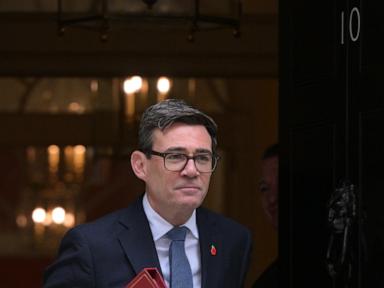
The British government has spent decades dodging the word "sorry" when it comes to the transatlantic slave trade. Now, signals from Downing Street suggest a sudden willingness to consider a formal apology for Britain's historical role in human trafficking. This shift is not born out of a spontaneous moral awakening in Whitehall. Instead, it reflects mounting diplomatic pressure from the Commonwealth, shifting legal strategies around reparatory justice, and a desperate calculation to preserve British soft power on the global stage.
For years, the official line from London was predictable and tightly scripted. Prime Ministers from Tony Blair to Rishi Sunak expressed "deep sorrow" or "regret" for the suffering caused by slavery, carefully avoiding the legal trap of a formal apology. In international diplomacy, words carry price tags. Government lawyers have long warned that an official apology could be weaponized in international courts as an admission of legal liability, opening the floodgates to multibillion-pound reparations claims from Caribbean and African nations.
Something in that risk-benefit analysis has changed.
The Legal Trap Behind "Deep Sorrow"
To understand why Westminster is tiptoeing around this issue, you have to look at the distinction between moral regret and legal culpability. Under principles of state responsibility in international law, a formal apology is often classified as a form of "satisfaction"—one of the recognized remedies for an internationally wrongful act.
If the British state formally apologizes, legal scholars argue it implicitly concedes that its actions were unlawful at the time, or that the state bears continuous legal obligations to the descendants of those harmed. Historically, the UK has argued that because the slave trade was legal under British and international law prior to the Slave Trade Act of 1807, no retroactive legal liability exists.
Downing Street's lawyers have spent twenty years building a firewall around that exact argument. By using phrases like "deep sorrow," Blair in 2006 managed to sound empathetic while keeping the Treasury's checkbook firmly locked. Subsequent leaders stuck to the script because the alternative looked like financial suicide. Yet the firewall is crumbling, not because the law changed, but because the political cost of silence has become unsustainable.
The Commonwealth Revolt
Britain's post-Brexit foreign policy relies heavily on the Commonwealth of Nations. Without the European Union, London needs trade deals, diplomatic allies, and a forum where it still looks like a global heavyweight. The problem is that the Commonwealth is no longer a polite club deferential to London.
The CARICOM Reparations Commission, representing fifteen Caribbean nations, has spent the last decade turning a moral grievance into a coordinated diplomatic offensive. Their ten-point plan demands not just a formal apology, but debt cancellation, public health investments, and educational programs funded by former colonial powers.
When British royals or politicians visit the Caribbean now, they are no longer met solely with ceremonial parades. They are met with formal demands, protests, and pointed speeches from prime ministers like Mia Mottley of Barbados. When Barbados removed the British monarch as head of state in 2021, it sent a clear message to Whitehall. If Britain refuses to confront its past, it will lose its remaining influence in the region.
Even more pressing is the shift happening within the Commonwealth Secretariat itself. Leaders from Africa and the Caribbean have increasingly aligned on the issue, threatening to make reparations and historical accountability the central theme of Commonwealth summits. For a UK Prime Minister trying to project global leadership, being publicly isolated by a bloc of fifty-six nations is a diplomatic nightmare.
Follow the Money
The financial history of British slavery makes the government's reluctance to discuss money particularly sensitive. When Britain finally abolished slavery across most of its empire in 1833, it did not compensate the enslaved people who had been brutalized for generations. It compensated the slave owners.
The British government borrowed £20 million—roughly 40 percent of its annual national budget at the time—to pay off 46,000 slave owners for the loss of their "property." That debt was so massive that British taxpayers did not finish paying it off until 2015. Every single citizen living in the UK, including the descendants of enslaved Africans, contributed through their taxes to paying off the families of former slaveholders until less than a decade ago.
This historical fact is the sharpest weapon in the arsenal of reparations advocates. It destroys the common counter-argument that slavery happened too long ago to have any bearing on modern budgets. The financial machinery of the British state was actively servicing the debt of slavery well into the twenty-first century.
To grasp how this complicates modern diplomacy, consider a hypothetical scenario. Imagine a corporation that stole land from a community two centuries ago, used the profits to build a massive endowment, and continued paying dividends to the original thieves' descendants until ten years ago. If that corporation suddenly asked the community to sign a new business partnership without mentioning the theft, the community would laugh them out of the room. That is precisely how Caribbean leaders view trade and climate negotiations with London today.
The Domestic Political Minefield
While diplomatic pressure pushes Downing Street toward an apology, domestic politics pulls it violently in the opposite direction. Britain is currently locked in fierce cultural debates over national identity, empire, and historical memory.
For a significant portion of the British electorate, the dominant narrative of the empire is not the slave trade, but the Royal Navy's West Africa Squadron—the naval force that spent decades intercepting slave ships after 1807 at considerable cost to British lives and treasure. Critics of an apology argue that Britain should be celebrated for ending the trade, not endlessly shamed for participating in it.
Any Prime Minister who signs off on a formal apology risks an immediate backlash from right-leaning media and opposition politicians, who will frame the move as an act of national self-flagellation. Worse, voters struggling with inflation, strained public services, and high taxes have little appetite for anything that smells like a precursor to sending billions of pounds overseas.
Downing Street knows this. That is why the current signaling is so cautious. By floating the idea of considering an apology, the government is testing the political winds. They are trying to gauge whether they can offer a carefully worded statement that satisfies Caribbean diplomats without triggering a domestic revolt or binding future governments to cash payouts.
What an Apology Actually Looks Like
If the UK government does move forward with a formal apology, it will not be a blank check. Whitehall's playbook for managing historical liabilities relies on non-financial reparatory frameworks.
We have already seen previews of how European nations navigate this terrain. In 2022, Dutch Prime Minister Mark Rutte issued a formal apology on behalf of the Netherlands for its role in the slave trade, calling it a "crime against humanity." Crucially, the Dutch government paired the apology with a €200 million fund dedicated to awareness, education, and community initiatives—explicitly ruling out direct financial reparations to individuals or foreign governments.
Britain is likely studying the Dutch model closely. A British equivalent would involve a tightly scripted statement acknowledging the state's role in the atrocity, delivered alongside targeted investments. Instead of writing checks to CARICOM governments, London would likely propose:
- Climate financing mechanisms framed around green energy transitions in the Caribbean, rebranding existing aid budgets under a new diplomatic banner.
- Educational scholarships and academic partnerships between British universities—many of which benefited directly from slave-trade endowments—and Caribbean institutions.
- Debt restructuring initiatives, using Britain's influence at the World Bank and the International Monetary Fund to ease borrowing costs for developing nations.
This approach allows Downing Street to claim moral leadership while keeping actual Treasury outflows strictly capped. It converts a potentially open-ended legal liability into a manageable, predictable foreign aid budget.
The Illusion of Closure
The fundamental flaw in Whitehall's strategy is the assumption that a carefully hedged apology will put the issue to rest. History suggests the exact opposite.
When the Church of England apologized for its links to slavery and established a £100 million impact investment fund, it did not end the conversation; it accelerated demands for the fund to be increased to £1 billion. When universities like Glasgow and Cambridge published reports detailing their financial ties to the slave trade, those disclosures became the legal and moral foundation for further demands.
In diplomacy, an apology without structural change is rarely accepted as the final word. For the descendants of enslaved people and the nations left underdeveloped by centuries of resource extraction, words are merely the starting line. If Downing Street thinks a speech in Parliament and a modest education fund will permanently quiet the Commonwealth, it is misreading the room.
The British government is caught between an imperial past it can no longer defend and a financial bill it cannot afford to pay. Signaling an openness to an apology is a tactical retreat, a way to buy time and preserve diplomatic relationships in a fracturing world. Yet the moment a British Prime Minister utters the words "we apologize," the debate will not be over—the real negotiations will have just begun.