The White House has officially confirmed a historic trilateral summit between Donald Trump, Vladimir Putin, and Xi Jinping in China this Thursday, marking the first direct, three-way negotiation among the leaders of the world's primary nuclear and economic powers in decades. While standard diplomatic readouts frame the gathering around trade stability and regional security, the timing and venue reveal a much deeper strategic reality. Washington, Moscow, and Beijing are confronting overlapping domestic pressures, fractured supply chains, and unresolved military standoffs that bilateral backchannels can no longer contain.
Diplomatic announcements rarely tell the full story. When three leaders with deeply conflicting agendas agree to sit at the same table on short notice, the motivation is rarely goodwill. It is necessity.
The Venue Is the Message
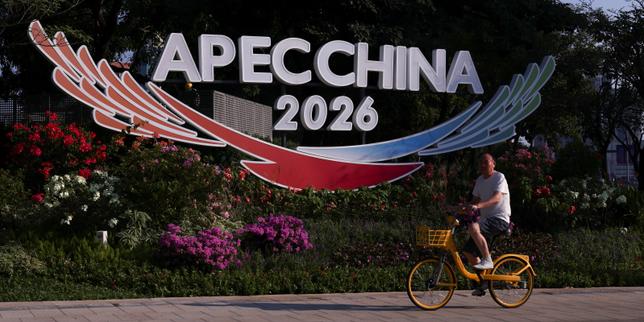
Holding this summit on Chinese soil is not a logistical coincidence. Beijing has spent the last several years positioning itself as the indispensable broker in global disputes, from Middle Eastern brokered truces to diplomatic overtures in Eastern Europe. By hosting both the American president and the Russian president simultaneously, Xi Jinping secures an immediate optical victory before a single word of the communiqué is drafted.
For Xi, the domestic audience matters just as much as the international one. China's economy faces persistent headwinds, including a prolonged real estate correction, youth unemployment, and mounting Western tariffs on electric vehicles and green technology. Bringing the leaders of the United States and Russia to China projects undisputed global centrality at a moment when domestic economic confidence requires reinforcement.
Donald Trump's willingness to travel to China for a three-way session reflects his long-standing preference for personal, leader-to-leader dealmaking over traditional State Department bureaucracy. Trump has consistently argued that multilateral institutions dilute American bargaining power, yet a trilateral room offers him a unique stage. Sitting directly across from both Xi and Putin allows him to test whether concessions on European security can be traded against tariffs, or whether Russian energy alignment with Beijing can be pried apart.
Vladimir Putin enters the room from a position of calculated endurance. Years of Western sanctions have reshaped the Russian economy into a wartime industrial base heavily reliant on Chinese trade and Asian energy markets. For Moscow, sitting as an equal alongside Washington and Beijing shatters any lingering narrative of diplomatic isolation. Putin needs no sweeping treaty to declare success; his mere presence at the table validates his geopolitical standing.
What Each Leader Actually Wants at the Table
Surface-level press briefings suggest the agenda will cover nuclear arms control, global trade routes, and ongoing regional conflicts. In practice, each delegation arrives with a narrow set of non-negotiable priorities and a willingness to trade away secondary interests.
Washington's Calculus
The White House faces an urgent need to stabilize global inflation drivers while fulfilling campaign promises to wind down protracted foreign entanglements. Administration officials understand that prolonged conflict in Eastern Europe drains defense stockpiles and keeps global energy and grain markets volatile. Trump wants a rapid, visible diplomatic breakthrough that freezes active hostilities, shifts security burdens onto European allies, and frees up American bandwidth to focus on Indo-Pacific competition.
At the same time, Washington cannot afford to leave Beijing without tangible movement on trade deficits, fentanyl precursor controls, and intellectual property enforcement. Trump's team views tariffs not as an end goal, but as maximum pressure to extract bilateral purchasing commitments and manufacturing concessions.
Moscow's Leverage and Vulnerabilities
Russia's primary objective is the formal recognition of its security perimeter and the gradual dismantling of the financial and technological sanctions regime. While Russia has adapted to sanctions by routing trade through third-party intermediaries and settling transactions in yuan, the long-term cost of high interest rates, labor shortages, and restricted access to Western semiconductors weighs heavily on its civilian economy.
Putin also faces a subtle strategic dilemma regarding China. The war in Ukraine has turned Moscow into the junior partner in the Sino-Russian relationship, dependent on Chinese dual-use goods and crude oil purchases at discounted rates. Engaging directly with Trump gives Putin a counterweight, reminding Beijing that Moscow still possesses independent diplomatic options with Washington.
Beijing's Balancing Act
Xi Jinping wants stability above all else. China's export-driven growth model cannot thrive in a world fractured by secondary sanctions, naval blockades, or escalating tariff wars. Beijing has walked a tightrope since the start of the Ukraine conflict, offering diplomatic and economic lifelines to Moscow while trying to avoid full-scale financial isolation from American and European markets.
If Xi can facilitate a framework that cools tensions between Washington and Moscow, he removes the primary source of friction between China and the West. In return, Beijing will push aggressively for the rollback of American export controls on advanced semiconductors and artificial intelligence hardware, which threaten China's long-term technological ambitions.
The Nuclear Elephant in the Room
Behind the economic posturing lies a dangerous vacuum in global arms control. The expiration of key bilateral treaties between Washington and Moscow, combined with the rapid expansion of China's nuclear arsenal, has left the world without a functioning framework to prevent a three-way arms race.
For decades, nuclear stability rested on a bipolar model. The United States and the Soviet Union, and later Russia, maintained roughly equivalent stockpiles governed by strict verification protocols and hotlines. That architecture is obsolete. Pentagon assessments indicate that Beijing is steadily expanding its operational warhead count, rendering any bilateral US-Russian treaty incomplete.
A trilateral summit provides the only realistic forum to address this mathematical reality. Washington has repeatedly insisted that China must join future arms limitation talks. Beijing has historically refused, arguing that its arsenal remains significantly smaller than those of the US and Russia. Putting all three leaders in the same room forces the issue onto the table, even if the immediate outcome is limited to establishing military-to-military crisis communication channels rather than hard warhead caps.
Why Traditional Diplomacy Failed to Get Here
To understand why this summit is happening now, one must look at the failure of conventional diplomatic channels over the past five years. Low-level working groups, foreign ministry summits, and United Nations resolutions have consistently stalled because mid-level diplomats lack the authority to make cross-domain trade-offs.
A State Department negotiator handling trade cannot offer concessions on NATO posture. A Russian diplomat discussing European security cannot negotiate Chinese tariff rates. In highly centralized political systems like Xi's China and Putin's Russia, and under an executive-focused administration like Trump's, real authority is concentrated entirely at the top.
- Cross-domain bargaining: Only heads of state can link unrelated issues, such as trading tariff relief for diplomatic pressure on a third-party conflict.
- Bypassing bureaucratic inertia: Foreign ministries are designed to protect institutional positions and avoid risk, often leading to incremental stalemate.
- Immediate verification of intent: Leaders frequently rely on personal instinct to gauge whether an adversary is bluffing or genuinely ready to deal.
However, bypassing traditional diplomacy carries severe risks. Without teams of technical experts vetting every phrase of an agreement, summit diplomacy can produce vague, contradictory commitments that collapse within weeks. History offers plenty of warnings, from the ambiguous communiqués of the Cold War to more recent high-profile summits that generated dramatic photographs but zero structural change.
The Overlooked Stakeholders Watching from the Sidelines
While the cameras focus on the three men in China, the decisions made on Thursday will reverberate immediately across capitals that were not invited to the room.
European leaders view a Trump-Putin-Xi gathering with acute anxiety. The prospect of Washington and Moscow negotiating the architecture of European security over the heads of Brussels, Berlin, and Paris strikes at the core of the transatlantic alliance. If the White House signals a willingness to freeze territorial lines or restrict future alliance expansion without European consent, it will accelerate calls within the European Union for autonomous defense spending and independent nuclear deterrence.
In the Indo-Pacific, allies like Japan, South Korea, and the Philippines are watching closely for any sign that Trump might trade away regional security commitments in exchange for a grand economic bargain with Xi. Taiwan remains the most sensitive flashpoint. Beijing will inevitably press Washington to reaffirm its opposition to Taiwanese independence in stronger terms, while Taipei fears becoming a bargaining chip in a broader great-power settlement.
Global markets are equally exposed. Energy traders, currency desks, and semiconductor supply chain managers are pricing in multiple scenarios. A breakthrough that eases sanctions on Russian energy exports could trigger a sharp drop in global crude prices, altering inflation trajectories worldwide. Conversely, a public breakdown in talks followed by threats of new tariffs or secondary sanctions would send shockwaves through Asian and American equities.
What Real Success Looks Like Versus Political Theater
Given the compressed timeline and the sheer complexity of the issues on the table, expecting a comprehensive treaty by Thursday evening is unrealistic. A genuine diplomatic breakthrough requires months of technical drafting, verification mechanisms, and legislative ratification.
Instead, observers should look for concrete, verifiable indicators rather than sweeping rhetoric. If the summit yields substantive progress, it will likely appear in specific, narrow deliverables:
- A formal ceasefire framework or humanitarian corridor agreement backed by clear monitoring mechanisms rather than vague calls for peace.
- The restoration of direct military-to-military hotlines between Washington, Beijing, and Moscow to prevent accidental escalations in contested waters and airspace.
- Targeted tariff suspensions or agricultural purchasing agreements that offer immediate, measurable economic relief without requiring complex structural reforms.
- An agreement to launch trilateral working groups on artificial intelligence safety and nuclear risk reduction, formally bringing China into strategic stability talks for the first time.
If the summit concludes with nothing more than warm handshakes, joint statements about "mutual respect," and promises to hold future meetings, the verdict will be clear. It will mean the leaders used the global stage to manage domestic politics while leaving the fundamental fault lines of the twenty-first century entirely intact.
The Mechanics of High-Stakes Summitry
When three leaders with vastly different governance styles meet, the choreography behind closed doors becomes a weapon in itself. Translation protocols, seating arrangements, and the sequence of bilateral pull-asides all carry strategic weight.
Xi Jinping favors tightly scripted encounters where every detail is pre-negotiated to eliminate surprises and protect leadership dignity. Donald Trump thrives on unpredictability, often breaking from prepared talking points to apply direct psychological pressure or float unorthodox proposals. Vladimir Putin, trained in intelligence tradecraft, relies on exhaustive preparation, historical grievances, and tactical patience to outlast his counterparts in marathon sessions.
Managing those colliding styles in a single room requires more than diplomatic skill; it demands a clear understanding of where leverage actually resides. In international politics, leverage is never static. It shifts with every fluctuations in oil prices, every change in semiconductor supply, and every domestic political poll. Thursday's meeting in China will not end the era of great-power competition, nor will it erase decades of structural mistrust, but it will force Washington, Moscow, and Beijing to reveal exactly what they are willing to pay to avoid a collision none of them can afford.