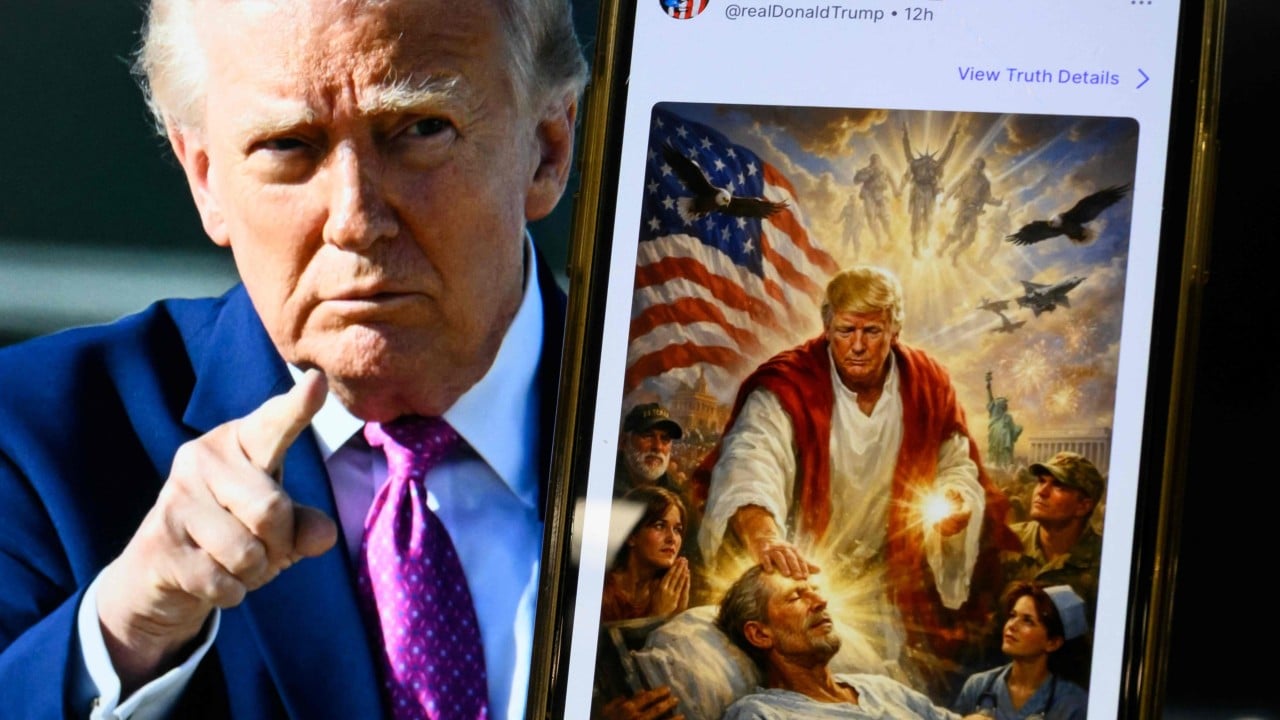
Donald Trump doesn't usually apologize, and he certainly doesn't back down from a fight with the Vatican. But after a bizarre 24-hour cycle involving an AI-generated image that looked suspiciously like a messianic figure, the former president is offering a creative explanation. He says he wasn't trying to look like Jesus. He thought he was a doctor.
If you've been offline for the last day, here's the gist. On Sunday night, Trump’s Truth Social account shared an image of himself in a biblical white robe and red sash. In the picture, he's laying hands on a man in a hospital bed while light beams from his fingers. Patriotic symbols like the Statue of Liberty and soaring eagles fill the background.
The backlash was instant. Even his most loyal evangelical supporters called it blasphemous. By Monday morning, the post was gone. When reporters caught up with him, Trump brushed off the "Jesus" comparison entirely. He claimed the image was actually him working with the Red Cross.
Why the Doctor Explanation is Hard to Swallow
Trump's defense is pretty straightforward. "I thought it was me as a doctor," he told reporters outside the Oval Office. He added that he's a "healer" who makes people "a lot better." He even threw in a mention of the Red Cross for good measure.
There's just one problem. The image doesn't show a stethoscope, a lab coat, or a hospital ID. It shows a man in 1st-century Middle Eastern attire performing what looks like a miraculous healing.
The Missing Medical Gear
- The Robe: Most doctors today wear scrubs or a white coat. They don't wear flowing linen robes with sashes.
- The Light: Modern medicine relies on surgery and pharmaceuticals. It doesn't usually involve glowing beams of light shooting from the fingertips.
- The Red Cross: Despite Trump's claim, there was no Red Cross logo or mention of the organization in the AI-generated artwork.
Honestly, it's a classic Trump move. When a post goes too far—even for his base—he rebrands the intent rather than admitting a mistake. By calling it a "doctor" photo, he tries to pivot from religious controversy to a message about "fixing" the country.
A Growing Feud with Pope Leo XIV
This wasn't just about a meme. The timing of the post is what really set people off. It went up right after Trump launched a verbal attack on Pope Leo XIV. The President called the American-born Pope "weak" on crime and "terrible" on foreign policy, specifically regarding the ongoing situation with Iran.
Trump's beef with the Pope isn't new, but it's getting personal. He suggested Leo only got the job because he was an American and "they" thought it would be a good way to handle a Trump presidency. "If I wasn't in the White House, Leo wouldn't be in the Vatican," Trump claimed.
Pope Leo didn't stay quiet. Speaking from the papal plane, he told reporters that the Gospel isn't a political tool. He basically said Trump doesn't understand the message he's trying to co-opt.
Breaking Down the Evangelical Backlash
Usually, Trump can do no wrong with his religious base. They've stuck by him through thick and thin. But this "Jesus" meme crossed a line for many.
Prominent Christian writers like Megan Basham called the post "outrageous blasphemy." For these supporters, there’s a massive difference between a "God-appointed leader" and someone literally depicting themselves as the Savior.
Why this time was different
- Direct Comparison: It wasn't a supporter making the meme; it was the President's own account.
- Sacrilege: In the Christian faith, claiming Christ-like powers (the glowing hands) is a major theological red flag.
- The Pope Factor: Attacking the head of the Catholic Church while simultaneously posting "Jesus" imagery felt like a bridge too far for many conservative Catholics.
The AI Problem in Politics
This whole mess highlights a bigger issue we're seeing in 2026. AI-generated images are everywhere, and they’re getting harder to distinguish from reality at a quick glance. Trump's team—or Trump himself—likely saw an image that looked "strong" and hit post without thinking about the theological implications.
We’ve seen this before. Last year, an AI image of Trump as the Pope circulated online. He seems to have a thing for these digital "costume" photos. The problem is that AI doesn't understand nuance. It just blends concepts. If you tell an AI to make a "healing leader," you're going to get a mix of a modern president and a biblical miracle worker.
What Happens Now
Don't expect a formal apology. Trump has already moved on, blaming the "fake news" for the confusion. He's sticking to the story that he’s just a guy who wants to make people healthy and the country great.
If you’re following this, keep an eye on his next rallies. He’ll likely double down on his "healer" rhetoric while avoiding the specific religious imagery that got him in trouble.
If you want to stay ahead of how these digital stories impact the polls, pay attention to the evangelical leaders. If they start distancing themselves over "blasphemy," Trump might have a real problem on his hands. Otherwise, this is just another Tuesday in the world of 2026 politics.
Double-check any political "photo" you see on social media before sharing. Look for the tell-tale signs of AI: weird hands, nonsensical background symbols, or glowing fingers. It saves everyone a lot of headache.