The morning frost does not ask for permission. It settles over four thousand acres of dairy pasture before the first hint of grey bleeds into the eastern sky, glazing every blade of grass, every rusted gate latch, and every heavy stone with a fragile, blinding white.
Cold.
Silence rules this hour, save for the low, rhythmic thrum of milking machinery in the distance and the steady, patient breathing of cattle waiting in the holding yards. This is a place where time is measured not by digital chimes or flickering screens, but by the weight of buckets, the shifting seasons, and the unrelenting demands of living soil. Here, on a sprawling dairy farm that stretches across undulating hills and river flats, life is raw and uncompromising.
For Narelle Zanker, this expanse was never merely a property. It was a textbook written in mud, manure, and morning dew.
To understand what drove her toward the blackboard, you have to understand the rhythm of the milking parlor at five in the morning. You have to know the sharp, sweet smell of silage, the sting of freezing water against chapped knuckles, and the quiet satisfaction of a well-maintained herd moving in unison toward the cups. It is a world governed by cause and effect in its most unfiltered form. If you fail to check a trough, the cattle go thirsty. If you mismanage a pasture, the feed fails. Every action has an immediate, visible consequence written directly into the earth.
Yet, for decades, a strange and widening chasm grew between this dirt-stained reality and the pristine, air-conditioned rooms where children sat behind rows of plastic desks.
Somewhere along the way, society decided that food was something that originated behind sliding glass supermarket doors. Milk arrived in neat plastic jugs; bread materialized in crinkling wrappers; wool, cotton, and timber existed as finished products detached from any animal, plant, or ecosystem. A generation of children grew up insulated from the origins of their own survival. They learned algebra, grammar, and history from bound volumes, but remained absolute strangers to the biological machinery that filled their lunchboxes.
Narelle watched this disconnect widen with a growing sense of urgency.
She saw the quiet crisis unfolding in rural and regional towns, where traditional livelihoods faced mounting pressures from economic shifts, weather extremes, and generational drift. Young people were leaving the land, not necessarily out of malice, but out of invisibility. If you cannot see the poetry and the intellectual rigor of agriculture, you will not stay to protect it. More importantly, urban children were growing up entirely illiterate regarding the ecological foundations of their daily bread.
Change does not arrive with a fanfare. It usually starts with a conversation in a dusty ute.
Instead of accepting the division between the schoolyard and the paddock, Narelle decided to stitch them together. She recognized that the classroom was not just four walls holding a whiteboard; it was any space where curiosity met reality. And what is more curious to a child than a newborn calf, a sprouting wheat shoot, or the microscopic universe humming inside a handful of rich topsoil?
Bringing the farm into the curriculum required a peculiar kind of translation. You cannot simply hand a ledger to a seven-year-old and expect them to understand herd genetics or pasture rotation. You have to translate the language of machinery and manure into the language of wonder. You have to show them how a cow turns grass into milk, how water cycles through a valley, and how human hands shape the landscape that feeds millions.
Imagine standing before a group of children who have never touched raw wool straight from the fleece. Their fingers hesitate, expecting something synthetic and sterile. Then they touch the lanolin, thick and warm, smelling faintly of dust and lanolin fat, and their eyes widen with sudden comprehension.
That is the moment the textbook comes alive.
Narelle’s work bridged these two estranged worlds with startling clarity. She designed programs that brought agricultural literacy directly to students who might otherwise spend their entire lives believing that food was manufactured in a factory. She showed teachers how to use the paddock as a living laboratory for mathematics, biology, economics, and environmental science. A math lesson suddenly involved calculating feed conversion ratios; a science class became an examination of soil microbiome health; a history module traced the footprint of settlement along the riverbanks outside the school window.
This was not about turning every child into a farmer. It was about rooting them in reality.
The modern world encourages abstraction. We trade in symbols, pixels, and financial instruments that float far above the physical earth. We consume information at dizzying speeds while losing touch with the physical substrate that makes human existence possible. By dragging education back into the mud, Narelle offered children an anchor. She taught them to look at a glass of milk and see the sunlight, the rain, the pasture, the cow, the farmer, and the intricate chain of human and natural history that brought it to their hand.
Recognition is a strange thing. Often, it arrives long after the heavy lifting has already been done in the dark.
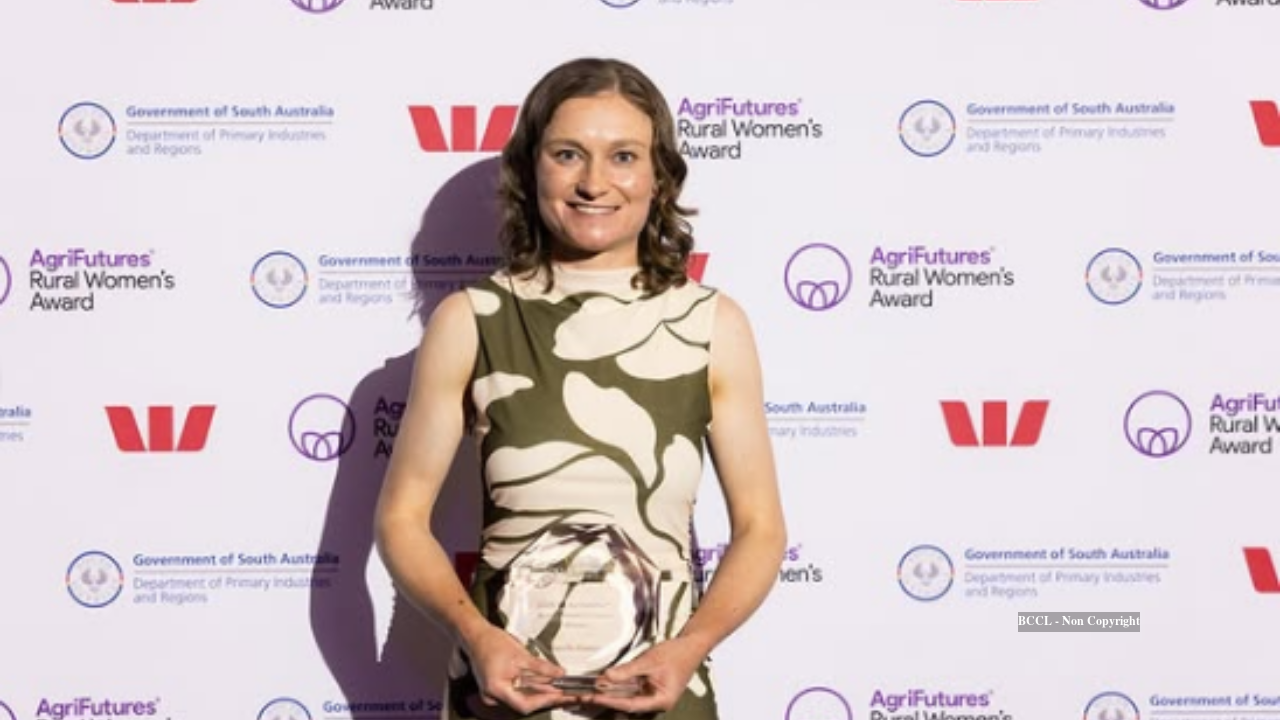
When the announcement came for the Rural Women’s Award, it caught many by surprise, but none who truly knew the scope of her quiet crusade. The award, designed to celebrate visionaries who champion regional communities and primary industries, found its truest embodiment in someone who understood that the future of farming is written in the minds of the young.
Winning such an accolade brings a sudden, blinding light to work that was previously carried out in the shadows of obscurity. It places a megaphone in the hands of someone who spent decades speaking in the gentle, measured tones required to calm a skittish heifer. Yet, true to form, the recognition did not alter her trajectory. It simply widened the gate.
Listen closely to the conversations happening around regional kitchen tables today, and you will hear the friction of change.
Farmers are aging out, weather patterns are erratic, and global markets swing with terrifying volatility. The traditional ways of surviving off the land are being battered by forces entirely beyond any single family's control. In this climate, education is not a luxury or an afterthought; it is the primary line of defense. If the next generation does not understand the value of the soil, they will sell it off to the highest bidder or pave it over for housing estates without a second thought.
Narelle understood that saving rural communities requires more than subsidies or drought relief packages. It requires cultural repositioning. Farming must be recognized not as a fallback occupation for those who lack academic ambition, but as a complex, multidisciplinary science requiring deep ecological intelligence, technological literacy, and profound patience.
When you walk through a classroom touched by her programs, the atmosphere is distinct.
There is no heavy drone of passive memorization. Instead, there is the hum of discovery. Children are testing water samples drawn from local creeks, measuring the germination rates of different seed varieties, and debating the economics of local supply chains. They are engaging with the world as active participants rather than passive consumers. They are learning to respect the limits of natural systems while harnessing human ingenuity to work within them.
This is the hidden power of placing agriculture at the center of education. It forces us to confront our absolute dependence on the natural world.
We can invent digital currencies, virtual realities, and artificial intelligence, but we cannot synthesize an acre of fertile topsoil overnight. We cannot manufacture rain. We cannot escape the biological reality that our bodies are built from the carbon, nitrogen, and water that pass through the plants and animals around us. To forget this is a kind of collective madness. To remember it is an act of sanity.
The four thousand acres of dairy pasture remain. The frost still settles before dawn, whitening the grass and turning the cow breath into plumes of white steam in the crisp air. The work does not stop for ceremonies or awards. Cows still need milking at sunrise. Fences still need mending after heavy winter storms. Calves still need tending when the birth is difficult.
Yet, something fundamental has shifted in the air above those pastures.
Because of one woman who refused to accept the artificial boundary between the furrow and the blackboard, thousands of children now look at the land with different eyes. They see the labor, the science, the fragility, and the extraordinary beauty of the systems that sustain us all. They know that milk does not come from a carton, that bread does not come from a machine, and that the future of human civilization depends entirely upon the health of the dirt beneath our feet.
The bell rings in the distance, carrying across the valley on the wind.
Inside the schoolhouse, a child leans over a microscope, adjusting the focus until a single cell snaps into sharp, brilliant relief. Outside, a herd drifts slowly toward the green river flats, their heavy hooves pressing softly into the waking earth, leaving tracks that will be washed away by tomorrow's rain, but never truly forgotten.