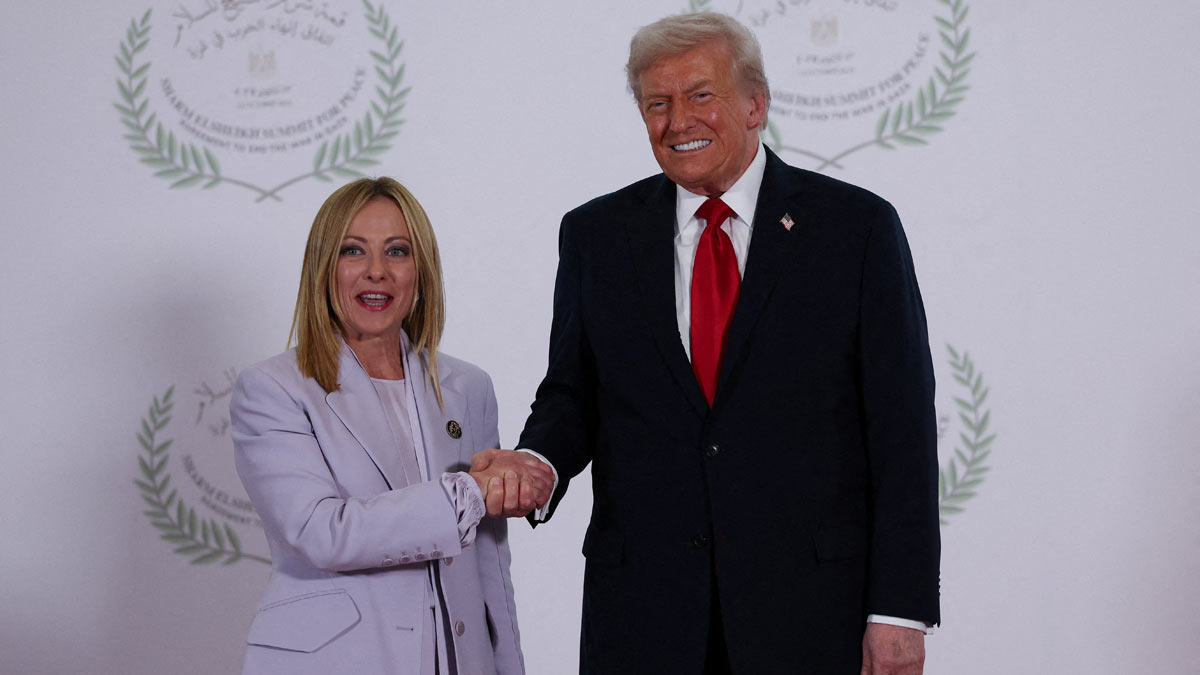
The political press corps loves a soap opera. For weeks, mainstream outlets have breathlessly tracked the supposedly "simmering tensions" between Donald Trump and Italian Prime Minister Giorgia Meloni. Then, right on cue, Trump drops a single, boilerplate compliment—calling Meloni "nice"—and Meloni returns fire with the standard diplomatic sedative of "cordial relations."
The media immediately swallowed the bait, declaring a grand detente. They are completely misreading the room.
This isn't a story about personal chemistry, hurt feelings, or a sudden outbreak of geopolitical friendship. It is a masterclass in calculated transactional theater. The lazy consensus states that right-wing populists are driven by ideological kinship and emotional loyalty. In reality, modern sovereignty is dictated by cold, hard calculus. Trump and Meloni don't need to like each other; they just need to use each other.
The Myth of Right-Wing Solidarity
For years, commentators have lumped Meloni and Trump into the same populist bucket. The assumption was that because they share a rhetorical skepticism of globalist institutions, they would naturally form an unbroken axis. When Trump’s camp expressed irritation over Italy's alignment with Washington on the Ukraine conflict and transatlantic security, the press treated it as a deeply personal betrayal.
I have spent over a decade analyzing European trade dynamics and sovereign policy shifts. If there is one absolute truth in international relations, it is this: ideology stops at the balance sheet.
Meloni is not a MAGA clone, and she never was. She is a Atlanticist pragmatist wrapped in nationalist branding. Italy relies heavily on the European Union’s post-pandemic recovery funds and requires a stable relationship with the European Central Bank to manage its massive sovereign debt, which hovers around 135% of its GDP. She cannot afford to play the role of an unpredictable disruptor.
When Trump calls her "nice," he is not extending an olive branch. He is setting a baseline expectation. He is signaling that she is compliant enough to deal with, provided she doesn't cross his administration on trade tariffs or defense spending.
Why "Cordial Relations" is Code for Strategic Distancing
When a politician describes a relationship as "cordial," it is the diplomatic equivalent of a corporate handshake that stays a little too far from the body. It is polite, sterile, and entirely devoid of actual commitment.
Consider the fundamental friction points that a few pleasantries cannot erase:
- NATO and Defense Expenditures: Trump has consistently threatened to recalibrate American commitments to allies that fail to meet the 2% GDP defense spending target. Italy has historically lagged behind this benchmark, projecting to reach it only by the late 2020s. No amount of "cordial" talk changes that mathematical reality.
- Tariff Warfare: Trump’s proposed universal baseline tariffs pose a direct threat to Italian export engines—specifically luxury goods, automotive components, and agricultural products. Meloni’s primary duty is to protect Italian industry from American protectionism, not to placate Trump’s ego.
- The China Factor: While Meloni successfully pulled Italy out of China’s Belt and Road Initiative, she did so to secure her standing with the current Western establishment, not to preview a total economic decoupling engineered by a future White House.
To believe that a sudden rhetorical softening resolves these systemic conflicts is naive. It ignores the structural forces that govern national self-interest.
Dismantling the Press Strategy
The mainstream media constantly asks the wrong question: Will Trump and Meloni get along?
The correct question is: How long can Meloni maintain her dual-track strategy before she is forced to choose between Washington and Brussels?
Let's look at the flawed premise of European populist unity. The media looks at leaders like Viktor Orbán in Hungary and assumes Meloni operates from the same playbook. She doesn't. Orbán can afford to be an outright contrarian because Hungary's economic leverage and geographic liabilities are entirely different. Italy is a G7 economy. It is the third-largest economy in the Eurozone. Meloni’s power comes from her ability to mainstream her platform within the existing European framework, not from blowing it up.
If she aligns too closely with Trump, she loses her leverage as the bridge builder within the European Union. If she alienates him entirely, she risks economic retaliation from Italy's largest non-EU trading partner. Her response of "cordial relations" is an explicit refusal to take the bait. It keeps her options open.
The High Cost of the Pragmatic Middle
There is a distinct downside to Meloni's calculated neutrality. By trying to be everything to everyone—an establishment ally to Brussels, a reliable security partner to Washington, and a sovereignist hero to her domestic base—she risks pleasing no one.
Imagine a scenario where the United States imposes sweeping 10% tariffs on all European imports. Meloni will not be able to negotiate a bespoke exemption based on a "nice" comment from the Oval Office. She will be forced to retaliate alongside the rest of the European Union, instantly vaporizing the illusion of a special populist connection.
The theater of diplomacy is designed to obscure these hard truths. The press reports on the smiles because analyzing structural tariff mechanisms and defense procurement pipelines doesn't generate clicks. But behind the curtain, the tension hasn't dissipated; it has merely been institutionalized. Stop looking at the handshakes. Watch the trade balances. That is where the real policy is written.


