The phone call arrived on an ordinary August afternoon in Washington, D.C. To the man on the receiving end—a longtime accumulator of digital wealth whose identity remains shielded behind court doc numbers—the voice on the line sounded official, crisp, and urgent. It was a Google representative, or someone pretending convincingly enough to be one, warning of a catastrophic security breach. Then came a second call, smoothly transferring him to a supposed specialist at the Gemini crypto exchange.
Fear is a quiet lubricant. It makes sensible people hand over keys they swore never to share. By the time the panic subsided, over 4,100 bitcoin—worth north of $240 million—had slipped away from the victim's digital vault.
Across a computer screen thousands of miles apart, a collective intake of breath echoed through a private voice chat. A recorded snippet later captured the unfiltered reality of the moment. A young voice gasped, cracking with disbelief.
"Oh, my God! Bro, bro, I'm going to spaz out!"
This was not the work of seasoned syndicate bosses operating in smoky backrooms. The masterminds were kids who had met in the glowing, dim-lit corners of online gaming forums. Malone Lam, an eighth-grade dropout from Singapore, was only twenty-two years old. Alongside peers like Veer Chetal and Jeandiel Serrano, he belonged to a loose, hyper-connected underground network of digital natives who understood the architecture of the internet better than the adults tasked with policing it. They called it social engineering. The rest of the world calls it theft.
Once the fortune landed in their virtual laps, the real error began. Money of that magnitude demands absolute silence, a ghost-like invisibility. Instead, they chose noise.
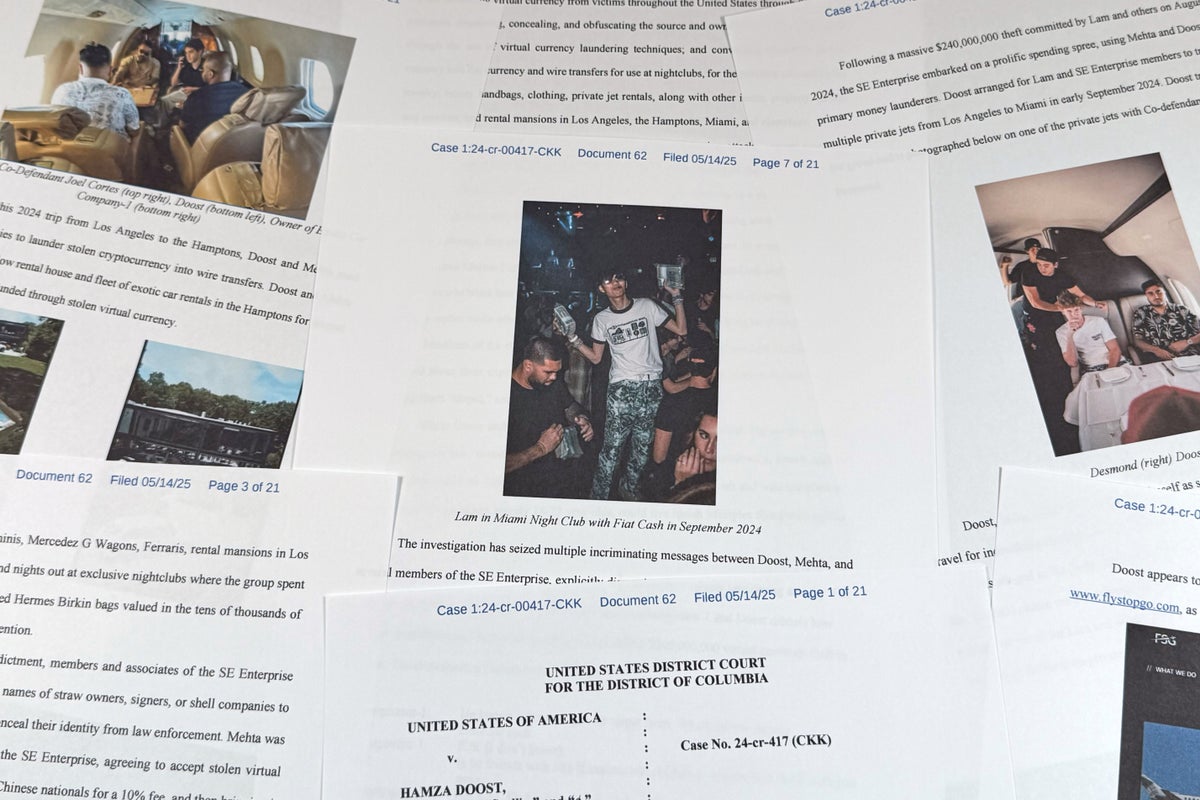
What followed was a month-long bender that blurred the lines between a rap video and a federal indictment. Lam jetted to Los Angeles, renting sprawling mansions and treating luxury night spots like his personal piggy bank. During a single thirty-day window, his crew dropped four million dollars across Southern California clubs. Lam personally burned through more than $569,000 in a single evening. He bought a watch worth two million dollars and accumulated a fleet of over thirty cars, including customized Porsches, Lamborghinis, and Ferraris. When the mood struck him in crowded VIP sections, he scooped up designer handbags retailing for tens of thousands of dollars and tossed them casually into the crowd like cheap party favors.
Chetal bought a Lamborghini for his parents and stuffed a duffel bag containing half a million dollars in cash right into their home washing machine. Serrano jetted off to the Maldives.
They were living out a frantic, high-definition caricature of success, completely blind to the digital breadcrumbs they were scattering behind them. Blockchains are fundamentally public ledgers. Even when routed through sophisticated money-laundering webs and converted into physical fiat currency, $240 million leaves a wake. The crash, when it came, arrived with terrifying speed.
The undoing started with a mundane technical slip. Serrano failed to properly mask his internet protocol address while setting up an exchange account to manage nearly $30 million of the loot. Investigators tied the digital signature straight to a rental house in Encino, California, costing $47,500 a month.
The physical world began to violently intrude upon their digital fantasy. The sheer flashiness of their spending drew the attention of other, more dangerous elements in the criminal underworld. Word of the multi-million-dollar windfall leaked through underground channels. In Connecticut, masked men intercepted Chetal's parents, dragging them out of their car, beating his father with a baseball bat, and binding their hands in an amateurish ransom plot designed to extort the young hacker's crypto share. The plot collapsed when witnesses called the police, but the message was clear. You cannot hide virtual wealth in physical reality.
Federal agents moved in on September 9, 2024. Lam was tracked to a Miami mansion, tipped off briefly by an off-duty officer before the net tightened completely.
From a jail cell, reality finally set in. On a recorded prison call, Lam muttered a stark realization to an associate. "We always talked about what it would be like if I were to go down, but never thought it would be this crazy."
The legal reckoning dismantled the crew piece by piece. Co-conspirators faced multi-year prison sentences, their dreams of permanent luxury reduced to standard-issue jumpsuits and federal oversight. Lam faced a recommended sentence stretching past a decade, watching the empire built on a single phone call evaporate into court transcripts and restitution orders.
The ledger closes, but the ghost remains. Somewhere in the vast, humming architecture of the global network, the money moves on, and the screens continue to glow in the dark rooms where the next generation is watching, waiting, and typing.


