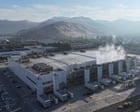
Hyperscale digital infrastructure is colliding with local ecological boundaries. For a decade, the underwriting models for datacentres focused almost exclusively on a four-variable optimization problem: power availability, fiber latency, land acquisition costs, and local tax incentives. This framework is obsolete. Data from the London School of Economics (LSE) global review of climate litigation reveals a systemic shift: datacentres have transitioned from indirect participants in environmental systems to primary targets of climate-related lawsuits.
This legal friction is not a localized phenomenon; it is a structural risk affecting major compute hubs globally, including the United States, Ireland, Chile, and the United Kingdom. The core operational vulnerabilities driving this litigation map directly to three physical input dependencies: high-volume water consumption, localized criteria air pollution from baseline or backup generation, and grid-level fossil fuel lock-in. Learn more on a connected topic: this related article.
The Tri-Factor Exposure Matrix
To quantify the legal risk facing digital infrastructure assets, the exposure must be disaggregated into three distinct operational vectors. Each vector represents a point where digital expansion intersects with a localized resource constraint, transforming an operational requirement into a legal liability.
1. The Hydrological Stress Vector
Datacentres require massive thermal management systems to dissipate heat from high-density server racks, particularly those hosting advanced artificial intelligence (AI) workloads. The standard metric for this efficiency is Water Usage Effectiveness (WUE), measured as: Additional analysis by CNET delves into similar views on the subject.
$$\text{WUE} = \frac{\text{Annual Water Consumption (Liters)}}{\text{Total IT Equipment Energy (kWh)}}$$
When operators utilize evaporative cooling to optimize Power Usage Effectiveness (PUE), they minimize electricity draw by sacrificing local water tables. In climate-stressed regions, this creates a direct zero-sum conflict with municipal allocations.
- The Mechanism of Litigation: Lawsuits target the validity of environmental permits by challenging the adequacy of Environmental Impact Assessments (EIAs). Plaintiffs argue that baseline hydrological models fail to account for forward-looking climate-induced drought.
- Empirical Precedent: This exact mechanism forced the halting of Google’s proposed Cerrillos datacentre project in Santiago, Chile. Local residents and municipal councils successfully argued that the project's water demands directly threatened an already depleted aquifer, proving that hydrological impact can entirely invalidate capital expenditure.
2. The Grid-Level Carbon Lock-In Vector
The explosive growth of compute demand has outpaced the deployment velocity of utility-scale renewable energy. This asymmetry forces a structural bottleneck: datacentres must either delay commissioning or rely on fossil-fuel-heavy grids to maintain the 99.999% uptime required by Tier III and Tier IV standards.
- The Mechanism of Litigation: Non-profit environmental legal firms are shifting their strategies from targeting fossil fuel extractors to targeting the large energy users that guarantee fossil fuel demand. The legal focus is on regulatory decisions that grant exceptions or extended timelines for carbon-intensive operations.
- Empirical Precedent: In Ireland—a primary European hub where datacentre electricity consumption risks exceeding grid capacity—the Commission for the Regulation of Utilities (CRU) issued a directive allowing large energy users to operate on fossil fuels for a six-year bridge period before transitioning to an 80% renewable mandate. Legal coalitions including ClientEarth and Friends of the Irish Environment initiated judicial reviews of this policy, arguing that it creates a multi-billion dollar economic lock-in for natural gas infrastructure and violates statutory national carbon budgets.
3. The Localized Atmospheric Emissions Vector
Beyond continuous grid consumption, datacentres maintain massive arrays of diesel or natural gas backup generators to mitigate grid instability. The rapid deployment of specialized AI clusters has altered this deployment model, with some operators installing continuous-run or peak-shaving gas turbines directly on-site to circumvent grid connection queues that can extend up to 12 years in overtaxed markets.
- The Mechanism of Litigation: These installations transition the datacentre from a passive consumer of electricity to a point-source industrial polluter subject to statutory air quality frameworks, such as the Clean Air Act in the United States. Litigation leverages environmental justice doctrines, demonstrating that localized emissions disproportionately impact nearby frontline communities.
- Empirical Precedent: The National Association for the Advancement of Colored People (NAACP) filed a notice of intent to sue regarding Elon Musk’s xAI Colossus facility in Memphis, Tennessee. The claim focuses on the unauthorized operation of over 30 portable methane gas generators, highlighting structural public health risks and criteria air pollution outside formal regulatory permitting frameworks.
The Strategic Cost Function of Climate Litigation
The financial impact of this growing legal backlash cannot be measured solely by court damages or regulatory fines. The true economic cost is a function of capital friction, asset depreciation, and timeline degradation.
[Permit Challenge / EIA Deficit]
       │
       ▼
[Injunction / Regulatory Halt] ──► Extends Connection Queues (Up to 12 Years)
       │
       ▼
[Stranded Asset Risk] ───────────► Forced Retrofits (Liquid/Immersion/Recycled Water)
       │
       ▼
[Capital Cost Premium] ──────────► Compressed IRR & Elevated Risk Insurance Premiums
Capital Friction and Timeline Extension
The primary risk of climate litigation is its asymmetric power to delay project execution. In real estate and digital infrastructure development, the Internal Rate of Return (IRR) is highly sensitive to the duration of the pre-operational phase. A lawsuit that forces a judicial review of an EIA introduces un-forecasted timeline extensions. Even in cases where the developer eventually prevails, the time value of capital spent on land acquisition and long-lead equipment (such as transformers and chillers) erodes project profitability.
Regulatory and Injunction-Driven Interventions
Litigation acts as an external regulatory mechanism that forces transparency. For instance, in Buckinghamshire, UK, legal action brought by tech justice non-profits forced the government to concede procedural flaws in the fast-tracked approval of a hyperscale facility. While the lawsuit was dropped, the developer was forced to accept binding environmental mitigation contracts with the local council. The precedent shows that litigation alters the contract architecture of digital infrastructure, shifting environmental mitigation from voluntary ESG targets to non-negotiable legal covenants.
The Stranded Asset Vulnerability
According to physical climate risk data from First Street, approximately 54% of global datacentre capacity is exposed to chronic climate stress (extreme heat and drought), while 79% faces elevated acute hazards (flooding, wildfire, and wind). When a court mandates that an operator modify its cooling technology—such as the judicial intervention in Pittsburg, California, requiring a datacentre to shift entirely to recycled water—the capital expenditure model must be completely restructured. Facilities built on traditional air- or fresh-water-cooling architectures face premature technological obsolescence and accelerated depreciation if local courts revoke their resource access rights.
Technical and Operational Risk Mitigation Architecture
Mitigating global litigation risk requires moving beyond standard carbon offsets and greenwashing marketing narratives. Computational logistics must align with physical constraints through precise, auditable architectural changes.
Transitioning to Closed-Loop and Alternative Thermal Designs
To eliminate the vulnerability of the Hydrological Stress Vector, infrastructure design must decouple cooling from local freshwater consumption.
- Direct-to-Chip Liquid Cooling: By circulating dielectric fluid or water through sealed cold plates directly attached to the processors, heat transfer efficiency increases dramatically without evaporation losses. This allows for an entirely closed-loop system, reducing site WUE toward zero.
- Immersion Cooling: Submerging entire server chassis in non-conductive hydrocarbon or synthetic fluids eliminates the need for both fans and water-intensive air handlers. While initial capital expenditure is higher, it insulates the asset from localized drought regulations and adjacent noise pollution lawsuits.
Absolute Grid Independence and Matched Generation
Relying on utility promises of future green grids is a high-risk strategy. Operators must structurally integrate dedicated, co-located energy generation and storage assets.
- 24/7 Carbon-Free Energy (CFE) Matching: Moving away from annual net-zero accounting toward hourly matching ensures that the actual electrons consumed by the facility are green. This requires direct investment in co-located solar, wind, and long-duration energy storage (LDES) systems, such as utility-scale lithium-iron-phosphate (LFP) or iron-air batteries.
- Behind-the-Meter Clean Generation: To bypass the multi-year grid-interconnection queues without triggering Clean Air Act violations, developers must deploy zero-emission baseline power. This includes long-term planning for small modular reactors (SMRs) or deep geothermal wells drilled directly on-site, providing a predictable, litigation-shielded energy profile.
Regulatory Realities and Arbitrage Limitations
A key limitation of risk mitigation strategies is the shifting landscape of jurisdictional cross-border regulation. Infrastructure funds frequently attempt regulatory arbitrage—shifting capacity from highly regulated markets like Ireland or Frankfurt to perceived low-regulation zones in the US Southeast or APAC markets like Johor.
This strategy ignores the hyper-localized nature of climate litigation. As demonstrated by emerging cases across the US, sub-national jurisdictions, local municipalities, and grassroots legal coalitions are capable of halting multi-billion dollar developments independently of national federal priorities. For example, while the US Department of Justice has actively attempted to block environmental justice claims against AI compute clusters on the grounds of macroeconomic necessity, local administrative courts retain the authority to deny zoning, water hookups, and noise variances. Regulatory arbitrage offers a temporary shield, not a durable risk mitigation framework.
The optimization calculation for locating hyperscale digital infrastructure must integrate climate litigation risk directly into the initial site-selection algorithm. Sites lacking verifiable hourly access to zero-carbon energy and closed-loop thermal management architectures should be assigned an elevated risk premium in capital allocation models.
The industry will divide into two classes of assets: resilient, self-contained compute infrastructure built to operate within strict regional ecological envelopes, and vulnerable, grid-dependent assets exposed to recurring operational halts, escalating insurance premiums, and systemic legal devaluation.