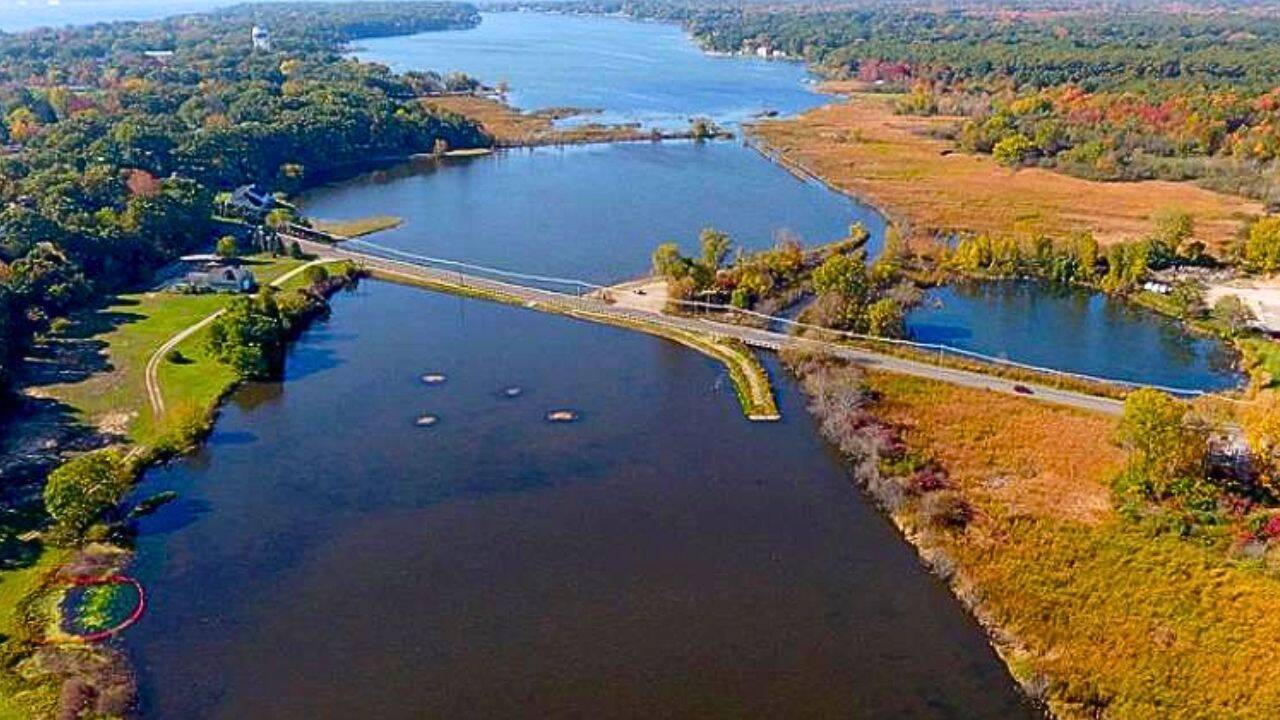
We love a good cleanup story. Shovels biting into muck, press conferences against a backdrop of excavators, politicians nodding solemnly as tonnage numbers flash on LED screens. Muskegon Lake recently checked all the boxes: 347,350 tons of debris and 190,000 tons of contaminated soil hauled away in a triumph of industrial sanitation. Everyone clapped.
Except the lake didn
Why Digging Up Muskegon Lake is an Expensive Illusion
news, business
Everyone loves a good cleanup story. Hand me a shovel, point to the industrial grime, and tell me we are restoring nature to its pristine, pre-settlement glory. It feels righteous. It looks great on a municipal press release. The headlines celebrate the extraction of 347,350 tons of debris and 190,000 tons of contaminated soil from Muskegon Lake like it is the environmental resurrection of the century.
Here is the dirty secret nobody in the local economic development office wants to say out loud: moving mountains of historically buried sediment does not fix an ecosystem. Often, it just restarts the clock on a brand-new set of unintended consequences.
I have spent decades watching municipal authorities dump hundreds of millions of dollars into legacy industrial dredging projects across the Great Lakes basin. The playbook never changes. You find federal grant money, you hire consultants who love writing multi-million-dollar feasibility studies, and you dig up a century's worth of sawdust, foundry sand, and heavy metal residues. Then you pat yourselves on the back while the underlying ecological reality remains stubborn, complicated, and largely indifferent to your heavy machinery.
Let us dismantle the lazy consensus.
The Myth of the Tabula Rasa
The underlying premise of the Muskegon Lake cleanup narrative is that nature wants to go back to a pristine baseline if we just vacuum up enough grit. This is a fairy tale.
Muskegon Lake is not a natural aquarium. It is a drowned river mouth lake, heavily modified by human engineering, commercial navigation channels, shoreline hardening, and a century of lumber and manufacturing dominance. When you dredge out hundreds of thousands of tons of sediment, you are not revealing Eden. You are destabilizing benthic zones, altering hydrological velocity, and kicking up sequestered legacy pollutants that were safely buried beneath layers of natural capping silt.
Let us look at the mechanics of what happens when you disturb a century-old sediment bed. Heavy metals like lead, mercury, and various polycyclic aromatic hydrocarbons settle into anaerobic layers where they stay chemically bound and biologically inert. They are trapped. The moment you drop a massive hydraulic dredge bucket into that soup, you reintroduce those toxins into the water column. You trade a localized, static problem for a mobile, highly bioavailable crisis.
Sure, the environmental agencies monitor turbidity. They install silt curtains. But anyone who has worked an active dredge site knows that containment fails. Every single time. You end up redistributing legacy pollution across a broader aquatic footprint under the guise of remediation.
Follow the Incentive Structure
Why do these mega-projects happen? Follow the money.
Environmental remediation is a multi-billion-dollar industrial complex. Contractors, engineering firms, and municipal bureaucrats thrive on scale. A project measured in hundreds of thousands of tons of contaminated soil commands massive federal appropriations, Great Lakes Restoration Initiative grants, and complex contracting loops. Nobody gets a promotion for saying, "Leave the sediment alone, cap it with clean sand where necessary, and let natural attenuation do the heavy lifting over fifty years."
That is not exciting. You cannot cut a giant ceremonial ribbon for doing nothing.
The obsession with total extraction ignores basic cost-benefit pragmatism. When you spend tens of millions of dollars moving dirt from the bottom of a lake to a specialized landfill upstate, you are burning diesel fuel, clogging local roadways with dump trucks, and expending massive carbon capital to achieve a aesthetic victory. What is the atmospheric cost of hauling 190,000 tons of wet soil? Did anyone calculate the carbon footprint of the remediation itself? Of course not. Because in the ledger of modern environmental theater, local optics always trump systemic math.
The Real Problem Was Never the Dirt
If you walk the shores of Muskegon Lake today, the legacy industrial sites are largely gone. The lumber mills faded out generations ago. The modern threat to the lake is not what happened in 1910; it is what is happening right now in 2026.
Non-point source pollution, agricultural runoff from the watershed, poorly managed urban storm drains, and hardened shoreline bulkheads that prevent natural wetland filtration—these are the real killers of urbanized aquatic ecosystems. Pumping millions into digging up old foundry sand while letting lawn fertilizers and street oil flow unchecked into the tributaries is like performing open-heart surgery on a patient while ignoring their pack-a-day cigarette habit.
You cannot engineer your way out of poor land-use planning with a backhoe.
When shorelines are completely locked in concrete and steel sheet piling, the lake loses its biological shock absorbers. Wetlands are the kidneys of a watershed. Muskegon Lake does not need another deep-pocketed dredging contract; it needs shoreline unpaving, wetland reconnection, and aggressive management of modern nutrient loading.
The Downside of My Contrarian Stance
I am not naive. Adopting a leave-it-alone or passive-containment approach comes with massive political risks. Try telling a city councilman whose constituents want waterfront real property values to soar that you prefer a monitored natural recovery strategy over a shiny active cleanup. Try explaining to local residents that the murky water after a storm is a natural function of a dynamic watershed rather than an immediate emergency requiring a federal disaster response.
Active remediation provides psychological comfort. It feels like action. It allows politicians to stand on a dock and proclaim that the sins of the industrial past have been physically hauled away in the back of a Peterbilt.
That psychological comfort is a dangerous narcotic. It creates a false sense of security. Once the lake is "cleaned up" on paper, development pressures intensify, shoreline zoning gets relaxed, and the underlying watershed health degrades further under a new wave of impervious surfaces.
Stop treating lakes like construction sites. Stop celebrating the sheer tonnage of dirt moved as a proxy for environmental health.
The next time a municipality announces a quarter-million-ton sediment removal project, do not cheer. Ask to see the long-term biological monitoring data for the benthic community three years post-dredge. Ask about the carbon accounting. Ask why we are spending a fortune rearranging the past instead of protecting the watershed from the present.
The lake remembers every bucket we drop into it. It is time we start listening to what it is actually telling us.