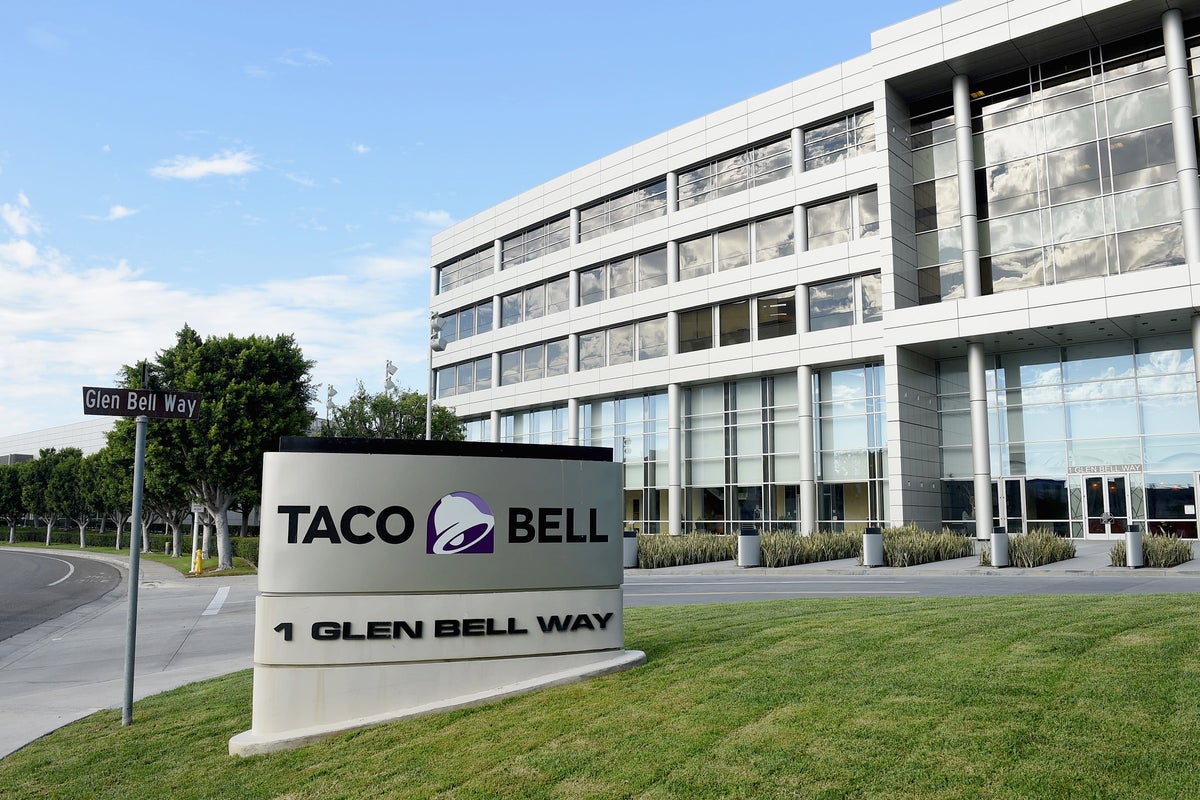
Corporate PR Didn't Save Taco Bell, Supply Chain Brutality Did
The conventional narrative around Taco Bell’s 2006 E. coli outbreak reads like a Disney script for corporate crisis communications. You’ve heard it a hundred times in business school case studies. The story goes like this: a fast-food giant faces a nightmare PR disaster blamed on shredded lettuce, leadership steps up to the mics, executes a masterclass in media relations, and single-handedly rescues a billion-dollar brand from the brink of total collapse.
It is a clean, comforting story. It is also completely wrong. Recently making waves in related news: The Mechanics of Sub-Treaty Bilateralism and Asymmetric Trade Friction.
I have watched executive teams blow tens of millions of dollars trying to "PR their way" out of structural operational failures. The obsession with media strategy during a supply chain disaster is a dangerous distraction. Taco Bell wasn't saved by smooth press releases, executive contrition, or crisis managers tweaking messaging in a war room. They survived because they executed a ruthless, deeply unglamorous overhaul of their agricultural procurement model that forced supplier accountability down to the exact field where the produce was harvested.
Focusing on the executive messaging during a health crisis misses the entire point. While corporate spokespeople were sweating under studio lights, the real fix happened in the soil, the distribution hubs, and the contract negotiations with massive agricultural vendors. Further details on this are detailed by The Economist.
Blaming the Lettuce Was a Distraction
For weeks during the late 2006 outbreak, the media and brand consultants fixated on shredded lettuce as the primary villain. The panic centered on a single ingredient, prompting widespread hysteria over produce washing protocols and fast-food salads.
Yet subsequent investigations by health authorities revealed a far more complicated reality. The source of contamination in major foodborne illness clusters often traces back to complex cross-contamination vectors—irrigation water run-off from neighboring cattle operations, systemic distribution center flaws, or soil contamination that no amount of industrial washing can erase.
By letting the narrative stay trapped on "lettuce safety," industry observers missed the underlying operational vulnerability.
The Reality of Food Safety: You cannot wash bad agricultural practices off a leaf of produce. When a pathogen enters the supply chain at the farm level, localized store hygiene is merely theater.
Fast-food operations rely on high-volume, low-margin supply networks. When you prioritize cost reduction across thousands of vendors, you build fragility into every single taco shell and lettuce bag. The obsession with the specific vehicle of the bacteria obscured the real issue: a supply chain architecture optimized entirely for price rather than biological traceability.
The Myth of the Crisis PR Masterclass
Every time a corporate disaster strikes, a parade of PR consultants steps forward to analyze the "response strategy." They critique the tone of the CEO, the speed of the press releases, and the color of the suits worn at press conferences.
This entire framework is fundamentally flawed.
Consumers do not return to a fast-food chain because they found the CEO’s apology video moving. They return when two conditions are met:
- The immediate hazard is physically removed from the system.
- The fundamental value proposition (cheap, fast, convenient food) remains intact while public attention naturally moves on to the next news cycle.
PR Action (Appeasement)  --> Temporarily controls headline tone
Operational Overhaul      --> Eliminates physical pathogen risk
Price & Convenience       --> Retains core consumer habit
If Taco Bell had deployed the greatest crisis communication strategy in human history without completely rewriting their vendor contracts and farm-level testing protocols, a second outbreak six months later would have killed the brand permanently. The media strategy was noise. The farm-to-fork auditing infrastructure was signal.
How Real Supply Chain Accountability Works
To actually fix a biological break in a distribution network, you have to burn down the traditional vendor relationship model. Historically, major chains bought produce through layers of brokers, middle-tier distributors, and regional farms. This created plausible deniability at every layer. When something went wrong, the farm blamed the processor, the processor blamed the logistics provider, and the retailer blamed the farm.
Real safety requires absolute, uncompromising traceability.
1. Direct Farm-Level Auditing
Companies must bypass brokers and establish direct oversight of agricultural practices. This means testing irrigation water quality, establishing mandatory buffer zones between livestock and crop fields, and enforcing strict field-sanitizer protocols.
2. Batch-Level DNA Testing
Instead of relying on visual inspections or random sampling, modern agricultural logistics require rapid pathogen testing at the processing plant before produce is ever loaded onto outbound trucks.
3. Immediate Isolation Capabilities
If an anomaly appears in a single region, the supply chain management system must be capable of blacklisting and isolating specific field lots within minutes, not days.
The Uncomfortable Truth About Consumer Behavior
Here is the brutal reality that brand strategists hate to admit: consumer memory is extraordinarily short, provided you don't kill them.
Corporate executives love to believe that customers form deep, emotional bonds with fast-food brands, carefully weighing corporate ethics and crisis responses before deciding where to buy lunch. They don't. Fast food relies on habit, price point, and geographic convenience.
When a brand suffers a food safety crisis, sales plummet not because consumers have made a moral judgment, but because temporary fear overrides basic habit. As soon as the immediate threat subsides and the health departments clear the stores, the gravitational pull of convenience inevitably wins.
The playbook for surviving a health scandal isn't complex, but it requires cold execution:
- Stop talking immediately. Every press release extends the news cycle and reminds the public of the contamination.
- Fix the physical infrastructure. Implement mandatory, non-negotiable standards for every supplier down to the grower level.
- Absorb the financial hit. Accept the short-term earnings collapse while paying premium prices for verified, safer produce.
- Let habit restore volume. Trust that convenience and value will pull the core customer back once the headline noise dies down.
Stop studying the press conferences. Start studying the supply contracts.
The next time a major brand faces a catastrophic product failure, ignore the corporate spokespeople. Look at the balance sheet, look at the vendor audits, and look at the logistics protocols. That is where brands live or die.