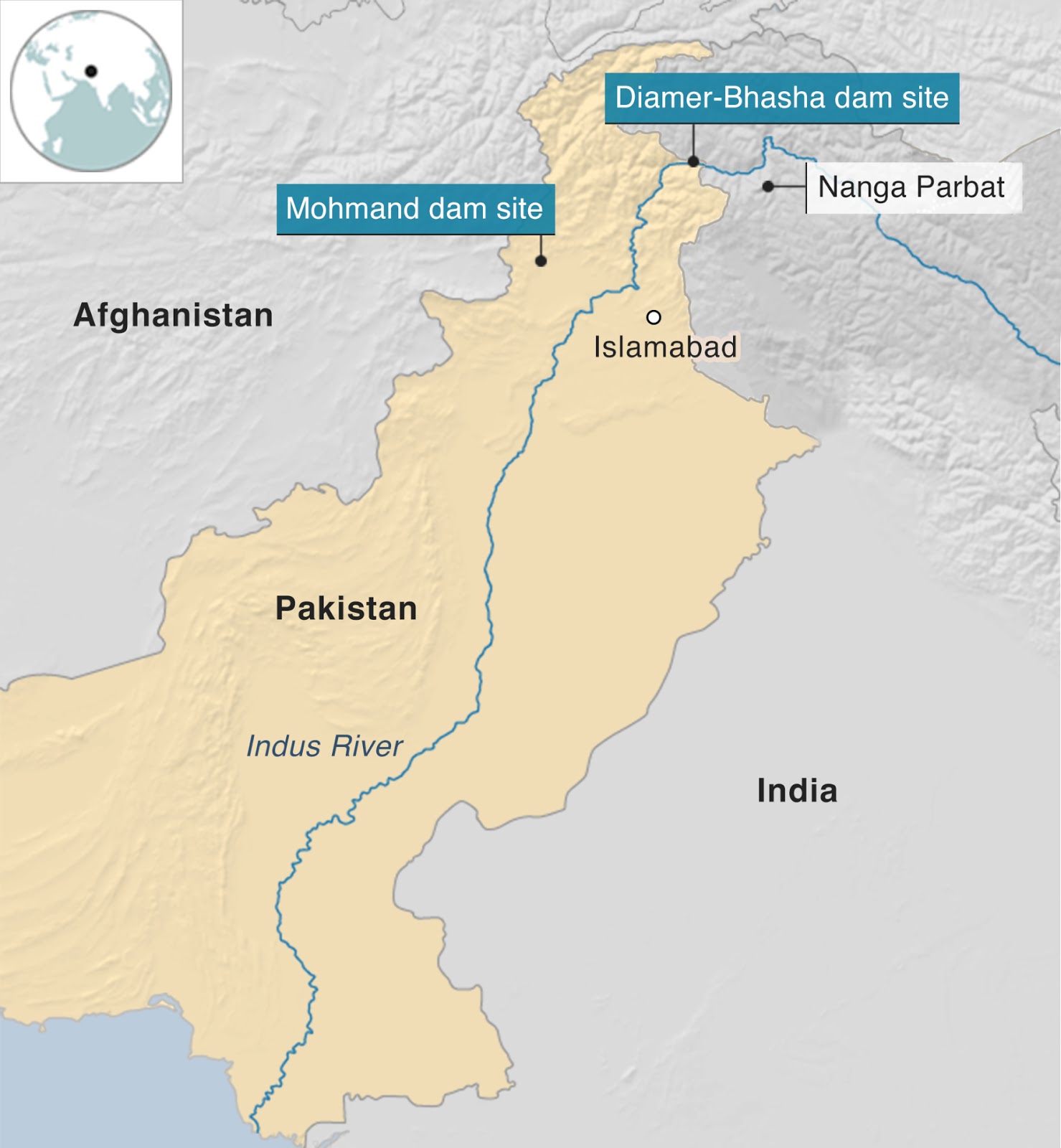
The recent surge of protests in Gilgit-Baltistan over the Diamer-Bhasha Dam isn't just a localized dispute about land compensation or boundary lines between Kohistan and Chilas. It is the death rattle of a 20th-century obsession with "prestige infrastructure" that ignores 21st-century economic reality. While the mainstream media fixates on the government’s desperate attempt to set a "timeline" for dispute resolution, they are missing the forest for the trees. The timeline doesn't matter because the project is a fiscal black hole masquerading as national salvation.
For decades, the Pakistani establishment has sold the Diamer-Bhasha Dam as the ultimate solution to water scarcity and energy deficits. They treat it as a sacred cow. In reality, it is a $14 billion (and counting) monument to sunk-cost fallacy. The "lazy consensus" suggests that if we just settle the tribal disputes and find the funding, the dam will secure Pakistan’s future. That logic is not just flawed; it is dangerous.
The Myth of the Infinite Reservoir
The central argument for Diamer-Bhasha is its massive storage capacity—approximately 8.1 million acre-feet (MAF) of water. Proponents argue this will revolutionize irrigation. They forget to mention the silt.
The Indus River carries one of the highest sediment loads in the world. When you build a mega-dam in a high-altitude, seismically active zone, you aren't just building a water tank; you are building a giant sediment trap. I have seen engineers overlook the "trap efficiency" of reservoirs until the capacity drops by 20% in the first two decades. We are essentially spending billions on a battery that starts losing its maximum charge the moment you plug it in.
More importantly, the obsession with storage ignores the crisis of efficiency. Pakistan has one of the lowest "crop per drop" ratios in the region. We lose massive amounts of water to crumbling canal infrastructure and primitive flood irrigation. The contrarian truth? If the state spent one-tenth of the Bhasha budget on lining existing canals and incentivizing drip irrigation, they would "create" more water than the dam ever could, without displacing a single soul in Gilgit-Baltistan.
A Financial Suicide Pact
Let's talk about the money—the part where the "industry insiders" usually lower their voices. The estimated cost is north of $14 billion. In a country currently surviving on IMF life support and rollovers from friendly nations, this isn't just an ambitious project; it’s a financial suicide pact.
- The Sovereignty Trap: Because the dam is located in a disputed territory (PoGB), major multilateral lenders like the World Bank and the Asian Development Bank have historically stayed away. This forces the state to rely on "creative financing" or high-interest bilateral loans.
- Opportunity Cost: Every rupee poured into the concrete of Bhasha is a rupee taken away from solar, wind, and run-of-the-river projects that have shorter gestation periods and higher ROI.
- Inflationary Pressure: Massive infrastructure spending in a high-inflation environment further devalues the currency. By the time the first megawatt hits the grid—if it ever does—the cost of that power will be astronomically higher than the current "affordable" projections.
The Seismicity Denial
The site of the dam is nestled in the Hindu Kush-Himalayan region, one of the most seismically volatile places on Earth. We are talking about building the world's tallest roller-compacted concrete (RCC) dam—272 meters high—directly on top of or adjacent to active fault lines.
The technical term for what we are risking is "Reservoir-Triggered Seismicity" (RTS). Imagine the weight of $10^{10}$ tons of water pressing down on tectonic plates that are already under immense stress. This isn't a thought experiment; it’s a geological gamble. If a catastrophic failure occurs, the downstream impact wouldn't just be a "setback"—it would be an apocalyptic event for the Indus Basin.
The Social Contract is Broken
The protests in Gilgit-Baltistan aren't just about money; they are about dignity and the lack of constitutional status. The state expects the people of PoGB to sacrifice their ancestral lands, their graveyards, and their climate for the "national interest," yet it refuses to grant them full constitutional rights or a say in the upper echelons of power.
The government's "timeline" to resolve disputes is a band-aid on a gunshot wound. You cannot resolve a land dispute when the very ownership of the region is legally ambiguous. The local population sees the dam as a colonial extraction project: the electricity goes to the national grid in the south, the water goes to the plains of Punjab and Sindh, and the people of Chilas are left with the ecological ruins and the debt.
The Decentralized Energy Revolution
The status quo believes in the "Big Grid" theory—the idea that massive, centralized power plants are the only way to fuel an industrial economy. This is 1950s thinking.
The future is decentralized. Micro-hydel projects in the north, massive solar farms in the south, and wind corridors in the west provide a resilient, modular energy network. A single hit to a mega-dam or a major transmission line can blackout a nation. A thousand micro-units cannot be taken down simultaneously.
We are chasing a dinosaur. The Diamer-Bhasha project is a relic of an era where "big" meant "better." Today, "fast" and "smart" win. The "dispute" the government is trying to settle isn't just with the locals; it's with reality itself.
The Brutal Reality of Hydropolitics
We hear constant noise about India's water aggression. The Bhasha dam is often framed as a "strategic" necessity to counter Indian dams upstream. This is a distraction. India’s ability to "turn off the tap" is physically limited by the geography of the Indus Waters Treaty. Our real threat isn't New Delhi; it's our own mismanagement.
If we continue to prioritize mega-projects over water governance, we will go bankrupt before the dam is even half-finished. The "timeline" the government just announced is a political fiction designed to pacify protesters and satisfy a military-industrial complex that loves large-scale construction contracts.
Stop asking when the dam will be finished. Start asking why we are still building it.
The most patriotic thing Pakistan can do right now is to stop digging. We are building a tomb for the economy and calling it a reservoir. Abandoning the mega-dam model isn't a sign of weakness; it’s a sign of intelligence. It’s an admission that the world has changed even if our bureaucrats haven't.
If you want to solve the water crisis, fix the pipes. If you want to solve the power crisis, embrace the sun. Leave the mountains alone before they decide to move on their own.
Build the grid of the future, not the monuments of the past.


