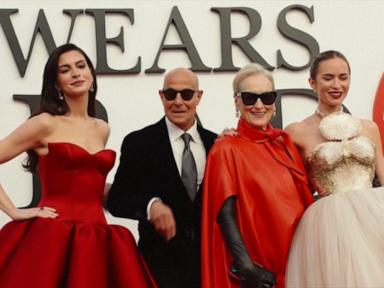
The trades are screaming about a "triumph." They see a $77 million opening weekend for a legacy sequel and call it a resurrection of the theatrical experience. They are wrong. They are celebrating the very thing that is killing the soul of the industry.
When The Devil Wears Prada struts into the top spot two decades later, it isn't a sign of health. It is a sign of creative bankruptcy. It’s the sound of a medium that has forgotten how to speak to anyone who wasn't born before the invention of the iPhone. We aren't watching a hit; we are watching a tax-incentivized séance. Meanwhile, you can find similar events here: The Streamer Safety Crisis Nobody is Investigating.
The Mirage of the $77 Million Win
Every analyst is currently obsessed with the "over-performance" of this debut. They point to the nostalgia factor and the enduring power of Meryl Streep. This is lazy math.
A $77 million opening for a brand name as massive as Prada is actually a symptom of a shrinking market. In 2006, the original film didn't need to win its opening weekend to be a cultural phenomenon. It had "legs." It stayed in theaters for months because it was a discovery. Today’s box office is built on front-loaded hype cycles and algorithmic certainty. To understand the complete picture, we recommend the excellent analysis by Variety.
The industry has traded cultural resonance for brand recognition.
If you look at the inflation-adjusted numbers and the sheer volume of marketing spend required to drag people away from TikTok for two hours, that $77 million starts to look expensive. We are seeing the "Blockbuster-ization" of the mid-budget drama. Films that used to be built on witty dialogue and human stakes are now being forced into the same marketing machinery as superhero sequels.
The Death of the Risk-Based Greenlight
I’ve sat in rooms where executives talk about "de-risking" a slate. They don't want a good script; they want a pre-sold audience.
The original The Devil Wears Prada was a risk. It was a movie about the fashion industry—a niche subject—led by a then-unproven Anne Hathaway and a veteran actress in Streep who hadn't headlined a commercial juggernaut in years. It succeeded because it was sharp, specific, and original.
This sequel exists because a spreadsheet said the IP had a high "affinity score."
When we celebrate these legacy wins, we tell studios one thing: Don't ever make something new again. We are effectively banning the next generation of writers from creating the next Prada. Why would a studio head spend $60 million on an original screenplay when they can just buy the rights to a 20-year-old bestseller and bank on the "Strut Factor"?
The Myth of the Female Audience "Return"
The narrative this week is that "women are saving the box office." This is patronizing and factually thin. Women never left the box office; the studios just stopped making movies for them that weren't predicated on 1990s IP.
By framing this as a "return," the industry ignores the decade of neglect where the only options for adult women were $200 million spectacles or low-rent streaming romances. The success of Prada isn't a miracle of marketing; it’s a desperate audience eating crumbs because they’ve been starved for ten years.
But here is the danger: Hollywood is reactionary. They won’t see this as a demand for smart, adult-oriented stories. They will see it as a demand for "More Movies From 2006." Prepare for the 27 Dresses cinematic universe and a gritty reboot of The Sisterhood of the Traveling Pants.
The High Cost of Nostalgia-Bait
Nostalgia is a finite resource. You can only strip-mine the past for so long before you hit bedrock.
Consider the mechanics of a legacy sequel. You have to pay the original stars ten times their original salary. You have to navigate the "legacy" of the characters, which usually means you can't take any real narrative risks. You end up with a polished, hollowed-out version of the first film that hits the same beats but lacks the bite.
$77 million sounds great on a Sunday night report. But it doesn't account for the opportunity cost.
Imagine a scenario where that same $100 million (production plus global P&A) was split across five $20 million original films.
- One might fail completely.
- Three might break even.
- One might become the new cultural touchstone for Gen Z.
By putting all the chips on Miranda Priestly's coat, the studio has ensured a profitable quarter, but they’ve failed to build a future. They are burning the furniture to keep the house warm.
The Streaming Trap vs. The Theatrical Lie
There is a loud contingent claiming this win proves "Cinema is back."
Is it? Or is this just a theatrical window serving as a glorified commercial for the eventual streaming drop?
The "Theatrical-to-Digital" pipeline has turned the box office into a vanity project. Studios are willing to overspend on a theatrical release just to boost the "perceived value" of the film when it hits their platform three weeks later. The $77 million isn't the goal; it’s the bait.
The audience is being trained to treat the theater as a place for "events" and their couch as the place for "stories." This is a catastrophic divide. Once you decide that only "brands" deserve a big screen, you've already lost the war for the medium’s relevance.
The Uncomfortable Truth About Miranda Priestly
Let’s talk about the character. Miranda Priestly worked in 2006 because she was a relic of a specific kind of corporate elitism. In 2026, that archetype isn't "iconic"—it’s a HR nightmare that feels dated in a world of quiet quitting and remote work.
To make her work today, the writers have to soften her. They have to give her "growth" or make her a "girlboss" hero. In doing so, they kill the very thing that made the original compelling. The sequel is a victim of its own time. It tries to be "sharp" while being terrified of offending the very people it needs to satirize.
The Only Way Out
If we actually want to save the industry, we have to stop cheering for these zombie hits.
We need to stop asking "When is the sequel coming out?" and start asking "Who is the writer nobody has heard of?"
The success of The Devil Wears Prada at the 2026 box office isn't a "strut" to first place. It’s a slow walk to the graveyard of original thought. We are celebrating the fact that we are still stuck in the same loop, wearing the same clothes, and laughing at the same jokes we did twenty years ago.
That isn't entertainment. It's a museum. And museums are where things go when they are no longer alive.
Buy your tickets for the original ideas. Ignore the brands. Stop letting the algorithm tell you what you’re nostalgic for.
That’s all.