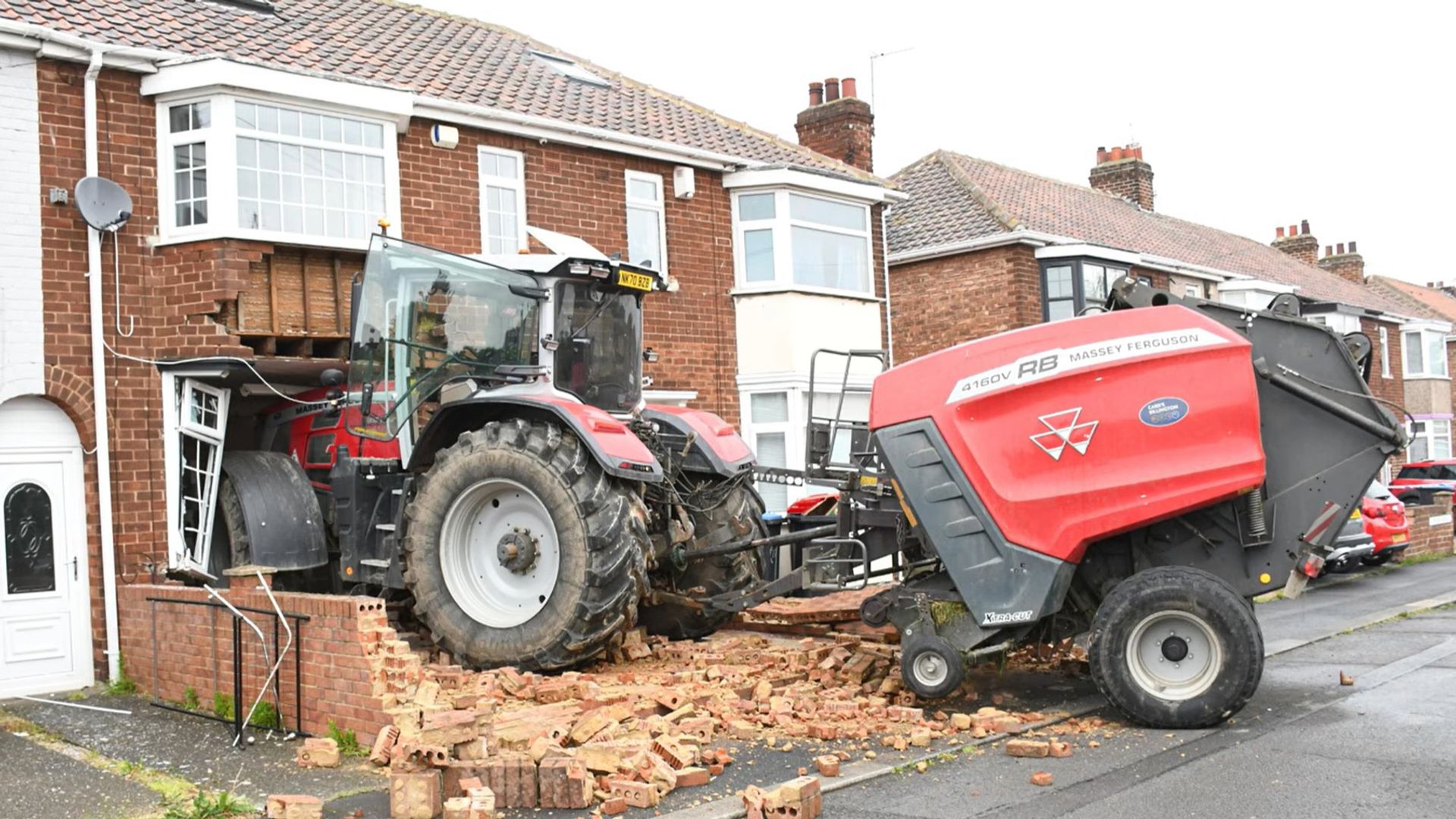
Every mainstream media outlet covering the headline about a man jailed for ramming a tractor into a house in a revenge attack wants you to focus on the obvious. They paint a neat, tidy picture of a lunatic acting in a vacuum, a simple villain deserving of a cell, and a legal system that functioned exactly as intended by locking him away. That narrative is lazy, comfortable, and fundamentally dishonest.
When a citizen feels compelled to pilot multi-ton agricultural machinery through the living room of a rival, you are not witnessing a random spasm of unprovoked madness. You are witnessing a complete and total failure of institutional conflict resolution.
I have spent years analyzing escalation dynamics in rural and commercial disputes, and I can tell you with absolute certainty that violent property destruction is almost never the first choice. It is the option people reach for when every conventional door has been slammed in their face, when civil courts move at the speed of geological drift, and when the social contract has already been shredded by months or years of unpunished grievances.
Let us look at the lazy consensus. The media tells us that prison solves this. Lock the perpetrator up, throw away the key, and society is safe. But that ignores the systemic rot underneath. It treats the smoke while ignoring the grease fire in the kitchen.
The Anatomy Of Institutional Failure
Civil law is supposed to offer a monopoly on dispute resolution. The state tells you: do not take the law into your own hands; bring your grievances to us, pay your fees, wait for a judge, and we will restore equity.
Except that promise is broken daily.
When property disputes, boundary violations, or personal vendettas drag on through civil litigation for three, four, or five years, racking up legal fees that exceed the value of the disputed asset, the legal system ceases to function as a remedy. To a cornered individual, the court system stops looking like a neutral arbiter and starts looking like an expensive, bureaucratic stalling machine designed to wear down the party with fewer resources.
Imagine a scenario where a business owner or property holder is systematically wronged by a rival, the local authorities shrug their shoulders and label it a civil matter, and the courts offer an injunction date twenty-four months down the line. In that environment, the cost of abiding by the law begins to outweigh the cost of breaking it.
That does not excuse driving a tractor into a load-bearing wall. Criminal acts must carry consequences, and vigilante destruction threatens public safety in horrifying ways. But if we pretend this man is an alien creature dropped from the moon rather than a predictable product of a paralyzed legal apparatus, we guarantee that the next tractor is already idling in a barn somewhere.
Why Punitive Sentences Are Lazy Governance
Slapping a lengthy prison sentence on a violent retaliator satisfies our primitive desire for retributive justice. It feels good. It gives the headline writers a clean ending.
It is also an admission of administrative defeat.
Real deterrence requires swift, certain, and proportionate intervention early in a dispute, not draconian spectacles after the breaking point has been reached. When civil courts fail to provide timely relief, they inadvertently outsource enforcement to the extremes of human frustration.
Look at how property disputes are handled in jurisdictions that actually maintain social cohesion. They feature rapid mediation boards, binding local arbitration, and immediate financial penalties for bad-faith actors who drag out litigation. They do not let petty hatreds simmer for half a decade until someone climbs into a diesel-powered front loader.
By focusing entirely on the length of the prison sentence, the establishment protects its own incompetence. It tells the public: the system worked because we punished the crime, while completely ignoring the fact that the system manufactured the desperation that led to the key being turned in the ignition.
The Brutal Truth About Conflict In Modern Society
We live in a culture that infantilizes conflict management. We pretend that if we ignore tension long enough, or tell people to be nice, deep-seated animosities will evaporate. They do not. They fester.
When two parties are locked in a zero-sum local feud—whether over land, family, business, or reputation—and institutional safety valves are rusted shut, pressure builds. The tractor is just the physics of the situation expressing itself when all other outlets are sealed.
Until we fix the agonizing crawl of civil justice and stop pretending that locking people away after the explosion absolves the state of its duty to prevent it, these stories will repeat.
The man is in jail. The house is destroyed. And the underlying rot remains completely untouched.
Stop asking why one man snapped. Start asking why the system left him nowhere else to go.