The wind does not care about borders. It sweeps down from the high plateaus of northern Chihuahua, gathers heat across the Chihuahuan Desert, and rushes through the canyons of the Big Bend unchecked. For millennia, this desolate expanse of West Texas was defined by its defiance of lines. Rivers carved canyons through limestone older than trees, and the horizon stretched so far that the sky felt like a physical weight.
Then came the heavy equipment.
To understand what is happening along the border in Brewster County, you have to look past the bureaucratic vocabulary of federal procurement contracts and environmental waivers. You have to stand on the banks of the Rio Grande where the water runs shallow enough to cross on foot, and listen to the heavy diesel roar of bulldozers waking up the dust.
Progress has a sound. It rattles.
The Iron Line in the Sand
In late spring, the Trump administration’s border infrastructure initiative reached one of the most remote and ecologically fragile corners of the American continent. For decades, the Big Bend region—anchored by Big Bend National Park and the vast stretches of private and state-owned ranch land surrounding it—had been bypassed by major barrier construction. The terrain itself was the wall. Sheer cliffs, hundred-degree summers, and bone-dry arroyos formed a natural barrier more formidable than any engineered fence.
Yet, policy collided with geography.
Federal plans set out to install steel bollard walls across sensitive stretches of the river corridor, cutting through public lands and historic ranching tracts. To the engineers in Washington, it was a logistics problem to be solved with concrete pours, high-tensile steel, and industrial-grade security lighting. To the people who live, work, and bleed under the West Texas sun, it felt like an amputation.
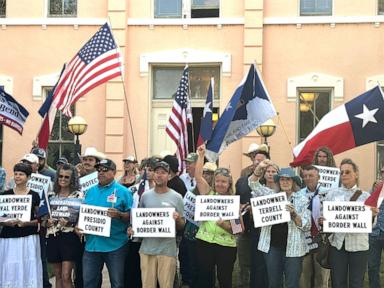
Consider a hypothetical rancher whose family has watered cattle on the same bend of the river since the late nineteenth century. For generations, the boundary was understood through stewardship, not architecture. Cattle drifted across the low-water channels after heavy rains; neighbors on both sides of the river exchanged greetings, trade, and shared labor.
When heavy trucks rumble down caliche roads, bringing steel posts and grading equipment, they are not just marking a political boundary. They are altering a watershed.
Anatomy of an Ecosystem
The Big Bend is not empty. That is the great misconception of the desert. To the untrained eye driving down US-90, the landscape looks like a postcard of nothingness—creosote bushes, ocotillo stalks, and jagged mountains shimmering in the heat haze.
Step closer.
Look down at the sandy wash beneath a mesquite tree. You will see the tiny, star-shaped tracks of a javelina, the delicate prints of a mule deer, and the unmistakable, heavy pad of a mountain lion that descended from the Chisos Mountains under the cover of darkness. This desert is a highway for life. Migratory species rely on the river corridor as a vital lifeline during scorching summers. Black bears cross back and forth between the protected wilderness of the national park and the rugged mountains of northern Mexico.
Engineered barriers do not discriminate, but they do obstruct.
When vertical steel bollards sink deep into the alluvial soil of the floodplain, they change how water moves during flash floods. When torrential summer monsoons hit the mountains, millions of gallons of water funnel down dry canyons into the Rio Grande. Debris—branches, tumbleweeds, and silt—catches against solid fencing, turning barriers into unintended dams. Water backs up, scouring out new channels, eroding fragile riverbanks, and washing away centuries-old cottonwood groves.
The ecology of the borderlands is a delicate clockwork. Change one gear, and the whole mechanism binds.
The Human Cost of Isolation
Beyond the wildlife and the hydrology lies the human dimension—the intricate web of cross-border culture that has thrived in the shadow of the mountains for generations.
In towns like Terlingua, Lajitas, and Presidio, the boundary has always been porous in spirit, even when strictly managed by law. Families are intertwined by marriage, commerce, and shared history. Musicians travel across the river for weekend festivals; doctors and markets in larger Mexican border cities serve remote Texan communities that are hours away from major American medical centers.
When the steel goes up, a psychological shift occurs.
The wall introduces a permanent visual monument to division in a place where people learned long ago that survival depended on cooperation. It changes the skyline. Where a traveler could once stand on a mesa and watch the sun dip below a horizon unbroken by human hands, they now see the rhythmic, prison-like geometry of vertical iron posts slicing the sunset into bars.
Local business owners watched the permits clear with a mixture of resignation and anxiety. Tourism is the lifeblood of the Big Bend economy. Visitors come from all over the world not to see concrete and steel, but to experience one of the last truly dark, wild, and untouched frontiers in North America. They come for the silence. They come to feel small beneath a cathedral of stars.
It is difficult to maintain that sense of wonder when the soundtrack of the desert is the backup beeps of heavy machinery and the clang of pile drivers.
The Logic of the Barrier
To be fair to the architects of the policy, the operational pressure was immense. Federal border enforcement agencies faced unprecedented numbers of migrant crossings across the southern border in preceding years, stretching personnel and resources to a breaking point. Smuggling cartels exploited remote, unguarded stretches of the Big Bend sector, moving contraband through rugged terrain where traditional agents struggled to maintain a continuous presence.
From a tactical perspective, physical barriers are force multipliers. They buy response time. If a sensor trips and a vehicle barrier holds, agents stationed miles away gain precious minutes to intercept illicit traffic before it vanishes into the interior highway network.
The administration argued that national security required absolute control over every linear mile of the international boundary, leaving no blind spots for illicit operators to exploit. In Washington, maps are flat. Lines are drawn with rulers. Every mile of border must be secured, categorized, and monitored.
Yet, maps do not bleed. They do not capture the exhaustion of a border patrol agent driving a Humvee through forty miles of axle-breaking caliche at two in the morning, nor do they reflect the profound grief of a local landowner watching federal eminent domain proceedings carve up ancestral acreage.
The Silence After the Build
Construction crews eventually finish their work. The dust settles. The heavy equipment loads onto flatbeds and rolls north toward the interstate, leaving behind a scarred earth that will take decades to heal.
The steel stands. It gleams coldly in the midday sun, absorbing the heat until the air above it shimmers. At night, high-intensity floodlights wash the riverbanks in a sterile white glow, outshining the Milky Way and blinding the nocturnal creatures that have roamed these canyons since the Pleistocene epoch.
And yet, the desert remains stubborn.
Seeds lie dormant beneath the caliche for seven years, waiting for a rain that may not come today, but will come eventually. When it does, green shoots will push up around the base of the steel posts, wrapping vines around the iron as if attempting to reclaim what was always wild.
The river continues to flow, sometimes a trickle, sometimes a brown torrent, carving its own path through the stone regardless of what humans build on its banks.
In the end, the wall is just a temporary punctuation mark in a very old story. The mountains were here before the treaties, before the nations, before the first human footprint pressed into the mud of the floodplain. They will be here long after the steel has rusted into the red soil, reclaimed by the wind, the sun, and the silence of the West Texas night.