The air in Riyadh tastes of dust and ambition. Across the capital, steel skeletons of futuristic towers pierce a pale sky, monuments to a kingdom trying to outrun its own history. Mirrors flash against the sun. Cranes swing in rhythmic synchronization. Everything here is designed to convey unshakeable momentum, a continent-sized project of reinvention led by a man in a hurry.
Crown Prince Mohammed bin Salman wants a new kingdom. He wants gleaming tech hubs, rolling green golf courses carved from ancient dunes, and millions of tourists wandering through valleys where only nomads once dared tread. But ambition is a fragile thing. It requires silence. It requires peace. And right now, the borders are growing very loud.
To understand the quiet panic gripping the halls of power in Riyadh, you have to look beyond the air-conditioned boardrooms and out toward the water. You have to look at the narrow choke points where the world's commerce breathes.
The Sound Across the Water
Imagine standing on the deck of an oil tanker idling just off the coast of Yemen. The water is a flat, unblinking blue. The heat presses down like a physical weight. Suddenly, a streak of fire tears across the horizon. It is a drone, small, crude, yet terrifyingly precise, hurtling toward a multi-million-dollar vessel carrying the lifeblood of the global economy.
This is not a hypothetical exercise. This is the reality of the Bab-el-Mandeb strait, a name that translates poetically to the Gate of Tears. For Saudi Arabia, these tears are not metaphorical. They are economic, strategic, and existential.
When the Houthis in Yemen launch missiles toward Red Sea shipping lanes, they are not merely harassing distant cargo ships. They are knocking on Riyadh’s front door. Every explosion off the coast sends a shudder through the grand economic blueprints of Vision 2030. Foreign investors sitting in New York or London look at the smoke on the horizon and pause. They recalculate risk. They hesitate. And hesitation is the mortal enemy of a trillion-dollar transformation.
For years, the Saudi strategy relied on a simple formula: build a wall of wealth so high that no regional conflict could scale it. But wealth is denominated in oil, and oil must move. When the waterways become shooting galleries, the wall begins to crumble from the bottom up.
The Shadow of a Bigger War
The drums of a broader confrontation between Washington and Tehran do not beat in a vacuum. They echo through every royal palace, military command center, and intelligence bureau across the Arabian Peninsula.
For decades, the unspoken contract between the Gulf monarchies and the United States was straightforward. Washington provided the iron umbrella; Riyadh kept the oil flowing. But the world has tilted on its axis. The United States, once tethered to Middle Eastern crude by an umbilical cord of strategic necessity, now sits atop its own oceans of shale. American presidents look toward Asia with anxious eyes, eager to pivot away from the endless sand traps of the Middle East.
This pivot leaves leaders in Riyadh exposed. They look across the Persian Gulf and see an adversary that has mastered the art of asymmetric warfare. Iran does not need to win a conventional naval battle to choke the Saudi economy. It only needs to keep the region on a permanent knife-edge.
Consider the calculus inside the royal court. If a full-scale conflict erupts between the United States and Iran, Saudi Arabia will not have the luxury of neutrality. Its airspace will be crossed. Its desalination plants—the fragile mechanical lungs that keep millions alive in an unforgiving desert—will be prime targets for proxy retaliation. Its glittering cities, built on the promise of untamed modernity, could become collateral damage in a geopolitical chess match played by superpowers with different priorities.
The prince knows this. That is why the diplomatic chessboard has shifted so dramatically in recent months. The handshakes in Beijing with Iranian officials were not born of sudden affection. They were born of absolute, pragmatic necessity. When the American umbrella looks increasingly unreliable, you start talking to the storm.
Mecca and the Line in the Sand
There is another boundary, far more sensitive than any map coordinate. It is spiritual, historical, and absolute.
Mecca.
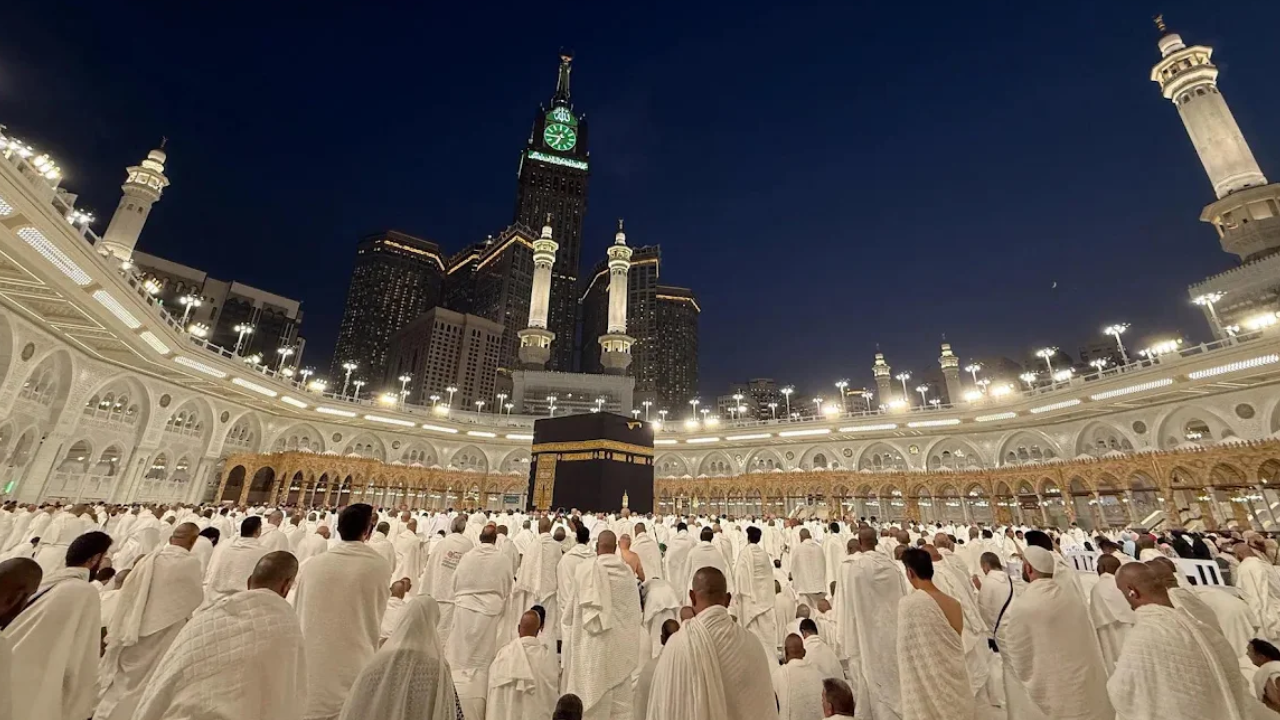
For the House of Saud, legitimacy does not stem merely from economic growth or absolute authority. It stems from custodianship. The King is the Custodian of the Two Holy Mosques. If a regional war draws close enough to threaten the sanctity of the holy sites—if the red lines of religious and national pride are crossed by flying shrapnel or retaliatory strikes—the nature of the conflict changes instantly.
It stops being a political dispute over shipping lanes or regional influence. It becomes a total existential crusade.
No leader in Riyadh can afford to watch the fire approach Mecca. Yet, by locking arms with Washington’s broader containment strategies, and by permitting American military assets on Saudi soil or in neighboring airspace, the kingdom remains tethered to the very escalation cycle it fears most. It is a dangerous tightrope walk. Lean too far toward Washington, and you invite direct confrontation with Tehran's proxy networks. Lean too far toward accommodation, and you alienate a superpower whose security guarantees, however frayed, remain the ultimate insurance policy.
The Architecture of Anxiety
Drive north from Riyadh toward the coast of the Red Sea, and you will see the future taking shape in real time. NEOM rises from the dust like a sci-fi painting come to life. Linear cities, artificial ski resorts, floating industrial complexes—it is a staggering manifestation of human will.
Yet, every single steel beam erected in that desert rests upon a foundation of fragile assumptions. It assumes that the sea routes will remain open. It assumes that regional peace can be bought with economic integration. It assumes that the old hatreds of the region can be paved over with concrete and glass.
History suggests otherwise. History whispers that empires and kingdoms are rarely undone by their lack of ambition; they are undone by their inability to control the chaos at their borders.
The Crown Prince wanted to change the world in a generation. Now, he finds himself racing against time, trying to finish his cities of the future before the fires of the past catch up to him.
The water at the Gate of Tears is churning. The red lines are drawing closer. And in the silent heat of the Arabian night, the glass towers cast long, nervous shadows across the sand.