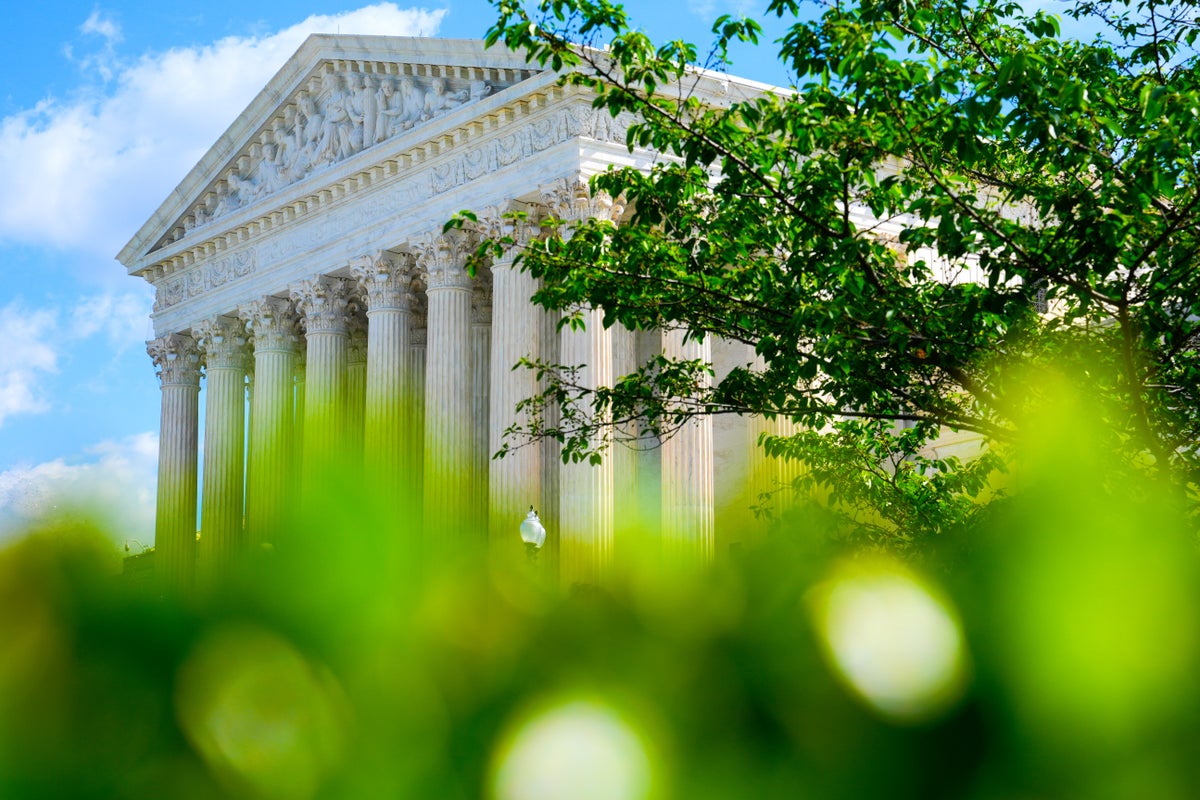
On Wednesday, April 29, 2026, the United States Supreme Court began hearing oral arguments for two consolidated cases, Mullin v. Doe and Trump v. Miot. At the heart of the dispute is whether the executive branch possesses the unreviewable power to strip Temporary Protected Status (TPS) from over 350,000 Haitian and 6,000 Syrian nationals. The administration argues that the Homeland Security Secretary holds absolute discretion to end these protections, while advocates contend that the government ignored clear evidence of ongoing catastrophe in these nations. This case is the endgame for a decade-long legal battle over the limits of presidential authority and the fate of families who have lived legally in the U.S. for years.
The Doctrine of Absolute Discretion
The administration’s legal team has arrived at the high court with a blunt instrument. Their core argument rests on a strict interpretation of the Immigration and Nationality Act, claiming that the law bars judges from questioning the "why" or "how" behind a decision to end TPS. Justice Department attorneys have summarized their position in four words: "No judicial review means no judicial review."
This isn't just about administrative procedure. It is an attempt to insulate the executive branch from the oversight of the federal court system. If the administration succeeds, the Department of Homeland Security would effectively gain a "black box" power to terminate humanitarian protections regardless of whether the target country is actively under fire or submerged by natural disaster.
The Evidentiary Gap
The friction in the courtroom stems from a glaring contradiction. While the administration claims Haiti and Syria are safe enough for mass returns, its own State Department maintains Level 4 "Do Not Travel" advisories for both nations.
In Haiti, the political infrastructure has largely evaporated, replaced by gang coalitions that control vital transport hubs and healthcare facilities. In Syria, after fourteen years of conflict, the economic and physical infrastructure remains in a state of ruin, with over 15 million people still requiring emergency assistance.
Critics point out that the administration’s push to end status for these groups did not follow an improvement in home-country conditions. Instead, they argue the terminations were a foregone conclusion, driven by a policy of "de-documentation" rather than a factual assessment of safety.
The Economic Ghost in the Room
Beyond the legal theory, there is a massive economic reality that the administration rarely mentions. Haitian TPS holders alone contribute approximately $6 billion annually to the U.S. economy. They are not a transient population; they are healthcare workers, teachers, and small business owners who have built lives over decades.
Ending their status would trigger what some analysts call the largest self-inflicted "de-documentation" event in American history. It wouldn't just result in deportations; it would instantly turn hundreds of thousands of tax-paying, authorized workers into "undocumented" residents, forcing them into the shadows of the informal economy or making them targets for the largest detention and removal operation ever attempted.
The Ripple Effect Across 17 Nationalities
While the current cases focus on Haiti and Syria, the precedent will be felt by nearly 1.3 million people from 17 different countries.
| Country | Estimated TPS Holders Affected | Primary Reason for Designation |
|---|---|---|
| Haiti | 350,000+ | Political collapse, gang violence, natural disasters |
| Syria | 6,000+ | Ongoing civil war and economic ruin |
| Venezuela | 470,000+ | Socioeconomic and political crisis |
| El Salvador | 190,000+ | Lingering effects of earthquakes and civil strife |
If the Court rules that the Secretary’s decision is "unreviewable," every one of these designations becomes a target. The stability of these communities—some of which have existed in the U.S. for over 20 years—would vanish at the stroke of a pen.
A Struggle Over Separation of Powers
The Supreme Court is being asked to decide who really runs immigration policy: Congress, which wrote the TPS statute with specific humanitarian criteria, or the President, who wants the freedom to ignore those criteria.
Lawyers representing the migrants argue that Congress never intended to give the executive branch a blank check to send people back into war zones. They contend that the law includes specific "steps" that must be followed. If the government fails to provide a reasoned explanation for why a country is now safe, the courts must be allowed to step in.
The administration’s counter-argument is a classic "unitary executive" play. They believe that immigration is a matter of national security and foreign policy, areas where the President’s power is at its peak and the Court’s power is at its lowest.
The Human Infrastructure
The tragedy of the TPS debate is the "temporary" label on a permanent reality. Many of these individuals have children who are U.S. citizens—kids who have never stepped foot in Port-au-Prince or Damascus.
The administration’s policy treats these families as line items to be erased. However, the logistical reality of deporting 350,000 people to a country with no functioning government is a nightmare that even the most aggressive immigration hawks have yet to fully explain. A victory for the administration in court might be a win for their legal theory, but it will create a humanitarian and administrative crisis on American soil that the country is nowhere near prepared to handle.
The Court’s decision, expected by the end of the term, will define whether the law is a shield for the vulnerable or a tool for the executive.



