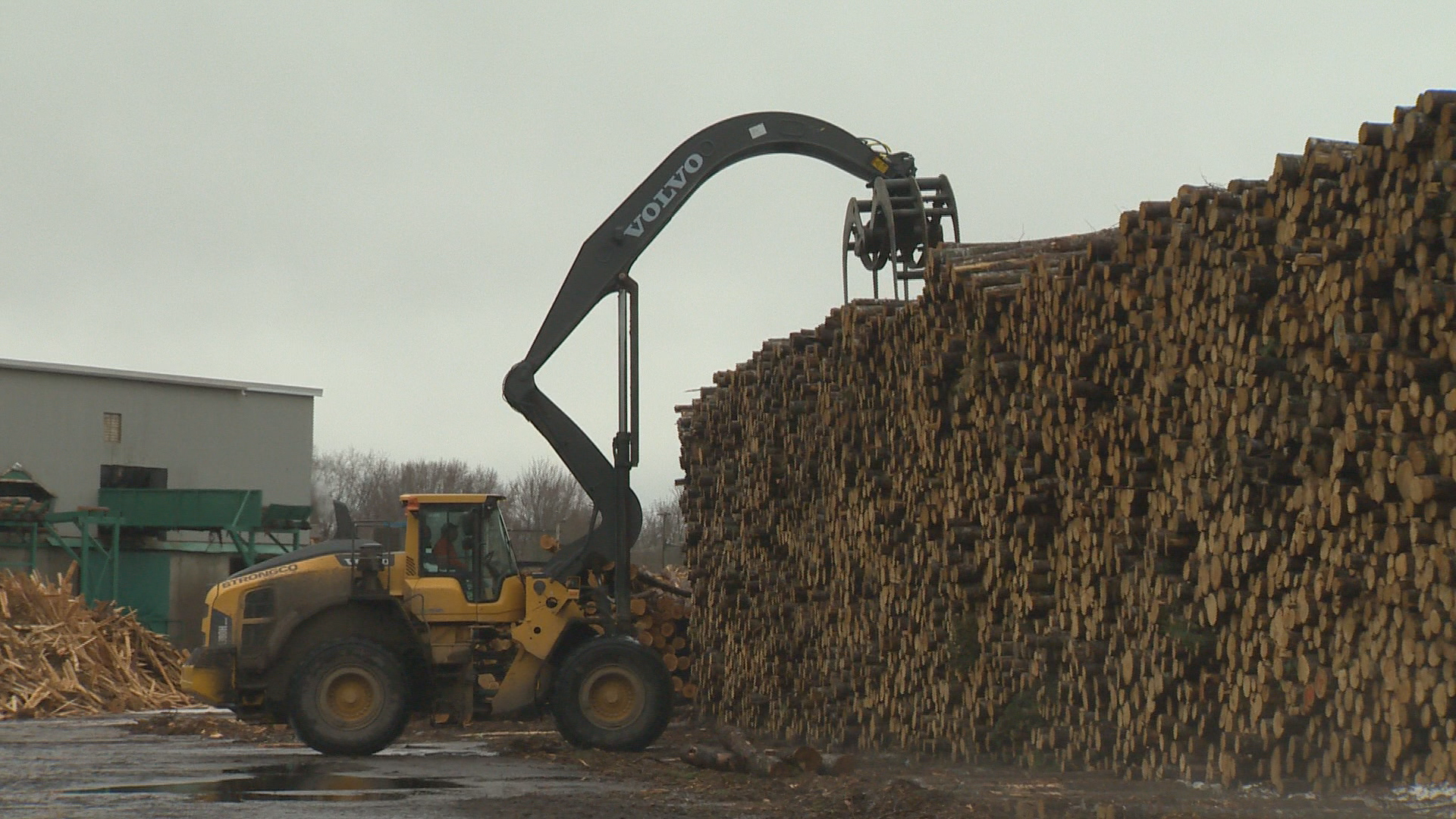
New Brunswick exporters hoping that a U.S. Democratic midterm victory will automatically dismantle protectionist tariffs are misreading how Washington actually makes trade policy. While a shift in congressional control slows down aggressive executive tariff authority and creates procedural friction for the White House, it will not repeal existing duties on Canadian softwood lumber, energy, or manufactured goods overnight. Protectionism has become a rare point of bipartisan consensus in American politics, leaving Maritime businesses exposed to structural trade headwinds regardless of which party holds the gavel on Capitol Hill.
For decades, the economic heartbeat of New Brunswick has been synchronized with the American Northeast. More than 90 percent of the province’s international exports flow south across the border, making Fredericton and Saint John uniquely sensitive to tremors in Washington. When ballots are cast in U.S. midterm elections, boardrooms from Edmundston to Moncton treat the results like a weather forecast for their quarterly balance sheets.
Yet the prevailing narrative—that a Democratic resurgence in Congress equates to a return to frictionless cross-border commerce—ignores three decades of political realignment in the United States. Trade skepticism is no longer the exclusive domain of nationalist populists on the political right. Organized labor, environmental coalitions, and domestic manufacturing lobbies within the Democratic base have steadily pulled the party toward industrial protectionism.
The Illusion of the Congressional Rescue
To understand why immediate trade relief is a mirage, you have to look at the mechanics of American trade law. Over the last half-century, Congress systematically ceded vast authority over tariffs to the executive branch. Through statutes like Section 232 of the Trade Expansion Act of 1962—which allows presidents to impose duties on national security grounds—and Section 301 of the Trade Act of 1974, the White House holds the steering wheel.
A Democratic majority in the House of Representatives or the Senate cannot simply pass a resolution to erase tariffs enacted under these authorities. Even if lawmakers drafted legislation to curb presidential tariff powers or exempt Canadian goods, the president holds the veto pen. Overriding a presidential veto requires a two-thirds supermajority in both chambers, an almost impossible threshold in a hyper-polarized legislature where border-state senators fiercely guard their local industries.
Consider how power shifts in Washington actually affect trade. Congress controls appropriations, oversight hearings, and the confirmation of trade officials. A Democratic-led committee can haul U.S. Trade Representative officials before cameras, demand economic impact studies, and stall funding for aggressive customs enforcement expansions. They can apply political pressure. They cannot unilaterally rewrite the tariff schedule.
For a lumber mill operator in northern New Brunswick or a seafood processor along the Bay of Fundy, committee hearings do not lower border fees. Cash flow is dictated by duties collected at the port of entry in Houlton or Calais, Maine, and those mechanisms remain firmly under executive control.
Bipartisan Protectionism and the New Washington Consensus
The deeper issue is ideological. The era of hyper-globalization that birthed the original North American Free Trade Agreement in the 1990s is dead in Washington, buried by both major parties.
Democratic lawmakers from industrial battlegrounds—states like Michigan, Pennsylvania, Ohio, and Wisconsin—win elections by promising to protect American factory floors and union jobs. Their voters view foreign imports, even from close allies like Canada, with deep suspicion whenever domestic supply chains feel threatened. "Buy American" procurement rules, which routinely lock Canadian steel, timber, and clean-tech components out of federally funded U.S. infrastructure projects, were championed aggressively by Democratic administrations and lawmakers alike.
When New Brunswick officials lobby Washington for exemptions, they often find themselves caught in a crossfire between two different flavors of economic nationalism. Republicans favor broad, blunt-force tariffs as leverage to reshore manufacturing and offset domestic tax cuts. Democrats favor targeted tariffs, strict labor rules, and green industrial subsidies designed to keep supply chains inside American borders.
Neither approach prioritizes the seamless integration that Maritime exporters depend upon. In fact, Democratic insistence on stringent environmental compliance and domestic content thresholds for clean energy projects poses its own set of non-tariff barriers for Canadian firms trying to compete for U.S. contracts.
Softwood Lumber and the Forty-Year Stalemate
Nowhere is the futility of waiting on U.S. election cycles clearer than in the softwood lumber dispute. It is the longest-running trade irritant between Ottawa and Washington, stretching back to the early 1980s.
The core friction is structural, not partisan. In the United States, most timber is harvested from private lands, with prices set by open market auctions. In Canada—including New Brunswick’s vast Crown lands—provincial governments own the forests and set stumpage fees administratively. The U.S. lumber lobby, concentrated in the American South and Pacific Northwest, has argued for forty years that provincial stumpage systems amount to an unfair government subsidy.
Whenever the U.S. Coalition for Fair Lumber Imports petitions the Department of Commerce, countervailing and anti-dumping duties follow. This cycle has repeated under Republican presidents and Democratic presidents, during unified governments and divided Congresses.
| Trade Era | U.S. Political Control | Outcome for Canadian Softwood Lumber |
|---|---|---|
| Lumber I–III (1982–2001) | Divided & Unified (Both Parties) | Repeated cycles of temporary duties, export taxes, and short-lived quotas. |
| Lumber IV (2001–2006) | Republican White House, Shifting Congress | Punitive duties exceeding 27 percent until the 2006 Softwood Lumber Agreement. |
| Lumber V (2017–Present) | Republican & Democratic Administrations | Expiry of 2006 deal triggered continuous annual administrative duty reviews. |
New Brunswick forestry companies have spent tens of millions of dollars in legal fees fighting these determinations before binational panels and the World Trade Organization. Even when international tribunals rule in Canada’s favor, Washington routinely drags out compliance for years while collecting deposits at the border. A midterm election does not alter the political calculus of senators from Georgia, Oregon, or Maine, all of whom defend domestic sawmills regardless of party affiliation.
Energy, Refining, and the Cross-Border Chokepoint
Beyond forestry, New Brunswick’s economic exposure rests heavily on energy and refined petroleum products. The Irving Oil refinery in Saint John—the largest in Canada—processes crude oil and ships the vast majority of its refined gasoline, diesel, and jet fuel into New England.
Here, the dynamic shifts from tariff threats to regulatory and infrastructure bottlenecks. New England relies heavily on Atlantic Canadian refined fuels and electricity imports because pipeline capacity from the rest of the United States into the Northeast is severely constrained.
While a Democratic Congress is far less likely to slap punitive tariffs on Canadian energy—doing so would immediately spike heating oil and gas prices for voters in Boston and Concord—it brings a different set of pressures. Federal decarbonization mandates, stricter emissions standards, and resistance to fossil fuel infrastructure expansion create long-term uncertainty for traditional refining operations.
At the same time, New Brunswick’s ambitions to export clean electricity, green hydrogen, and critical minerals into the American grid face intense scrutiny. Democratic lawmakers routinely attach strict domestic sourcing requirements to federal grid modernization funds. If a transmission project in Maine or Massachusetts relies on federal tax credits, developers face immense pressure to source materials domestically rather than from across the New Brunswick border.
The Currency Cushion and the Margin Trap
Many Maritime exporters have survived recent trade turbulence not because Washington relented, but because the Canadian dollar acted as a shock absorber. A weaker loonie makes Canadian goods cheaper in U.S. dollar terms, artificially offsetting a portion of border duties and compliance costs.
Relying on currency depreciation is a dangerous business model. While a low Canadian dollar pads export revenues, it simultaneously inflates the cost of imported machinery, software, fertilizers, and industrial inputs priced in U.S. dollars. Over time, this erodes capital investment and widens the productivity gap between New Brunswick firms and their American competitors.
Furthermore, smaller and mid-sized enterprises in the province lack the balance-sheet depth to absorb prolonged border friction. A multinational forestry conglomerate can weather five years of held duty deposits while waiting for a binational trade tribunal to rule. A family-owned specialty food producer in Carleton County or a precision manufacturer in Dieppe cannot. When border delays stretch from hours to days due to heightened customs scrutiny, perishable goods spoil and just-in-time supply contracts evaporate.
What Actual Leverage Looks Like for Fredericton and Ottawa
If waiting for Washington to change its mind is a losing strategy, what actually works? History shows that U.S. trade policy only bends when American domestic constituencies feel immediate economic pain.
Ottawa proved this during previous trade disputes by deploying surgical retaliatory tariffs. Rather than slapping blanket duties on all American imports—which hurts Canadian consumers—federal trade negotiators targeted politically sensitive products produced in the districts of powerful congressional leaders. Bourbon from Kentucky, orange juice from Florida, yogurt from upstate New York, and steel from Pennsylvania were placed directly in the crosshairs.
For New Brunswick, provincial diplomacy has to bypass the noise of national cable news and focus on hyper-local economic interdependence. Governors and state legislators in Maine, New Hampshire, and Massachusetts understand that their own economies suffer when cross-border trade stalls. Maine’s paper mills rely on New Brunswick wood chips; New England’s construction sector depends on Maritime lumber; regional tourism flows both ways along the I-95 corridor.
Building coalitions with New England business associations, port authorities, and state chambers of commerce creates pressure from within the U.S. system. When a Maine contractor tells their senator that tariffs on Canadian building materials are driving up housing costs in Portland, that carries infinitely more weight than a diplomatic note from Ottawa.
Diversifying Away From a Single Customer
The harder, slower, and more necessary work involves reducing New Brunswick’s structural over-reliance on the American market. Exporting over 90 percent of international goods to a single country is a massive concentration risk, no matter how friendly the neighbor appears.
Canada already possesses comprehensive free trade agreements with the European Union (CETA) and the Indo-Pacific region (CPTPP). The Port of Saint John has undergone hundreds of millions of dollars in infrastructure upgrades, expanding its container capacity and rail links to central Canada. The physical gateway to global markets exists.
Yet utilization of these trade agreements among Atlantic Canadian businesses remains disproportionately low. Entering European or Asian markets requires navigating unfamiliar regulatory standards, longer shipping timelines, and higher upfront marketing costs. For decades, selling south to Boston or New York was simply easier, faster, and required less adaptation.
That era of effortless continental integration is over. Whether the next U.S. Congress is controlled by Democrats or Republicans, the trajectory of American trade policy points toward managed trade, localized supply chains, and persistent border friction. New Brunswick’s exporters cannot afford to treat midterm election nights as a rescue plan; the only durable protection against Washington’s protectionism is building a business model that no longer depends on Washington’s permission to survive.


