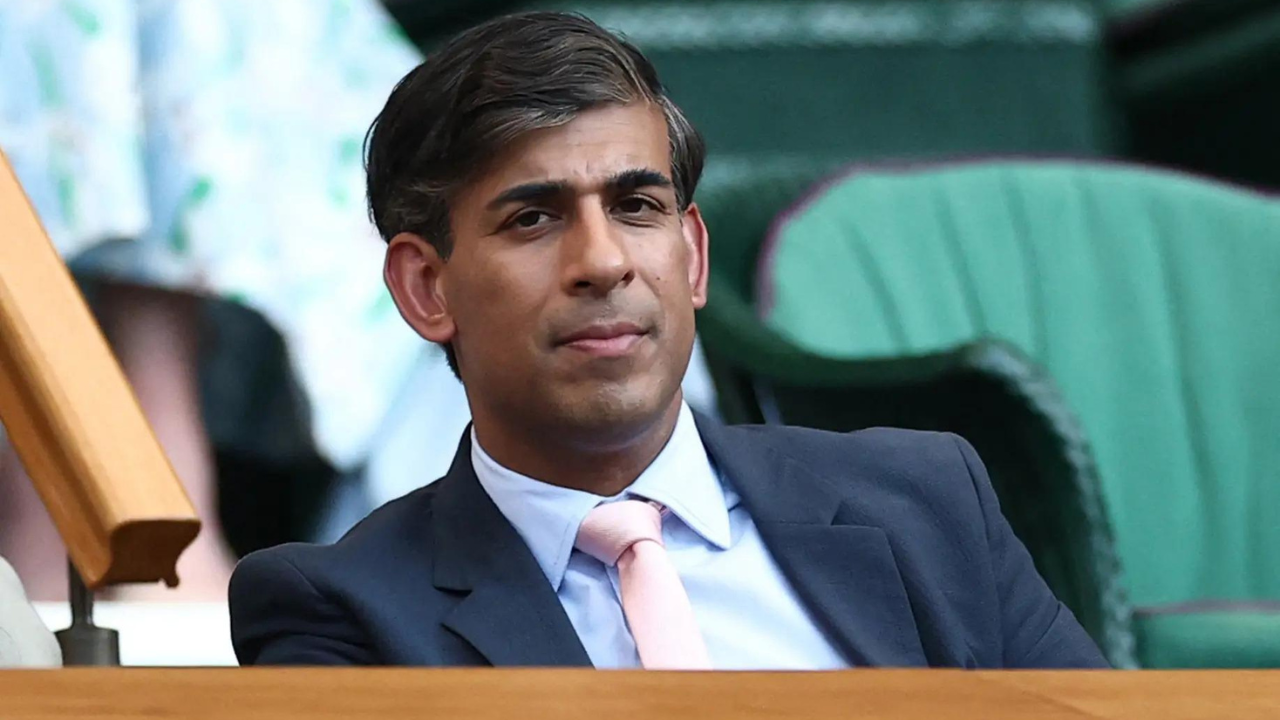
Defining Britishness by skin colour is lazy. Worse, it is a convenient distraction that lets politicians sound brave while dodging the real argument about national identity.
When a headline rallies around a former prime minister pushing back against the question "What are you other than English?", the predictable script writes itself. Applause on one side. Outrage on the other. A neat, tidy moral victory where nobody actually changes their mind and nobody examines what "British" or "English" has meant in practice for centuries.
I have spent years watching political campaigns, media narratives, and institutional diversity drives burn through enormous energy and millions of pounds on surface-level identity battles. Time and again, smart people get trapped fighting yesterday’s proxy war while ignoring the mechanics that actually govern belonging, citizenship, and civic life.
Let us clear the smoke right away. The lazy consensus says there are two camps: people who equate whiteness with being authentically English or British, and people who insist identity is purely inclusive and civic. That framing sounds noble. It is also shallow. It treats national identity like a paint swatch when it actually operates like a legal, historical, and social operating system with plenty of contradictions baked in.
The Myth of the Neat Civic Fix
Here is what standard commentary gets wrong when it cheers a rebuke of racial gatekeeping: it assumes that rejecting skin colour as a test of belonging automatically settles what belonging requires.
It does not. In fact, pretending the question ends at pigmentation leaves a vacuum that worse arguments gladly fill.
Start with basic definitions, because precision matters more than slogans. Englishness, Britishness, ethnicity, and nationality are not synonyms, even though commentators mash them together whenever a soundbite calls for it. Nationality is a legal status. Ethnicity relates to shared ancestry, heritage, or cultural background. Britishness is a multinational political identity tying together England, Scotland, Wales, and Northern Ireland—a union forged through treaties, crowns, wars, and empire, not a single ancestral tribe.
When someone asks a minority Briton, "What are you other than English?", they are usually revealing a narrow mental map of ancestry. Calling that out is straightforward. The harder part—the part polite debate avoids—is recognizing that Britain has long held competing ideas of membership at the exact same time. Even before modern mass migration, "Briton" was an umbrella stretched across distinct nations with prickly histories, while "English" often slid between regional heritage and a stand-in for the whole state.
Sociologists and historians who have studied British identity for decades—figures like Linda Colley in her work on the making of Britons, or Tariq Modood on multiculturalism and national identity—have shown that belonging is never static or purely one-dimensional. It is negotiated through institutions, shared habits, legal rights, and everyday friction.
Imagine a scenario where a third-generation family lives in Birmingham or Leeds. One relative speaks with a broad local accent, follows the Premier League religiously, pays taxes without complaint, and has never lived anywhere else. A stranger still asks about their "real" background. Most commentary stops at That stranger is prejudiced. True enough. Yet that only describes the symptom. It does not explain why a country with deep historical ties across the globe still struggles with a vocabulary that separates heritage from present reality.
Stop Asking the Wrong Questions About Identity
Most public debates around this topic start from a broken premise. Readers type variations of common questions into search bars every day, expecting a neat verdict where there is only tension.
Is Britishness defined by race or shared values?
Neither one tells the whole truth on its own. Defining Britishness by race is factually wrong and socially corrosive in a plural society. Yet claiming it is only about abstract "shared values" is an equally convenient dodge. Values are slippery. Almost everyone claims to value fairness, tolerance, and the rule of law until concrete disputes arise over speech, borders, welfare, or tradition.
Real national identity sits in the messy overlap between legal citizenship, shared institutions, everyday culture, and personal history. Pretending it is purely a set of values lets leaders avoid talking about unequal outcomes, regional neglect, or the genuine discomfort some communities feel amid rapid social change.
Can someone be truly English if their family came from abroad?
Yes, if you mean living as part of the nation, sharing its civic life, and claiming it as home. No, if you define "English" strictly by multi-generational genealogical descent.
Here is the brutal honesty missing from most opinion columns: people use the word in both senses, often in the same conversation, without admitting the shift. If you tell someone their lived identity is invalid because of their grandparents' birthplace, you are policing belonging with a bloodline test. If you pretend ancestral heritage never matters to how people understand themselves or their families, you are ignoring human nature. Both extremes create friction. Honesty requires naming the difference instead of pretending it does not exist.
Why does this question keep coming back in British politics?
Because politicians love a culture-war shortcut when economic and institutional problems feel harder to fix.
Wages stagnate. Public services strain. Housing gets out of reach. Trust in institutions wobbles. Instead of grinding through unglamorous policy trade-offs, political actors reach for identity cues that trigger instant loyalty or instant revulsion. A remark about who counts as "really" English or British travels ten times faster than a policy paper on productivity or local council funding.
Identity politics thrives whenever material anxieties go unanswered and symbols become substitutes for substance.
What Everyone Misses About Civic Belonging
Here is the counter-intuitive truth that cuts across both sides of the aisle: insisting that skin colour does not define Britishness is easy; building conditions where people actually experience equal belonging is hard.
A polite society can easily condemn overt racial exclusion at a podium. That takes thirty seconds. What takes years of unglamorous work is making sure belonging is not conditional on good behavior, elite polish, or performing gratitude.
Think about how conditional acceptance often looks in practice. Minorities in public life are frequently celebrated as proof of openness when things go smoothly, yet scrutinized differently when they criticize the country, take unpopular stances, or carry accents and backgrounds outside the traditional establishment mold. That is not full belonging. That is probation.
At the same time, pushing back against racialized definitions of Britishness should not mean erasing real cultural differences or flattening distinct histories into a bland monoculture. A confident society does not need everyone to sound, eat, vote, or trace their roots the same way to share a common civic home. In fact, demanding total uniformity usually signals insecurity, not strength.
Consider how this plays out across everyday institutions:
| Dimension of Identity | Lazy Consensus View | Practical Reality |
|---|---|---|
| Legal Status | Passport equals full acceptance | Citizenship grants rights, not automatic social ease |
| Heritage | Heritage is either irrelevant or everything | Ancestry shapes stories and ties without owning citizenship |
| Shared Culture | One fixed set of "British values" settles it | Everyday life mixes local habits, law, history, and change |
| Political Rhetoric | Condemning bias solves the debate | Soundbites rarely fix structural or social friction |
Look at that table and ask yourself which side most pundits actually argue. They argue the top row and ignore the rest.
Where My Contrarian View Can Backfire
Let me be upfront about the risks of taking this harder-edged stance. Candour has a cost.
If you point out that "shared values" is vague, or that ancestry and heritage carry real weight in how people think about themselves, bad-faith actors will try to twist your words into an argument for exclusion. They will cherry-pick a sentence to claim heritage matters more than equal citizenship. It does not. Legal equality and civic belonging come first in a free society.
There is also the risk of sounding cynical when people genuinely want reassurance. For someone who has spent their life being treated like a visitor in the only home they know, hearing a blunt call for nuance can feel cold if it strips away clear moral lines against racism. Prejudice is real. Calling it out plainly matters.
The trap is stopping there. Moral clarity is the starting line, not the finish line. If we treat a catchy rebuke of racial gatekeeping as the entire solution, we end up congratulating ourselves while leaving the deeper questions of national cohesion, class, and representation untouched.
How to Actually Shift the Conversation
If you care about a healthier, more honest debate around Britishness—whether you write, lead teams, organize communities, or just argue at the dinner table—stop trading slogans and start changing how you frame the issue.
- Separate citizenship from ancestry in plain language. When someone conflates where a person is from with what they look like, call out the category error directly. Do not get dragged into a debate over who is "pure" anything.
- Stop hiding behind vague "values" talk. Whenever a politician or commentator invokes "British values," ask which specific law, institution, or norm they mean—and whether they apply that same standard consistently across their own allies and critics.
- Watch who benefits from the outrage. Before reacting to a viral quote on identity, check what policy failure, leadership crisis, or fundraising pitch is sitting right behind it.
- Measure belonging by everyday treatment, not speeches. Speeches cost nothing. Look at hiring pipelines, local representation, how ordinary citizens are treated by authorities, and whether people can disagree sharply without being cast as outsiders.
National identity is not a fragile vase that shatters the moment you speak plainly about its contradictions. It is a living argument. Treat it like an adult subject instead of a scoreboard, and you might actually get somewhere.
Drop the slogans. Demand specifics.