The desert outside Tehran does not look like the high-desert country of Texas, but if you close your eyes against the glare, the heat feels exactly the same. It is a heavy, smothering weight.
For Monica Witt, that weight had been shifting for years. Don't miss our earlier post on this related article.
When a person decides to erase their own life, they do not usually do it all at once. It happens in increments. A cold glass of tea on a hot afternoon. A conversation with a stranger that lasts an hour too long. A growing, quiet certainty that the flag on your uniform no longer represents the coordinates of your soul.
By the time the former United States Air Force counterintelligence officer stepped off a plane in Iran in August 2013, she wasn’t just changing locations. She was converting a lifetime of government trust into a currency for survival. She carried no heavy briefcases packed with microfilm. She didn't need them. The most dangerous weapons of the twenty-first century are carried between the ears, stored in the gray matter of people who felt unloved, unappreciated, or unseen by the empires they served. To read more about the background of this, Al Jazeera offers an in-depth summary.
Today, the FBI still keeps her face on a wanted poster. The digital ink never fades. But behind the standard bureaucratic language of "Conspiracy to Deliver National Defense Information" lies a far more unsettling story about how easily the machinery of state secrecy can be dismantled from the inside out.
The Architecture of a Ghost
To understand how a girl from Texas ends up as a asset for the Iranian Revolutionary Guard Corps, you have to look at the unique loneliness of the intelligence community.
Imagine a room with no windows. Inside, the air smells faintly of ozone and stale coffee. You spend ten hours a day looking at lines of code, intercepted chat logs, and satellite imagery of places you will never visit. You know the names of a target’s children. You know what time they go to sleep. But when you leave that room, you cannot tell your spouse, your parents, or your friends a single detail about your day.
You become a ghost to the people who love you.
Monica Witt entered this world in 1997 when she joined the Air Force. She was disciplined. She had an aptitude for languages. The military trained her in Farsi, the language of poetry and geopolitical defiance, and deployed her to places where the tension was thick enough to taste. For over a decade, she served with distinction, securing a high-level security clearance that granted her access to Special Access Programs. These are the secrets within secrets—the operations so sensitive that even mentioning their code names in the wrong hallway can end a career.
But the human mind is not designed to hold secrets indefinitely without a release valve.
When Witt left the military in 2008, the transition to civilian life wasn’t a soft landing. It was a cliff. The sudden absence of structure can be deafening to someone used to the rigid hierarchy of defense work. She worked as a contractor, but the purpose was gone. The mission had evaporated, leaving behind only the administrative friction of a standard bureaucratic life.
Then came the invitation.
The Bridge to Tehran
It started with a film festival in 2012.
The Iranian government has long understood that warfare is fought as much in the psychological realm as it is on the battlefield. They organized the New Horizon Conference, an event designed to attract Westerners who were critical of American foreign policy. For Witt, who had grown deeply disillusioned with US military interventions in the Middle East, the conference was an oasis of validation.
Consider the psychological trap laid for her. For years, her own government had treated her as a small cog in a massive, indifferent machine. In Tehran, she was treated like a VIP. They listened to her. They validated her doubts. They made her feel like a truth-teller rather than a rogue agent.
The FBI would later track her digital footprints during this period. The emails grew more frantic, more resolute. She was crossing a line, and she knew it. In one message to an Iranian contact, she wrote that she was using her training to do something good rather than evil. She genuinely believed she was the hero of her own story.
This is the hardest truth for outsiders to grasp about espionage. Traitors rarely think of themselves as traitors. They think of themselves as defectors, whistleblowers, or visionaries who have finally seen through the grand illusion of nationalism.
When she officially made the leap in 2013, she didn't just bring her perspective. She brought actionable data.
The Digital Assassination of an Agency
The fallout of Witt’s defection wasn’t immediately apparent to the public, but inside the American intelligence apparatus, the alarms were deafening.
She had spent years working in counterintelligence. Her job had been to protect American spies from being caught by foreign adversaries. Because of that role, she knew the identities of the agents. She knew their habits. She knew the specific software and cyber-tools the United States used to monitor Iranian communications.
Once in Iran, she began working with cyber-actors linked to the Revolutionary Guard.
What followed was a targeted, clinical campaign against her former colleagues. Using fake personas on social media—often posing as childhood friends or fellow veterans—the Iranian cyber-teams targeted Witt’s old military associates. They sent messages embedded with malware. They created digital mirrors of her past life to lure unsuspecting officers into lowering their guard.
It was a brilliant, devastating strategy. A standard hacker has to guess your vulnerabilities. A hacker working with Monica Witt knew exactly which buttons to press. They knew which officers were struggling financially, who was bitter about a missed promotion, and who would be susceptible to a friendly message from an old friend.
The damage was systemic. The United States had to pull assets from the field, dismantle communication networks that had taken a decade to build, and rewrite the security protocols for hundreds of personnel. Witt had turned her insider knowledge into a scalpel, cutting away the nerve endings of American intelligence in the region.
The Price of the Wanted Poster
Six years after she vanished, the Department of Justice unsealed a federal indictment against Monica Witt. The 2019 announcement was full of stern faces and promises of justice. They revealed that she had been provided with free housing and computer equipment by the Iranian government as a reward for her services.
But the announcement felt empty, a closing of the stable door long after the horse had bolted across the world.
Witt remains at large, likely living under an assumed name somewhere within the sprawling suburbs of Tehran or the guarded compounds of the state security apparatus. She is a prisoner of her own choice. She cannot leave Iran without risking immediate arrest and a lifetime in a federal penitentiary. She cannot return to the Texas sun. She cannot see her family.
We often view espionage through the cinematic lens of high-stakes glamour—fast cars, tailored suits, and clean escapes. The reality is far more grey and compromised. It is a life spent looking over your shoulder at every airport, wondering if the person sitting next to you at a cafe is an operative with a vial of poison or a pair of handcuffs.
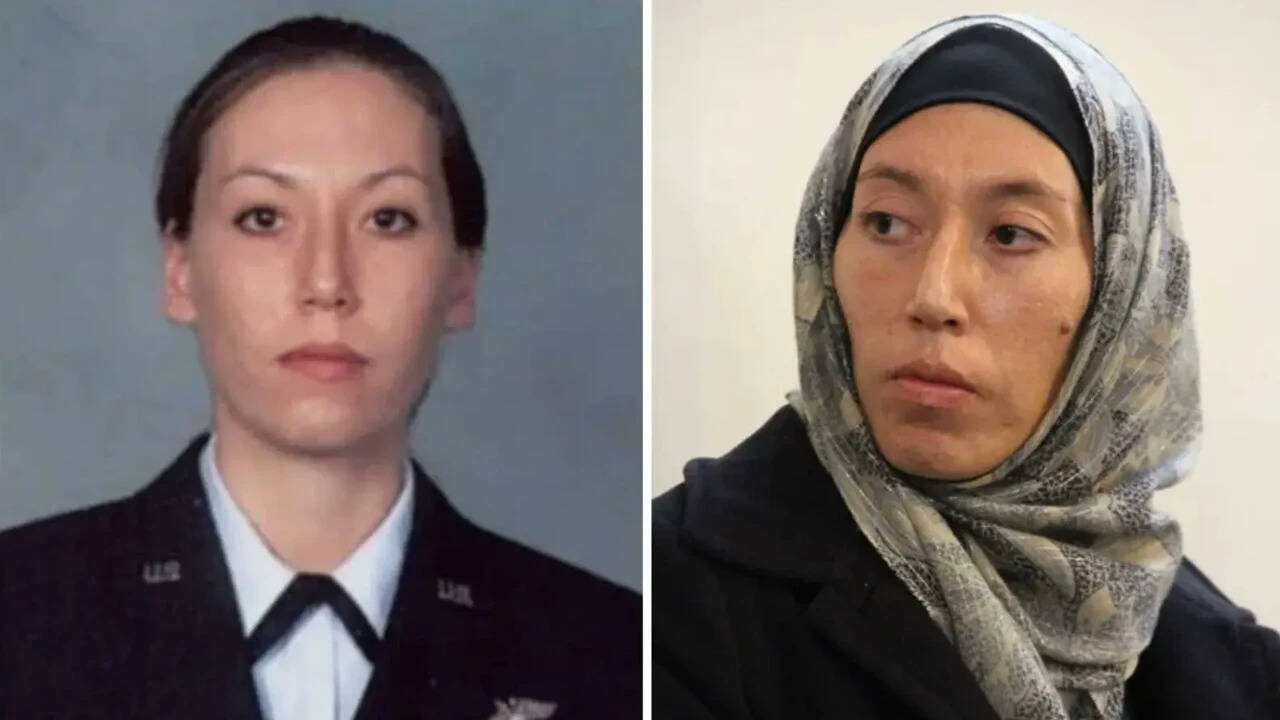
The FBI maintains her profile on their website, a digital ghost story meant to warn the current generation of intelligence officers about the cost of betrayal. Her eyes look out from the screen, flat and unreadable, captured in a military passport photo from a life that no longer exists.
The real tragedy of Monica Witt isn’t just the secrets she sold, but the fundamental human failure that preceded it. A system that knows how to collect billions of data points through satellite surveillance still hasn't figured out how to notice when one of its own people is rotting from the inside out with loneliness and regret.
The machinery of state security continues to hum, processing code and chasing shadows, while the people inside it remain entirely, dangerously human. They watch the desert from windowless rooms, waiting for someone to notice they are there.