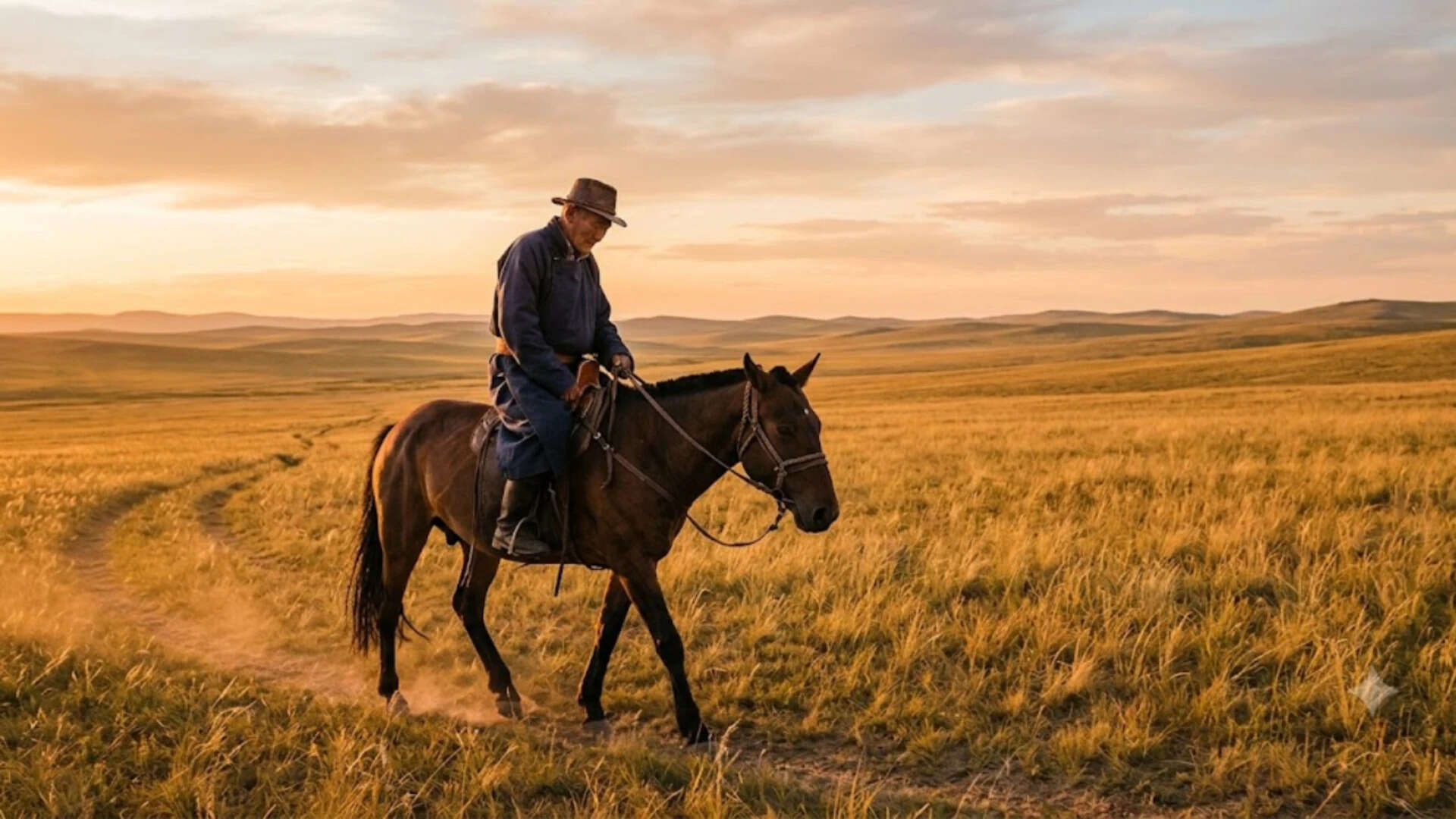
The traditional Mongolian proverb, "A horse knows the road, even if its rider does not," is frequently romanticized as a statement about animal instinct or passive trust. In reality, it describes a sophisticated model of decentralized network architecture and distributed intelligence. For thousands of years, pastoral nomadic systems have relied on a bi-directional information loop between human strategy and animal telemetry. Examining this relationship through the lens of modern systems engineering reveals that the horse is not merely a tool, but an autonomous edge-computing node capable of navigating complex environmental variables that escape human processing limits.
This structural analysis breaks down the proverb into its constituent operational mechanics: decentralized navigation, sensory bandwidth disparities, and the allocation of cognitive load between executive strategy and physical execution. You might also find this connected article interesting: Why India is Rushing to Rewrite Its Old Trade Deals With ASEAN and Australia.
The Two-Tier Architecture of Nomadic Navigation
To understand why the horse "knows the road," one must first map the operational differences between the rider's cognitive processing and the horse's localized data collection. The relationship operates as a two-tier system hierarchy.
                  [Executive Layer: Rider]
               Macro-routing, Objective Setting
                              │
             ▲ Telemetry      │ Strategic
             │ Data           ▼ Command
                              │
                  [Operational Layer: Horse]
            Micro-routing, Obstacle Avoidance
1. The Executive Layer (The Rider)
The human component of the system operates at a macro-strategic level. The rider defines the objective (e.g., reaching a specific winter pasture or locating a lost herd member), manages resource expenditure, and monitors macro-environmental indicators like weather patterns or celestial markers. Human navigation relies heavily on abstract mapping, memory, and distal visual cues. As highlighted in latest articles by Harvard Business Review, the results are notable.
2. The Operational Layer (The Horse)
The equine component operates at a micro-tactical level. While the rider focuses on the distant horizon, the horse processes the immediate topography. The horse evaluates soil density, detects hidden ice layers under snow (a critical variable in the Mongolian winter known as zud), senses subtle changes in incline, and remembers recurring spatial pathways through tactile and olfactory feedback.
When the proverb notes that the rider does not know the road, it highlights a failure state in the Executive Layer—such as disorientation caused by a blizzard, nightfall, or physical exhaustion. In this scenario, system survival depends on a total handoff of control to the Operational Layer. The horse changes from a directed node into an autonomous navigator, using a suite of sensory inputs that humans lack.
Sensory Bandwidth and Edge Telemetry
The structural advantage of the horse in navigational crisis stems from its superior sensory bandwidth. Humans possess a highly focused but narrow field of view and limited olfactory or auditory processing power. The horse operates with an entirely different sensory array.
Visual Scope and Low-Light Processing
Horses possess a panoramic visual field of approximately 350 degrees, dictated by lateral eye placement. This allows for simultaneous scanning of the left, right, and rear quadrants, minimizing blind spots to a narrow cone directly in front of the forehead and directly behind the croup.
Furthermore, the equine eye contains a high density of rod photoreceptors and a specialized reflective membrane called the tapetum lucidum. This anatomical feature reflects light back through the retina, effectively doubling the available light in nocturnal conditions. When a human rider faces zero-visibility conditions due to darkness or blowing snow, the horse retains a functional level of low-light visual telemetry, enabling it to detect topographical borders, tree lines, and ancient migratory paths.
Olfactory Mapping and Memory
Olfaction serves as a primary data logging mechanism for horses. The equine nasal cavity contains millions of receptor cells capable of detecting chemical signatures left by other animals, moisture levels in the air, and distinct soil compositions.
In nomadic pastoralism, pathways are not paved; they are defined by usage and geography. A horse identifies a previous trail not by looking for signs, but by detecting the scent of compressed earth, old manure, and specific vegetation types crushed during prior transhumance cycles. This creates a persistent olfactory map that remains intact even when snow covers all visual landmarks.
Mechanoreception and Subsurface Evaluation
Through hoof and joint mechanoreceptors, a horse evaluates the structural integrity of the terrain with every step. The hoof functions as a sensory organ, detecting variations in ground elasticity, moisture content, and slope stability.
- Subsurface Ice (Zud Conditions): A horse can detect hollows or brittle ice shelves covered by fresh snow that would collapse under weight.
- Mud and Bogs: In marshy terrains, the horse senses changes in soil liquefaction before deep sinking occurs, executing micro-corrections to its stride to maintain equilibrium.
The Strategic Handoff: Autonomy vs. Control
In organizational design and automated systems, the transition of control from a central supervisor to a localized agent is a high-risk event. The Mongolian proverb serves as an axiomatic framework for when a supervisor must cede authority to the edge device.
The Cost of Human Intervention
When a rider is lost or disoriented, continuing to enforce manual steering commands introduces systemic noise. The human, relying on corrupted or absent data, issues corrections that contradict the horse's sensory inputs. This creates a friction point: the horse attempts to avoid a localized hazard (e.g., a hidden ravine), while the rider forces it forward. The result is structural failure—injury, fall, or a total loss of orientation.
The proverb advocates for the suspension of executive control when the quality of executive data falls below a critical threshold. By dropping the reins, the rider acknowledges that their internal navigational model is broken and allows the horse's localized heuristic loops to take over.
Heuristic Loop Execution
The horse does not navigate via an abstract map. It executes a series of simpler, highly reliable heuristics:
- Follow the Path of Least Resistance: Minimize caloric expenditure by tracking established animal paths or natural contours in the landscape.
- Return to the Herd Base: Horses are herd animals with a strong homing instinct centered on safety, shelter, and water sources.
- Avoid Subsurface Failure: Never step where the ground cannot support weight.
By stacking these basic operational rules, the horse successfully solves complex navigational problems without requiring the cognitive capacity to understand the macro-destination.
Systems Limitations and Operational Boundaries
While the proverb emphasizes the strength of decentralized intelligence, a rigorous analysis must outline the limitations of relying entirely on the operational layer. Autonomy is not a flawless solution; it operates within clear boundaries.
1. Goal Misalignment
The ultimate objective of the horse is survival and return to a safe environment (the home pasture or herd). This may not align with the strategic intent of the rider, who might need to reach a specific distant outpost or outpost checkpoint for trade or medical emergencies. If the rider cedes total control, the horse will invariably navigate to its own point of origin or safety, rather than the intended human destination.
2. Vulnerability to Local Optima
Because the horse navigates via localized heuristics, it can get trapped in a local optimum. For instance, to avoid a difficult ridge, it might follow a gentle valley that leads away from the macro-destination. It cannot conceptualize that a short-term increase in difficulty (climbing the ridge) is required for long-term optimization (reaching the correct valley on the other side).
| Navigational Layer | Primary Data Input | Strength | Vulnerability |
|---|---|---|---|
| Rider (Strategic) | Abstract maps, celestial cues, long-term memory | Long-range objective tracking, macro-optimizations | Susceptible to short-term environmental noise (blizzards, darkness) |
| Horse (Operational) | Olfaction, low-light vision, hoof mechanoreception | Immediate hazard avoidance, localized path-finding | Trapped by local optima, lacks abstract destination awareness |
Tactical Application: Building Bi-Directional Systems
Modern operations can draw direct structural insights from this symbiotic relationship. Designing resilient systems—whether they are supply chains, corporate hierarchies, or autonomous drone fleets—requires balancing central planning with edge autonomy.
To replicate the resilience demonstrated in the Mongolian proverb, systems architects must implement three specific design principles:
- Establish Clear Handoff Thresholds: Define the exact parameters under which a central authority must cede control to localized teams or automated nodes. When data corruption or environmental noise exceeds a set percentage, autonomy should automatically scale up.
- Maximize Edge Sensory Capabilities: Equip localized units with specialized tools to monitor their immediate environments. Do not force them to rely solely on telemetry pushed down from headquarters.
- Align Survival Heuristics: Ensure that the baseline instincts of the local units (e.g., safety, efficiency, quality control) naturally guide the system toward a viable state, even when higher-level strategic direction is completely cut off.
Survival in volatile environments depends on knowing when to steer and when to let the asset carry the system home.