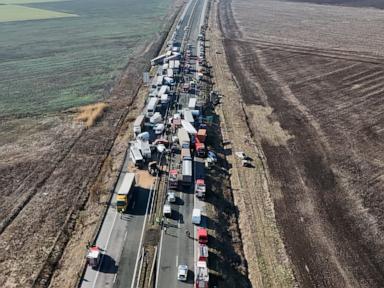
At least 12 people died in a series of multi-vehicle pileups on a fog-shrouded Bulgarian motorway, a mass-casualty event confirmed by the country’s interior ministry that highlights a much deeper, systemic failure across Eastern Europe’s transit network. While initial reports point to dense seasonal fog and sudden drops in visibility as the immediate triggers, road safety analysts and regional transport data indicate that weather rarely acts alone in mass-casualty highway crashes. Instead, sudden atmospheric shifts routinely expose underlying structural flaws, including missing active weather-warning signage, inconsistent enforcement of speed limits, and aging transit corridors struggling under heavy commercial freight traffic.
Fog does not kill drivers. Complacency and static infrastructure do. When a dense bank of radiation fog rolls across a Bulgarian valley or river basin, a stretch of asphalt rated for 140 kilometers per hour instantly becomes a blind trap. Within seconds, visibility can plunge from half a kilometer to less than ten meters. Without dynamic overhead gantries capable of dropping speed limits in real time, motorists continue barreling forward at highway velocities until they encounter a wall of brake lights—or worse, unlit wreckage already blocking the lanes.
The Anatomy of a Motorway Pileup
To understand how a single patch of bad weather escalates into a double-digit fatality event, you have to look at the physics of modern highway traffic. On major Bulgarian arteries like the Trakia, Hemus, or Struma motorways, passenger cars share two narrow lanes per direction with heavy articulated lorries traversing the trans-European transit routes between Western Europe, Turkey, and the Middle East.
A fully loaded forty-ton truck traveling at 90 kilometers per hour requires roughly 100 meters to come to a complete stop on dry asphalt. Add a thin film of moisture from condensing fog, and that stopping distance stretches past 130 meters. If visibility drops to 30 meters, the driver is covering the entire visible distance in just over one second—barely enough time for the human brain to register a hazard and move a foot from the accelerator to the brake pedal, let alone bring the vehicle to a halt.
Once the first impact occurs, a chain reaction becomes almost mathematically inevitable. Following drivers, blinded by the same grey wall, steer instinctively toward the shoulder or the adjacent lane, blocking emergency access routes before the dust has even settled. Secondary and tertiary collisions cause the highest fatalities in these events. Occupants who survive the initial fender-bender often exit their vehicles in panic, stepping out into active lanes where oncoming traffic cannot see them until the moment of impact.
Bulgaria’s Persistent Road Safety Crisis
Bulgaria consistently ranks at or near the bottom of European Union road safety statistics. Year after year, data published by the European Commission places the country alongside Romania at the top of the bloc’s road fatality rates per million inhabitants—often sitting at nearly double the EU average.
Official statements following major crashes almost always follow a predictable script. Ministers express condolences, prosecutors open investigations into driver error, and traffic police announce temporary crackdowns on speeding. What rarely enters the immediate political conversation is why Bulgaria’s motorway infrastructure remains decades behind Western European standards in basic hazard mitigation.
The Missing Layer of Intelligent Transport Systems
Drive through Austria, Germany, or the Netherlands during autumn fog, and the highway itself reacts to the weather. Automated roadside weather stations detect drops in visibility and surface friction, triggering variable message signs kilometers ahead of the hazard zone. Speed limits drop automatically from 130 to 80, then 60 kilometers per hour. Flashing amber beacons warn drivers to increase following distances before they even enter the mist.
Across vast stretches of Bulgaria’s motorway network, those systems either do not exist or sit offline due to maintenance backlogs and disputed public procurement contracts. Drivers rely entirely on static metal signs, personal intuition, and whatever taillights happen to pierce the gloom ahead.
Freight Bottlenecks and Fatigue
Geography makes Bulgaria an unavoidable land bridge. Hundreds of thousands of commercial trucks pass through the country annually, linking the Aegean and Black Sea ports with Central Europe. Border delays at checkpoints like Kapitan Andreevo and Kulata frequently force commercial drivers to push their schedules to the absolute legal limit once they clear customs.
When tired drivers behind the wheel of heavy freight rigs hit sudden fog on unlit rural stretches of motorway, the margin for error vanishes entirely. Enforcement of tachograph rules and mandatory rest periods remains uneven, turning transit corridors into high-stakes endurance runs.
Why Driver Behavior Fails in Low Visibility
Infrastructure deficits tell only half the story. The human factor on Bulgarian roads carries its own distinct set of risks, shaped by decades of uneven traffic policing and an aggressive driving culture that treats speed limits as loose suggestions rather than hard boundaries.
In dense fog, human visual perception plays dangerous tricks. Without fixed reference points like trees, guardrails, or distant horizon lines, the brain loses its ability to gauge speed accurately. Many motorists unknowingly maintain highway speeds simply because they lack the visual cues that normally signal how fast they are moving.
At the same time, a phenomenon known as moth-effect driving pulls motorists toward the faint red glow of the car ahead. Instead of hanging back, drivers close the gap so they can use the preceding vehicle’s taillights as a guide through the whiteout. When that lead car strikes an obstacle and stops dead, the following vehicle has zero buffer space to react.
There is also a widespread misuse of vehicle lighting systems. Modern cars equipped with automatic daytime running lights illuminate the front of the vehicle while leaving the rear completely dark. Countless drivers enter daytime fog assuming their lights are on, rendering their cars virtually invisible from behind until an approaching driver is meters away. Conversely, drivers who switch on high-intensity rear fog lights and forget to turn them off once traffic slows down create a blinding red glare that masks the activation of their actual brake lights.
The Enforcement and Maintenance Deficit
Fixing a deadly motorway corridor requires more than pouring fresh asphalt. Bulgaria has spent billions of euros in EU cohesion funds expanding its highway network over the past fifteen years, yet basic upkeep and safety retrofitting chronically lag behind new construction.
Guardrails damaged in minor collisions frequently go unrepaired for months. Road markings fade under heavy winter salting, stripping drivers of the reflective edge lines needed to stay in their lanes during zero-visibility conditions. Drainage systems clog, allowing water to pool on the carriageway and increasing the risk of hydroplaning when fog condenses into drizzle.
Speed enforcement suffers from similar institutional inertia. While fixed speed cameras exist on major routes, their locations are widely known and mapped on navigation apps. Motorists routinely brake hard before a camera gantry and immediately accelerate back to 150 kilometers per hour once clear. Section-control systems—which calculate average speed between two points over several kilometers—have proven far more effective at calming traffic across Europe, yet their rollout in Bulgaria has been bogged down by legal challenges, administrative delays, and bureaucratic infighting.
What Actually Prevents Fog-Related Mass Casualties
Countries that have successfully reduced mass-casualty weather crashes did not do so by asking drivers to be more careful. They engineered the environment to forgive human error.
- Automated Visibility Detection and Variable Speed Limits: Pairing optical fog sensors with overhead digital gantries allows traffic control centers to slow traffic down miles before the visibility drop occurs, preventing high-speed rear-end collisions at the edge of the fog bank.
- High-Retroreflectivity Road Markings and Raised Pavement Markers: In zero visibility, drivers look down, not ahead. Embedded reflective cat's eyes and profiled thermoplastic lane markings provide tactile and visual feedback that keeps vehicles centered in their lanes without relying on distant sightlines.
- Mandatory Section-Control Enforcement: Average-speed cameras eliminate the "brake-and-accelerate" cycle, forcing sustained compliance with reduced weather-adjusted speed limits across entire motorway segments.
- Strict Commercial Vehicle Spacing and Convoy Rules: In extreme fog events, traffic authorities in neighboring European jurisdictions deploy police pace cars to physically lead traffic through hazardous zones at safe speeds, preventing individual drivers from outrunning their headlights.
Until Bulgaria pairs its expanding concrete network with active traffic management, automated weather warnings, and relentless average-speed enforcement, the next dense fog bank will bring the exact same headlines, the exact same ministerial condolences, and the exact same preventable loss of life.