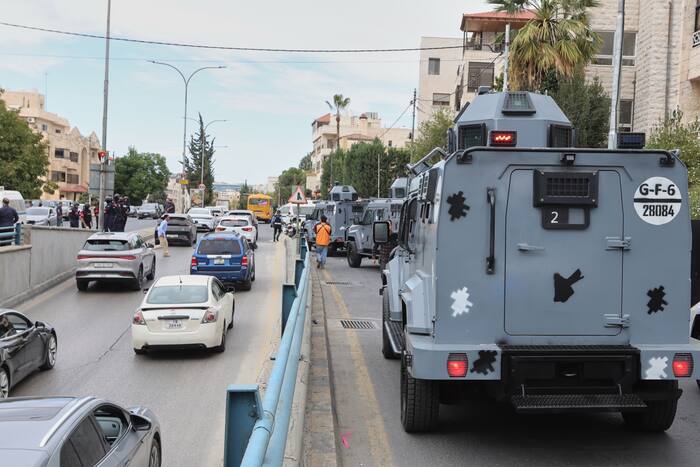
A security officer was fatally attacked near the Sri Lankan Embassy in Amman, Jordan, turning a quiet residential diplomatic district into a crime scene and raising urgent questions about perimeter vulnerabilities around smaller foreign missions. While local authorities moved quickly to secure the area and launch an investigation into the assault, the incident highlights a persistent gap in how host nations and sending states allocate protective resources. High-profile Western embassies operate like fortified bunkers, yet missions representing smaller developing nations often rely on minimal local guard details that leave personnel dangerously exposed to sudden, localized violence.
The attack occurred in the immediate vicinity of the Sri Lankan diplomatic mission in the Jordanian capital, a city long regarded by intelligence analysts and foreign ministries as one of the most stable postings in the Middle East. Amman serves as a regional hub for diplomacy, humanitarian aid, and intelligence coordination. Because Jordan maintains strict internal security through its General Intelligence Directorate and Public Security Directorate, overt assaults near diplomatic compounds are rare. When they happen, they shatter the assumption that proximity to diplomatic zones guarantees safety.
Anatomy of a Diplomatic Perimeter Failure
To understand how an officer can be killed steps away from an embassy, you have to look at the legal and operational reality of diplomatic security. Under the 1961 Vienna Convention on Diplomatic Relations, the host state carries a special duty to take all appropriate steps to protect the premises of a diplomatic mission against any intrusion or damage and to prevent any disturbance of the peace. In practice, however, "appropriate steps" translates into a tiered system of protection.
Major powers—the United States, the United Kingdom, France, and regional heavyweights—negotiate massive security footprints. Their compounds sit behind blast walls, anti-ram bollards, and concentric rings of host-nation tactical police alongside their own armed security detachments.
Smaller missions operate under entirely different constraints. Sri Lanka, like dozens of other nations with limited foreign ministry budgets, operates out of a standard villa or commercial building in an upscale Amman neighborhood such as Abdoun or Sweifieh. Security at these locations typically consists of a small detachment from Jordan's Diplomatic Protection Department, supplemented by unarmed or lightly armed local contract guards.
This setup creates a predictable vulnerability. A single officer stationed at an exterior booth or patrolling the immediate sidewalk acts as a visible deterrent against petty crime, visa-line disputes, or unauthorized entry. That same officer becomes an isolated target if confronted by a determined assailant, a sudden altercation, or a targeted ambush. Without a secondary overwatch position or hardened physical barriers separating the guard post from public foot traffic, reaction time drops to zero.
The Amman Security Paradox
Jordan has spent decades cultivating a reputation as an island of calm surrounded by regional volatility. Bordering Syria, Iraq, Israel, and the West Bank, the Hashemite Kingdom absorbs immense geopolitical pressure. Its security apparatus is widely respected for disrupting terror cells, intercepting weapons smuggling along its northern border, and maintaining civil order during intense regional crises.
Yet that overarching stability often breeds complacency at the micro level. In Amman, diplomatic missions are heavily integrated into civilian neighborhoods. Cafes, private residences, and local businesses sit directly across the street from embassy gates. Normal street life flows right up to the curb of foreign missions.
While this openness makes Amman a livable posting for diplomats, it complicates threat detection. Security personnel must constantly distinguish between routine neighborhood foot traffic and hostile surveillance or imminent threats. When an attack occurs in such an environment, investigators immediately examine three primary possibilities:
- Targeted Violence Linked to Bilateral or Domestic Grievances. Even nations far removed from Middle Eastern conflicts carry domestic political baggage. Sri Lanka has a long history of internal strife, and its overseas missions have occasionally faced protests or threats from diaspora factions. Alternatively, visa denials, consular disputes, or labor grievances involving Sri Lankan nationals working in Jordan can escalate into personal vendettas against embassy staff and guards.
- Opportunistic or Criminal Assault. Not every attack near an embassy is a geopolitical statement. Guards stationed outside diplomatic compounds carry equipment, radios, and sometimes sidearms. In some instances, assaults stem from personal disputes, mental health crises, or criminal encounters that happen to unfold on a diplomatic block simply because a uniformed officer was standing there.
- Spillover Geopolitical Hostility. During periods of heightened regional tension, uniform wearers near any foreign mission risk becoming targets for individuals seeking to strike a symbol of state authority. Jordanian security forces have faced lone-actor attacks in the past, including incidents near diplomatic zones where assailants targeted police officers rather than the embassies themselves.
The Hidden Economics of Embassy Protection
Behind the immediate tragedy of a slain officer lies a structural problem that foreign ministries rarely discuss publicly: the cost of keeping diplomats alive.
When a country like Sri Lanka maintains an embassy in Jordan, its primary mission is consular and economic. Tens of thousands of Sri Lankan migrant workers—predominantly domestic workers and garment factory employees—live and work in Jordan. The embassy exists largely to process their paperwork, mediate labor disputes, and facilitate remittances that keep the Sri Lankan economy afloat.
These missions operate on shoestring budgets. Installing ballistic glass, reinforced guard booths, automated vehicle gates, and high-definition perimeter surveillance costs hundreds of thousands of dollars per facility. For a ministry struggling to pay utility bills and diplomatic salaries, hardening a building in a perceived "safe" city like Amman sits near the bottom of the priority list.
Host nations feel the same fiscal strain. Jordan hosts dozens of embassies, international organizations, and United Nations agencies. Deploying a four-person tactical squad around the clock to every single diplomatic villa in Amman would require thousands of dedicated officers, draining manpower needed for border security and counterterrorism operations. Consequently, the host nation spreads its Diplomatic Protection Department thin, placing single officers at low-threat missions and reserving heavy deployments for high-threat embassies.
The math works fine until the exact moment an attack happens. Then, the single officer on the sidewalk absorbs the full brunt of the failure.
What Happens When Protocol Breaks Down
In the immediate aftermath of a fatal attack near a diplomatic compound, standard operating procedures snap into place, exposing just how reactive the system truly is. Jordanian security forces cordon off the surrounding streets, tactical units deploy to reinforce the embassy perimeter, and intelligence officers begin reviewing CCTV footage from neighboring businesses and traffic intersections.
Simultaneously, the diplomatic machinery kicks into gear. The host nation's Ministry of Foreign Affairs issues formal condolences and assurances of a thorough investigation. The sending nation's ambassador lodges requests for upgraded security, and headquarters in Colombo reviews threat assessments that should have been updated months earlier.
Consider a hypothetical scenario common across mid-tier diplomatic postings: an embassy's security assessment is updated once every two years. If no incidents occurred during that window, the mission's threat rating remains low. Guard rotations stay static. The exterior booth remains unarmored. Months later, regional tensions spike or a localized dispute boils over, but because no formal intelligence warning named that specific embassy, the physical security posture never changes. By the time an attacker approaches the gate, the officer on duty is operating with yesterday's threat model.
Gray Areas in Diplomatic Accountability
Assigning blame after an incident like the Amman killing is rarely straightforward. Critics often point fingers at the host government for failing its Vienna Convention obligations. Yet no host nation can guarantee absolute immunity from sudden violence on a public street, especially when an attack unfolds in seconds without prior intelligence chatter.
Conversely, blaming the sending state ignores the reality of global diplomacy. If developing nations were required to build fortress-style compounds for every overseas mission, most would be forced to shut down half their embassies, severing vital consular lifelines for their citizens abroad.
Private security contractors occupy another murky space in this ecosystem. Many embassies hire local private guards to supplement host-nation police. These contractors often earn low wages, receive minimal tactical training, and operate under restrictive rules of engagement. In a crisis, they serve more as tripwires than defenders, left to confront armed or violent individuals without adequate protective gear or backup.
Concrete Shifts Needed to Prevent the Next Fatality
Stopping future deaths outside low-profile embassies does not require turning every residential street in Amman into a militarized zone. It requires abandoning the binary mindset that classifies postings as either "war zones" or "completely safe."
Foreign ministries and host-nation security services can close the most glaring vulnerabilities through targeted, realistic adjustments:
- Eliminate Solo Static Posts. Stationing a single officer alone outside an embassy gate creates an unacceptable target profile. Protective details should operate in pairs, allowing one officer to monitor the immediate perimeter while the second maintains situational awareness of approaching foot and vehicle traffic.
- Harden the Immediate Guard Footprint. Even low-budget missions can afford basic ballistic shielding for exterior guard booths, reinforced doors, and panic alarms wired directly to the nearest host-nation police precinct. Giving an officer three seconds of physical cover can mean the difference between a thwarted assault and a fatality.
- Integrate Consular Risk into Threat Assessments. Security analysts must look beyond geopolitical terrorism and track consular friction points. High volumes of rejected visas, distressed migrant workers, or heated domestic political anniversaries should automatically trigger temporary reinforcements at the embassy gate.
- Upgrade Neighborhood Surveillance Integration. Rather than relying solely on cameras pointed at the embassy front door, host-nation police and diplomatic missions should link perimeter feeds into municipal command centers, enabling rapid dispatch before a street-level altercation escalates into lethal violence.
An embassy gate is the physical boundary where one nation's sovereignty meets another's public street. Leaving a lone officer standing undefended on that line is not a viable security strategy; it is simply gambling that nothing will go wrong on that particular shift.