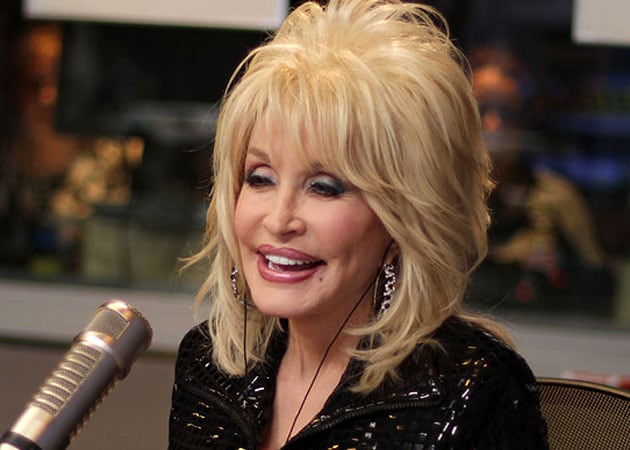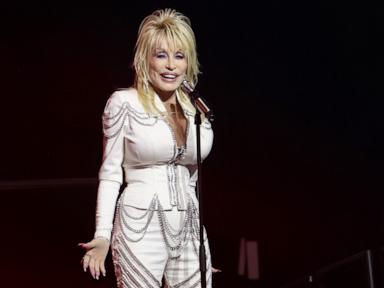
The world feels a little quieter today, and the air carries an unaccustomed chill. When word broke that Dolly Parton had breathed her last at the age of eighty, a collective hush fell across millions of kitchens, front porches, and dimly lit highway diners. For six decades, she was the bright, rhinestone-studded constant in a changing America.
Governors, rock legends, truck drivers, and poets paused their routines to share grief. Social media feeds flooded with black-and-white photographs alongside bursts of neon pink and blonde sequins. Politicians from both sides of the aisle issued statements, scrambling to articulate what she meant to the national fabric. But beneath the formal tributes lay a raw, private sorrow. People were not merely mourning a musician; they were mourning the sudden absence of unconditional warmth.
Consider what happens when a pillar of comfort vanishes.
For many, Dolly was never just a celebrity on a screen or a voice coming through a car radio. She felt like kin. Imagine growing up in a cramped house where money was scarce and futures felt claustrophobic, only to hear a voice sing about a coat of many colors with such fierce dignity that your own patched sleeves suddenly felt like royal robes. That was her magic. She took the hard edges of rural poverty and Appalachian struggle and wrapped them in humor, glitter, and unyielding grace.
When her husband of fifty-eight years, Carl Dean, passed away, friends whispered that a part of Dolly went with him. They had built a quiet, impenetrable fortress of loyalty away from the blinding glare of Hollywood, cherishing a privacy that became rarer by the year. Her recent months, marked by canceled appearances and quiet battles with her health, suggested a body growing tired after an extraordinary sprint. Yet, true to form, she tried to shield her fans from the worry until the very end, apologizing for missing a Las Vegas residency as if she were simply late for a cup of coffee.
Now, the tributes pour in because her footprint defies categorization.
Musicians remember her peerless songwriting, the way she penned tracks like Jolene and I Will Always Love You with a deceptive simplicity that masked profound emotional depth. Business leaders look at her multi-million-dollar empire—spanning Dollywood to her massive publishing catalogs—and marvel at a sharp mind who always owned her masters and controlled her destiny. Educators and parents look at the Imagination Library, which mailed millions of books to children who otherwise might never have known the joy of turning a page, and see a legacy of literacy that will echo for generations.
She bridged worlds that usually despised one another. In honky-tonks, boardrooms, and community centers, she was universally adored. She wore her faith lightly and her acceptance heavily, standing up for the marginalized without ever raising her voice in anger. She laughed at herself before anyone else could beat her to the punch, reminding us that taking your work seriously never meant taking yourself too seriously.
The outpouring of grief from politicians and peers is genuine, yet it feels strangely small compared to the grief of the ordinary people who loved her. A statement from a statehouse cannot capture the feeling of sitting alone in a kitchen, listening to her sing about working nine-to-five, and feeling seen for the first time in your life.
The sequins have stopped spinning. The stage lights have dipped.
Yet, somewhere in the mountains of East Tennessee, a child is opening a brand-new book delivered in the mail, tracing small fingers over the cover, and a legend whispers quietly into the dark that everything is going to be alright.