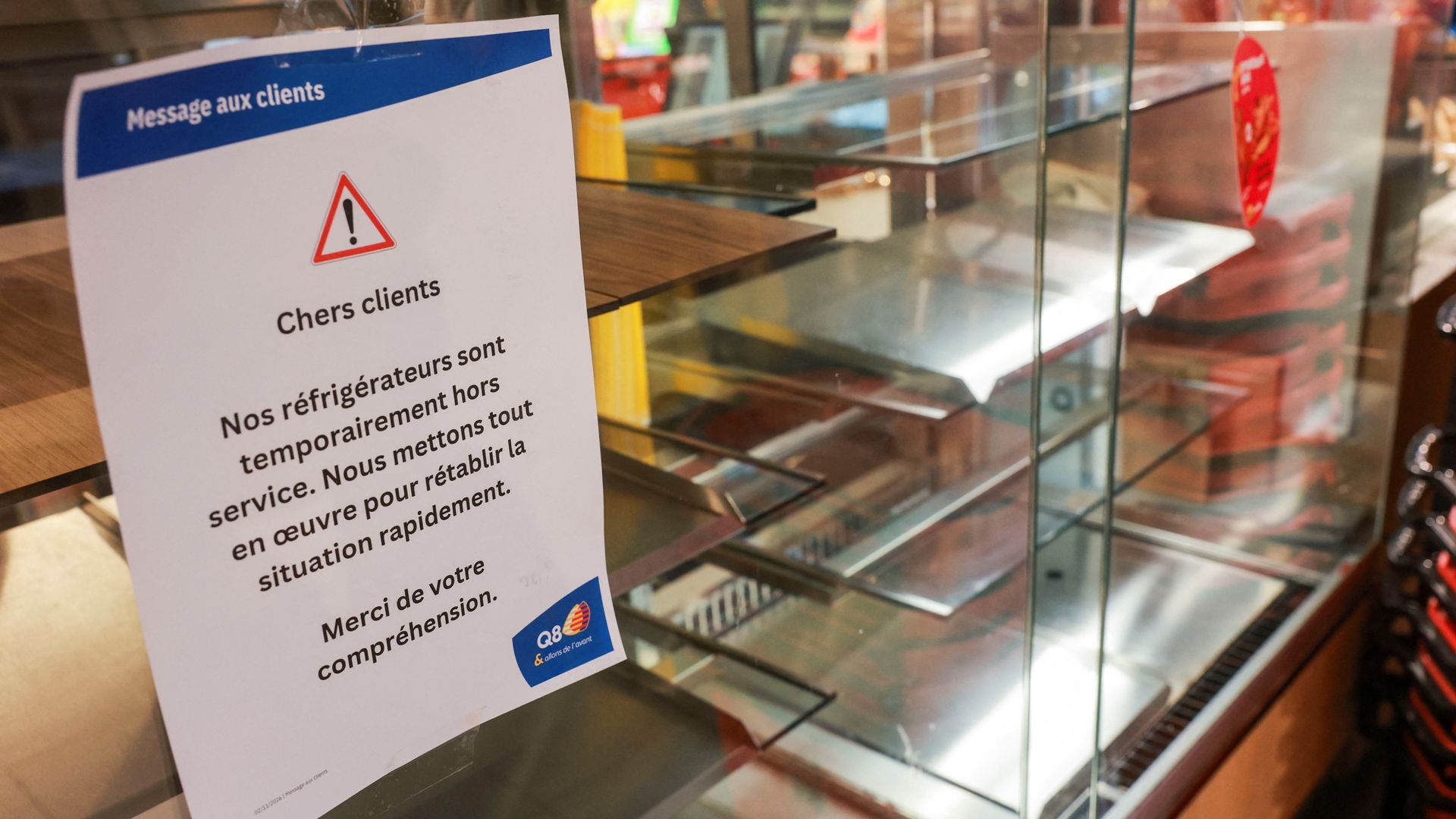
The hum is the first thing you notice when it stops.
For anyone who has ever worked the graveyard shift stocking shelves, or walked into a neighborhood market at six in the morning before the rush, that low, mechanical drone of the refrigeration units is the heartbeat of the building. It is a sound so constant, so deeply woven into the background of modern life, that your brain edits it out entirely. Until the morning it vanishes.
Picture a Tuesday morning in a mid-sized town outside Lyon. Let us call the store manager Marc—a composite of the dozens of European grocers and facilities engineers who have found themselves on the unexpected front lines of twenty-first-century conflict. At 5:30 AM, Marc unlocks the heavy glass doors, expecting the usual blast of crisp, recycled air from the dairy aisle. Instead, he is hit by the heavy, stagnant smell of warming milk and thawing poultry. The digital displays on the freezer cases, usually glowing a reassuring icy blue, are either black or flashing a sequence of frantic error codes.
Across the aisle, water is beginning to pool beneath the frozen vegetable bins, seeping slowly into the grout. Outside, the sun hasn't even risen yet, and Marc is already losing thousands of euros an hour. He assumes it is a blown transformer. Maybe a compressor gave out. He grabs his phone to call the maintenance contractor, unaware that the digital fingerprint left inside his store's thermostat does not belong to a local glitch, but to a state-sponsored cyber unit operating thousands of miles away in Tehran.
It sounds absurd. Almost comical. Why would the intelligence apparatus of the Islamic Republic of Iran care about the temperature of yogurt in suburban France?
To ask that question is to misunderstand the architecture of modern warfare. We have spent decades conditioning ourselves to expect cyberattacks to look like Hollywood movies—flashing red skulls on Pentagon screens, stock markets crashing in seconds, or power grids plunging entire cities into darkness. We prepared for the sledgehammer. We completely ignored the crowbar.
The Architecture of the Invisible
When French intelligence officials and judicial authorities finally pulled back the curtain on a series of baffling disruptions across European commercial infrastructure, issuing international arrest warrants for suspects linked to Iranian state-backed groups, the public reaction was a mixture of confusion and dark humor. Headlines focused on the bizarre target: supermarket refrigerators.
Laugh. It is a natural defense mechanism when reality outpaces our imagination.
Yet, behind those arrest warrants lies a chillingly sophisticated shift in geopolitical strategy. To understand why a grocery store cooler is a viable military target, you have to understand how modern buildings breathe. Twenty years ago, a refrigerator was a dumb box with a motor, a coil, and a dial. Today, every commercial cooling unit in a modern European supermarket is an Internet of Things (IoT) endpoint. They are networked together, feeding real-time thermal data back to central corporate servers to optimize energy consumption, predict mechanical failures, and satisfy strict European Union food safety regulations.
Think of a modern supermarket not as a brick-and-mortar store, but as a floating iceberg of data. The aisles you walk down, the apples you weigh, the card reader at the checkout—that is just the ten percent visible above the waterline. Beneath the surface sits a sprawling, interconnected web of industrial control systems (ICS), HVAC controllers, smart meters, and vendor portals.
And here is the dirty secret of operational technology: it was never built to fight a war.
I spent years consulting on industrial network security, walking through the concrete bowels of cold-storage facilities and municipal water plants. You learn quickly that the engineers who design refrigeration systems care about thermodynamics, reliability, and cost-efficiency. They do not care about encrypted packet inspection. For decades, the standard security protocol for an industrial controller was simply assuming nobody outside the building knew it existed.
Then we connected all of them to the internet so a technician could check the coolant pressure from an iPad in Paris. We built a superhighway straight into the engine room and left the keys in the ignition.
The Anatomy of a Silent Siege
Consider what happens next when a threat actor decides to weaponize that convenience.
According to forensic reconstructions of the European incidents, the attackers didn't need to breach a fortified military firewall. They didn't need zero-day exploits worth millions of dollars on the dark web. They scanned the open internet for exposed remote-access ports—the digital equivalent of rattling doorknobs down a long suburban street until one clicks open. Many of these systems were running on default factory passwords, or routing through third-party maintenance contractors whose own networks had been quietly compromised months earlier.
Once inside the operational network, the intruders didn't deploy ransomware immediately. They didn't demand Bitcoin. They simply altered the set points.
By shifting the target temperature of remote refrigeration units upward by ten or fifteen degrees, or forcing compressors into endless defrost cycles, the attackers triggered a slow-motion cascading failure. If you shut down a power grid, the alarms ring at the highest levels of government within seconds. Military intelligence mobilizes. Retaliation becomes inevitable.
If you ruin the cold chain of a regional supermarket network?
First, the store blames the equipment. Then the equipment vendor blames the local power fluctuation. Days pass before anyone realizes that dozens of facilities across France, Germany, or the Netherlands suffered identical, simultaneous thermal spikes. By the time forensic investigators trace the anomalous commands back through layers of proxy servers to state-linked infrastructure in Iran, tons of perishable food have already been hauled to landfills, insurance claims are tangled in bureaucratic limbo, and the attackers have vanished into the digital ether.
It is warfare calibrated to stay strictly below the threshold of armed retaliation. Strategists call it the "gray zone"—a murky twilight between peace and declared war where adversaries bleed each other's economies, sow subtle psychological exhaustion, and test the resilience of civilian infrastructure without ever firing a missile.
Why Food Is the Ultimate Soft Underbelly
History offers a brutal reminder that you do not need to destroy an army to break a nation; you only need to interrupt its supply lines. In the nineteenth century, that meant burning granaries and blockading ports. In the twenty-first century, it means corrupting the algorithmic choreography that keeps fresh food moving from farm to warehouse to shelf.
We live inside a miracle of just-in-time logistics. Most urban supermarkets hold barely forty-eight to seventy-two hours' worth of perishable inventory at any given moment. That efficiency keeps prices low and waste minimal during peacetime, yet it leaves almost zero buffer when friction enters the system.
Imagine a coordinated campaign not against three stores, but against three hundred distribution hubs across Western Europe during a July heatwave. No explosions. No casualties. Just millions of liters of milk souring, tons of insulin and temperature-sensitive pharmaceuticals losing potency in pharmacy coolers, and panicked shoppers stripping shelves bare within six hours.
That is the real strategic value of a supermarket fridge hack. It is a proof of concept.
When French prosecutors and intelligence agencies took the rare step of naming state-sponsored actors and issuing formal arrest warrants, they were signaling that the rules of engagement had shifted. Historically, espionage and cyber sabotage were handled quietly in diplomatic backchannels. You caught the spy, expelled a few diplomats, and kept the public calm. Going public with arrest warrants—even when the suspects sit safely beyond the reach of European extradition treaties—is an act of strategic exposure. It strips away the attackers' greatest weapon: plausible deniability.
Honestly, it is unsettling to admit how exposed our daily routines have become. When I walk down the refrigerated aisle now, I catch myself looking past the glass doors at the little digital temperature readouts tucked in the corner. Thirty-seven degrees Fahrenheit. Three degrees Celsius. A tiny green light blinking steadily. We trust those numbers with our health, our budgets, and our sense of normalcy, rarely stopping to consider the fragile chain of code keeping that light green.
Rebuilding the Digital Cold Chain
So where does that leave the ordinary business owner, the facilities engineer, or the shopper pushing a cart down aisle four?
Panic is useless, and unplugging the modern world isn't an option. We cannot go back to paper ledgers and analog dials without forfeiting the efficiency that feeds hundreds of millions of people every day. Instead, the wake-up call echoing out of France demands a fundamental shift in how we treat mundane technology.
First, the era of connecting industrial hardware directly to the public internet must end. Critical operational systems—whether they run a nuclear centrifuge or a neighborhood butcher's cold locker—belong behind strict network segmentation. If a maintenance contractor needs remote access to diagnose a compressor, that connection should pass through isolated, multi-factor authenticated gateways, never an open port exposed to automated scanners.
Second, we have to rethink our blind faith in automation. When Marc, our hypothetical store manager in Lyon, walked into a warm dairy aisle, the human nose detected a crisis that the automated dashboard failed to flag as malicious. Organizations need physical fail-safes and out-of-band alarms—simple, unhackable sensors that trigger local alerts the moment temperatures drift outside safe parameters, independent of the primary corporate network.
Finally, the burden cannot fall solely on regional grocers or overworked IT managers. When a nation-state turns its intelligence apparatus against civilian commerce, defense becomes a collective responsibility. The European Union's push toward stricter cybersecurity mandates for critical supply chains—forcing vendors to ship hardware without universal default passwords and requiring rapid breach reporting—is a vital step forward, though bureaucracy always moves slower than code.
The next time you push open the heavy glass door of a supermarket freezer and feel that crisp rush of cold air against your face, pause for half a second. Listen to the steady, monotonous hum beneath the floorboards. That sound isn't just keeping your dinner fresh; it is the quiet frontline of a war you were never meant to notice.