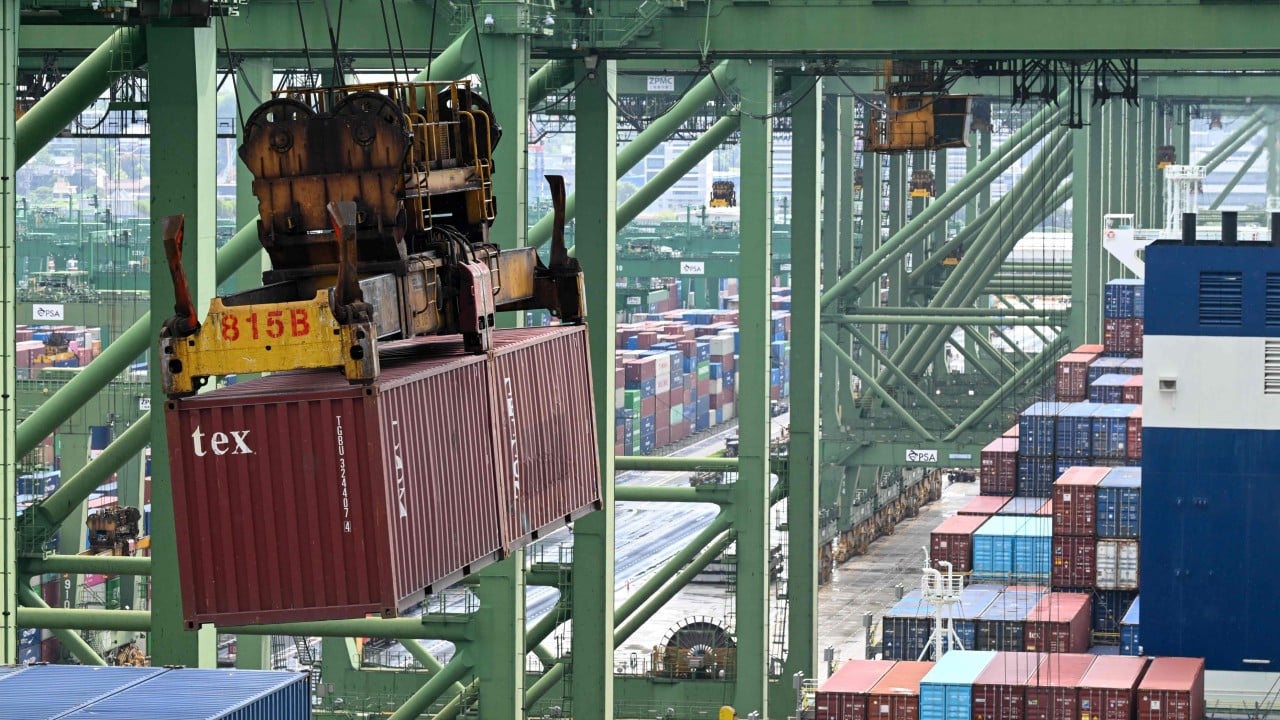
A single plastic toy sits on a shelf in a Tokyo department store. It is small, inexpensive, and entirely mundane. Yet its journey to that shelf required a sequence of events so perfectly timed that a delay of a single hour anywhere along the chain would have left the shelf empty. For decades, the global economy operated on this exact knife-edge. We called it "just in time" manufacturing. It was a beautiful, hyper-efficient lie.
Then the Strait of Hormuz became a chokehold, and the lie unraveled. If you found value in this post, you should check out: this related article.
To understand why your next smartphone might cost more, or why a car factory in Nagoya suddenly went dark, you have to look at a map. More importantly, you have to look at the water. The Strait of Hormuz is a narrow strip of ocean separating Oman and Iran. It is the world’s most critical oil chokepoint. When geopolitical tensions flared and shipping lanes there became unpredictable, the shockwaves did not just affect oil tankers. They fractured the invisible, brittle nervous system of global trade.
Asia, the manufacturing beating heart of the world, woke up to a terrifying reality. The flawless, frictionless machine had ground to a halt. For another perspective on this story, check out the recent update from MarketWatch.
The Ghost in the Machine
Consider a hypothetical logistics manager we will call Min-jun, working for an electronics giant in Seoul. For fifteen years, Min-jun’s job was an exercise in minimalist art. He did not warehouse spare parts. Warehouses cost money. Rent, security, insurance—all of it drains profit. Instead, Min-jun relied on the global shipping network to act as his floating warehouse. Components from Taiwan arrived precisely three hours before they were needed on the assembly line.
This is the essence of just-in-time logistics. It treats the entire planet as a synchronized conveyor belt.
But when the Hormuz crisis escalated, shipping rates skyrocketed. Insurance premiums for vessels transiting volatile waters multiplied overnight. Ships were rerouted around the Cape of Good Hope, adding ten to fourteen days to journeys that used to take weeks.
Min-jun’s assembly line did not have ten extra days. The line stopped. Workers sat in silence. The silence of a multi-billion-dollar factory is a deafening sound for anyone in business.
The crisis exposed a fundamental truth that global executives had ignored for a generation. Efficiency is the enemy of resilience. By stripping out all the fat, all the safety margins, and all the excess inventory to maximize quarterly profits, companies had left themselves utterly defenseless against reality.
The Great Re-Architecture
What is happening now across Asia is not a temporary adjustment. It is a fundamental rewrite of global capitalism. The era of hyper-globalization—where a component might cross the ocean five times before becoming a finished product—is dying.
Business leaders are scrambling to implement what they call "just in case" logistics.
This shift is agonizingly expensive. Companies are forced to rent massive warehouses to stockpile months of raw materials. They are diversifying their suppliers, moving away from single-source dependencies in volatile regions. If a company used to buy 100% of its microchips from a single state-of-the-art facility, it is now paying a premium to source 30% from India, 20% from Vietnam, and the rest from local domestic suppliers.
This redundancy creates safety, but it destroys the cheap prices consumers have taken for granted for thirty years.
Consider the math of a standard laptop. If every component is sourced from the absolute cheapest location on Earth, the manufacturing cost is kept remarkably low. But if you force the manufacturer to buy from three different countries to guarantee supply chain survival, the cost climbs. The consumer bears that burden. Inflation is no longer just a monetary policy problem; it is a geographic reality.
The Human Toll of Supply Chain Friction
We often talk about supply chains in terms of shipping containers, TEUs, and freight indices. But these numbers represent human sweat and anxiety.
When a supply chain breaks, a factory worker in Vietnam loses a shift and cannot pay tuition for her child. A small business owner in Malaysia goes bankrupt because the specialized valves he needs to repair industrial machinery are trapped on a vessel anchored off the coast of East Africa.
The physical reality of moving objects across water is unforgiving. You cannot download a physical semiconductor. You cannot upload a barrel of oil. The digital economy is completely dependent on a physical world made of steel, diesel, and deep-water ports. When those physical corridors are threatened, the digital illusion vanishes.
The response from Asian economies has been swift and fiercely nationalistic. Governments are pouring billions into "nearshoring" and "friendshoring"—terms that simply mean moving production to countries that are politically aligned and geographically accessible. Japan is subsidizing companies to bring manufacturing back home. India is aggressively positioning itself as the alternative global factory floor, betting that its massive domestic market and land borders can offer stability that oceanic routes currently cannot.
The Price of Certainty
We are moving into a clunkier, heavier, and more fragmented world. It is a world where businesses accept lower profit margins in exchange for the peace of mind that their factories will actually run tomorrow.
The poetry of the old system is gone. There was a strange grandeur to the idea that a piece of silicon could travel the globe seamlessly, touched by workers of a dozen nationalities, to land in a pocket in Chicago precisely on schedule. It was a monument to human cooperation.
But that monument was built on calm waters. The moment the sea became angry, the structure cracked.
Tomorrow, Min-jun will look at a spreadsheet filled with higher costs, bloated inventory numbers, and inefficient shipping routes. His bosses will not like the margins. The shareholders will grumble. But the assembly line will be moving. The lights will stay on. In the new economic landscape, survival is the only metric that matters.
The toy on the Tokyo shelf is no longer just a toy. It is a miracle of survival, a survivor of a messy, expensive, and chaotic new world that is still learning how to build things when the conveyor belt snaps.