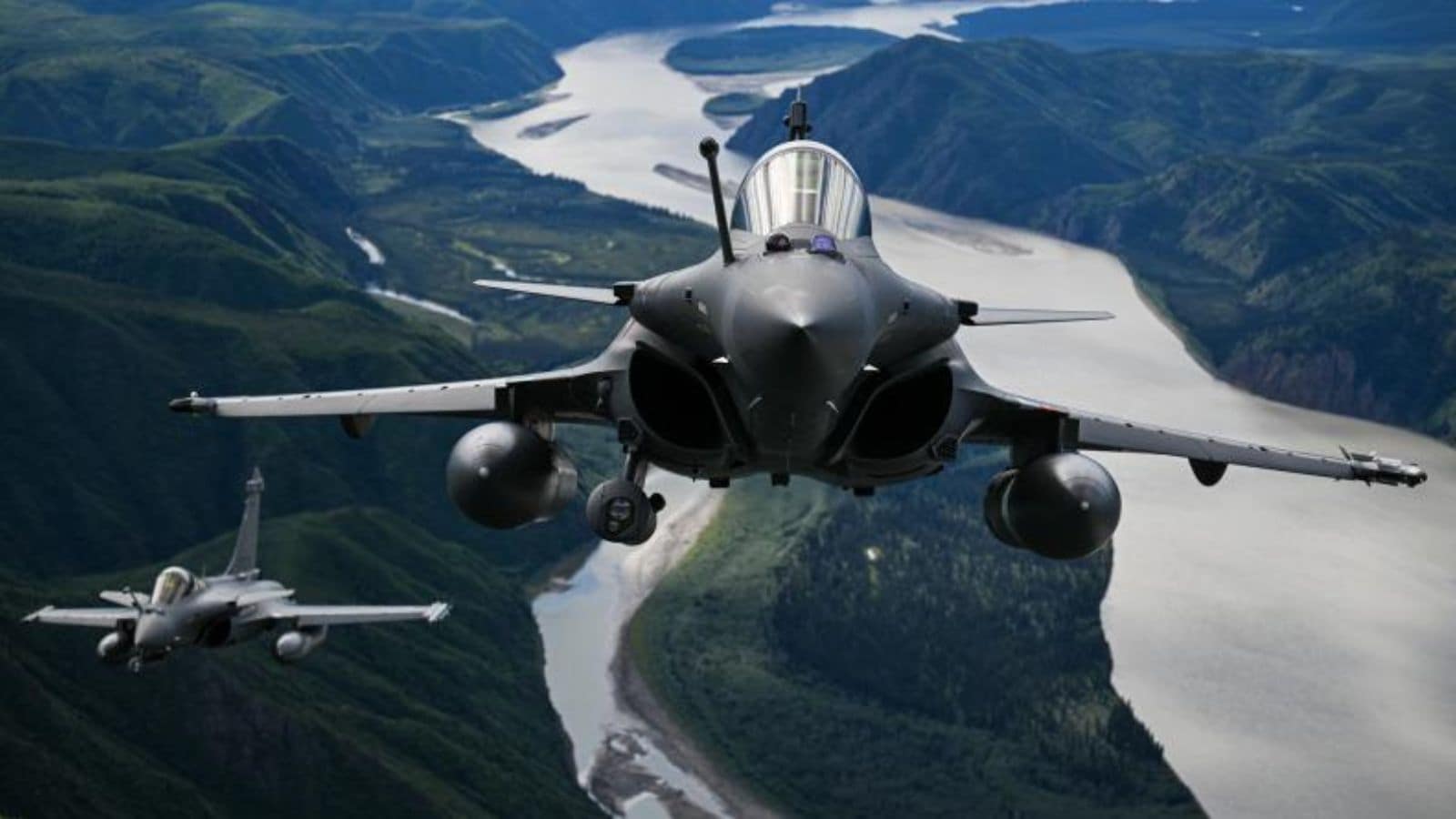
Every defence publication on the planet recently published a breathless carbon-copy announcement about Dassault Aviation flight-testing two sovereign artificial intelligence algorithms on the Rafale fighter jet. The lazy consensus in these reports treats this milestone as a routine step toward automated dogfighting, framing it as Europe's answer to autonomous combat programs elsewhere.
They are missing the plot.
The breathless coverage assumes that dropping machine learning into a 4.5-generation multirole cockpit represents an evolutionary leap in combat lethality. I have spent years tracking aerospace prime contractors and system integration failures; when an industrial architect issues a press release about proprietary algorithms without disclosing functional parameters, memory footprints, or sensor latency metrics, you are not reading a technological breakthrough. You are reading a political filing designed to protect funding streams for the Rafale F5 standard while the Franco-German-Spanish Future Combat Air System stumbles through political delays.
Let us dismantle the mythology of tactical cockpit algorithms.
The Cognitive Overload Fallacy
The standard industry narrative claims that pilots are drowning in data and need machine learning to sort through sensor feeds, radar returns, and threat warnings.
This diagnosis is half-true and entirely misleading. Modern pilots are indeed overwhelmed, but not because they lack data filtering. They are overwhelmed because human-machine interfaces in military aviation are still built on twentieth-century paradigms of menu-driven displays and multi-function touchscreens that demand visual fixation inside a high-g environment.
Adding a black-box neural network to summarize electronic warfare threats does not solve the root mechanical problem. It introduces a dangerous layer of opacity. When a pilot is pulling nine gs while evading a surface-to-air missile battery, they do not need an autonomous copilot guessing which threat stream to de-prioritize based on probabilistic inference weights trained in a French laboratory. They need deterministic, ironclad systems that behave with absolute mathematical predictability.
If you introduce probabilistic code into a safety-critical flight envelope without a transparent verification path, you are not reducing workload. You are trading predictable human error for unpredictable machine hallucination.
The Sovereignty Mirage
Dassault made a deliberate point of labeling these algorithms as sovereign. In European defence circles, sovereign is the magic word used to soothe national anxieties about American tech dominance and supply chain dependency.
Imagine a scenario where a European air force relies on imported commercial microprocessors or non-European foundational model architectures to compute tactical decisions at Mach 1.8. The vulnerability is obvious. Hence, building homegrown code with Thales and cortAIx feels like a major victory for strategic autonomy.
However, algorithmic sovereignty is a mirage if the underlying hardware ecosystem remains tied to globalized semiconductor supply chains and proprietary sensor buses. Writing your own sorting code in Saint-Cloud does not insulate you from supply disruptions if the neural processing units executing those instructions depend on foreign foundries.
True military authority in software design is not about who wrote the script; it is about whether the system can be mathematically proven safe under adversarial jamming, sensor degradation, and electronic counter-countermeasures. On that front, a flashy press release about flight tests tells us precisely nothing about resilience in a contested electromagnetic spectrum.
The F5 Stopgap Reality
To understand why these algorithms are flying right now, look at the calendar and the geopolitical map. The Rafale F5 standard and its associated collaborative combat aircraft ambitions are explicitly positioned as a national priority because the next-generation fighter programs are moving too slowly.
When multi-billion-dollar joint ventures hit political gridlock, aerospace manufacturers pivot. They take existing airframes, badge them with modern buzzwords, and market incremental software upgrades as revolutionary transformations.
The Rafale is an exceptional multirole platform. Its airframe design, aerodynamics, and sensor fusion suites—like the Thales radar architecture—are world-class. But shoehorning unproven machine learning modules into a legacy cockpit architecture to satisfy defense ministry innovation quotas does not turn a 4.5-generation jet into a sixth-generation asset.
Stop treating every corporate software test as a paradigm shift. Until prime contractors open their source architectures to rigorous red-teaming and publish concrete performance envelopes under jamming conditions, these algorithms remain expensive parlor tricks designed for procurement boards rather than dogfights.
The future of air combat does not belong to the company that writes the most press releases about artificial intelligence. It belongs to the engineers smart enough to admit that when missiles are incoming, a deterministic switch will always beat a probabilistic guess.
France Is Bringing AI Into the Rafale Cockpit
This video provides a brief look at the recent flight tests bringing artificial intelligence algorithms directly into the Rafale fighter cockpit.