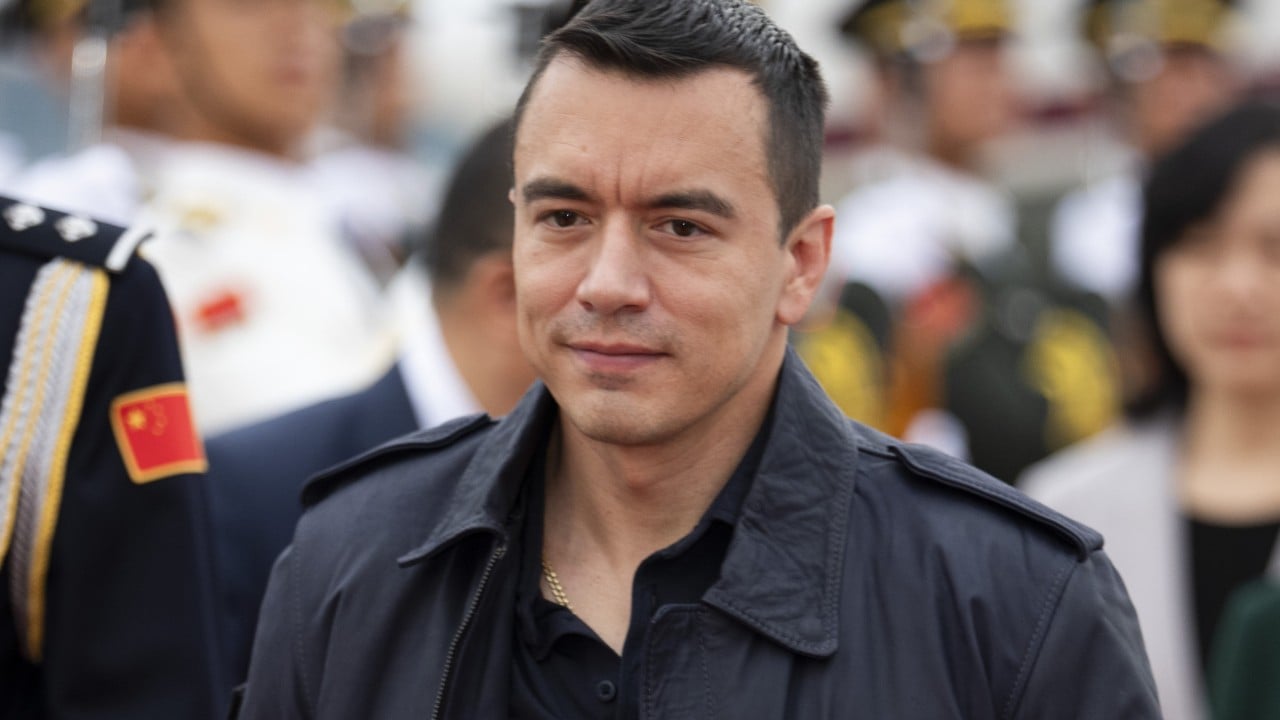
Foreign policy in South America used to mean picking a side and sticking to it. Ecuadorian President Daniel Noboa is tearing up that old rulebook. While great power competition tells smaller nations to choose between Beijing and Washington, Quito is doing business with both, keeping economic survival ahead of ideological loyalty.
If you want to understand how a developing economy manages the tightrope walk of modern geopolitics, look straight at Ecuador. The country needs Chinese markets for its shrimp and copper, but it also relies on American security backing to fight organized crime. Noboa isn't trying to hide this dual approach. He's leaning into it. For a closer look into similar topics, we recommend: this related article.
The Economic Gravity of Beijing
Ecuador's economic reality makes avoiding China impossible. Bilateral trade hit $17.33 billion, and the free trade agreement signed in 2024 opened up massive avenues for local exporters. China buys massive quantities of what Ecuador produces, including agricultural goods, bananas, cocoa, and crucial mining products.
When 14 Ecuadorian shrimp-exporting companies faced sudden suspensions from the Chinese market due to sanitary disputes, Noboa didn't launch an anti-China PR campaign. He packed his bags for a state visit to Beijing. Pragmatic leadership means you fix trade barriers face-to-face, rather than letting political pride sink your country's primary export revenue. For additional context on this issue, in-depth analysis is available at Forbes.
Copper and mining investments tell a similar story. Developing Ecuador's rich mineral deposits requires billions in heavy capital expenditure that Western firms are often too risk-averse to supply quickly. Chinese state-backed enterprises have the capital and the appetite for these long-term infrastructure plays. Noboa knows that turning down Chinese investment over hypothetical security warnings from Washington leaves his domestic economy broke and powerless.
Keeping Washington Close Without Losing Independence
The usual narrative claims that getting too cozy with Beijing triggers an automatic backlash from the United States. Noboa is proving that narrative wrong through active security alignment. His administration works hand-in-hand with Washington on counter-narcotics, intelligence sharing, and regional security initiatives to fight violent cartels.
He met with high-ranking U.S. officials, including Vice President JD Vance in Washington, explicitly reaffirming close cooperation on trade, energy, and migration. Noboa understands a fundamental truth about American foreign policy under the Trump administration: as long as a Latin American leader delivers results on border security and anti-crime efforts, economic diversification in Asia gets a lot more breathing room.
He stated plainly that while he aligns heavily with Washington on internal security, he cannot pick a fight with his second-largest trading partner by icing out Beijing. It's a calculated, transactional foreign policy. Washington gets an active partner against organized crime, and Beijing gets reliable access to raw commodities and seafood.
What This Means for Global Markets
For global investors, Ecuador's strategy offers a clear playbook. Small and mid-sized emerging markets are done apologizing for multi-vector foreign policies. They will take Chinese infrastructure funding and buy American security equipment at the same time.
If you are tracking commodities, watch how these high-level diplomatic visits translate into actual regulatory approvals for suspended exporters and new mining concessions. The era of blind ideological alignment is dead. Pragmatism rules the day, and Noboa is writing the manual on how to extract maximum value from global superpowers without getting crushed in the crossfire.