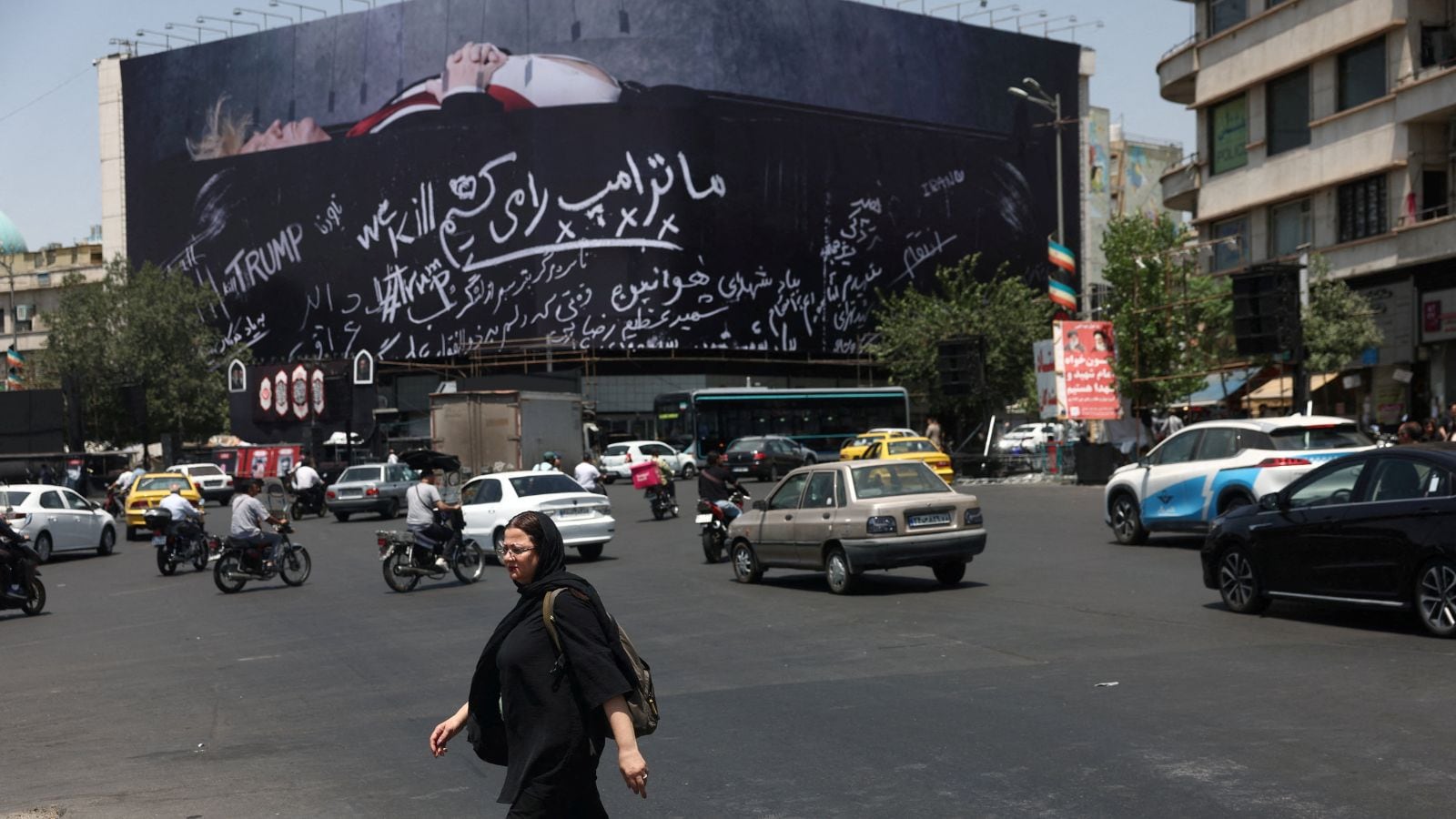
The headlines are screaming again. "US hits Tehran area." "Iran targets Bahrain and Kuwait." Cable news anchors are dusting off their maps of the Persian Gulf, pointing somberly at the narrow neck of water between Iran and Oman, and warning that the global economy is about to grind to a halt.
They want you to believe we are one drone strike away from a global energy collapse. They want you to panic.
It is a lie.
The narrative of a catastrophic, world-ending blockade of the Strait of Hormuz is the most overhyped geopolitical ghost story of the last fifty years. It is kept alive by defense contractors looking for funding, oil speculators looking for a quick bump in crude futures, and mainstream editors who know that fear sells clicks.
I have spent two decades analyzing maritime logistics and energy flows. I have sat in rooms where military planners map out these exact scenarios. The gap between the terrifying public rhetoric and the cold, hard operational reality is massive.
Let us dismantle the panic and look at the real mechanics of the Persian Gulf.
The Self-Destruction of the Iranian Threat
The core premise of the panic is simple: Iran can, and will, shut down the Strait of Hormuz, cutting off 20% of the world’s petroleum liquids.
This premise ignores basic economics and geography.
If Iran blocks the Strait of Hormuz, the first country to starve is Iran.
Iran is not a self-sufficient island. It is a nation heavily dependent on maritime trade for its own survival. Despite its vast energy reserves, Iran relies on the import of refined gasoline, industrial equipment, and basic food staples. More importantly, its crippled economy is kept on life support almost entirely by selling crude oil to China.
- The Chinese Factor: China buys roughly 90% of Iran’s oil exports. These shipments must pass through the Strait of Hormuz. If Tehran shuts down the strait, it cuts off its own economic lifeline and directly harms its most important geopolitical patron, Beijing. Do you honestly believe the Supreme Leader will call up Xi Jinping and say, "We decided to collapse your economy today"? It is not going to happen.
- The Geographic Reality: The shipping lanes in the Strait of Hormuz are not a single narrow canal. They consist of a two-mile-wide inbound lane, a two-mile-wide outbound lane, and a two-mile-wide separation zone. While narrow, this is deep, open water. You cannot block it by sinking a single container ship like you can in the Suez Canal. Blocking it requires continuous, active military interdiction.
The Military Reality: A Blockade Cannot Last
Let us run a thought experiment. Imagine a scenario where Iran, pushed to the absolute brink, decides to execute a total blockade anyway. They dump sea mines, deploy fast attack craft, and fire anti-ship missiles from the cliffs of Bandar Abbas.
How long does that blockade actually last?
The answer is measured in days, not months.
The US Navy’s Fifth Fleet, stationed right across the water in Bahrain, exists for the sole purpose of keeping these lanes open. Combined with regional allies and international coalitions, the response would be swift and devastating.
[Strait of Hormuz Bypass Infrastructure]
Persian Gulf Oil Fields -> Saudi East-West Pipeline -> Red Sea Ports (Yanbu)
Persian Gulf Oil Fields -> Abu Dhabi Crude Oil Pipeline -> Indian Ocean (Fujairah)
Within 72 hours, Iranian radar installations, missile launch sites, and naval bases would be systematically neutralized. Minesweeping operations would begin immediately. Yes, shipping insurance rates would spike. Yes, some tankers would refuse to sail for a week or two. But the idea of a prolonged, multi-month shutdown of the strait is militarily impossible.
The Iranian military knows this. Their entire doctrine is based on asymmetric harassment, not territorial control. They want the threat of a closure to do the heavy lifting for them. They do not want to actually trigger the consequences of a real attempt.
The Bypass Pipelines Nobody Talks About
The mainstream media talks about the Strait of Hormuz as if it is the only exit door in a burning theater. They completely ignore the massive, multi-billion-dollar infrastructure built specifically to bypass it.
Over the last two decades, Gulf nations have quietly constructed alternative routes to get their oil to market without entering the Persian Gulf.
The Saudi East-West Pipeline
This massive conduit runs from the Eastern Province oil fields all the way to the port of Yanbu on the Red Sea. It has a capacity of roughly 5 million barrels per day (bpd). While it currently operates below peak capacity, it can be ramped up quickly in an emergency to bypass the strait entirely.
The Abu Dhabi Crude Oil Pipeline
The United Arab Emirates built a 230-mile pipeline from its Habshan fields directly to the port of Fujairah on the Gulf of Oman, which sits safely outside the Strait of Hormuz. This pipeline can move 1.5 million bpd of oil directly to the Indian Ocean, completely bypassing the threat zone.
Iraq's Northern Route
While currently hampered by political disputes, Iraq has the infrastructural framework to move significant volumes of northern oil through Turkey to the Mediterranean port of Ceyhan.
When you add up these bypass routes, a significant portion of the oil that normally transits Hormuz can be rerouted within days. The world would not run out of oil; the oil would just take a slightly longer detour.
The Choreographed Dance of US-Iran Strikes
When you see headlines like "US hits Tehran area, Iran targets Bahrain," you are watching a highly choreographed political theater, not an unhinged march to war.
Both Washington and Tehran are master players in the art of calibrated escalation.
When the US conducts a strike, it targets specific proxies, warehouse facilities, or intelligence outposts. It signals these strikes well in advance through backchannels (often via Swiss intermediaries or Qatari officials) to minimize casualties while maximizing political theater.
Iran’s retaliation is equally calculated. They fire missiles at empty desert patches near US bases or orchestrate minor drone strikes on commercial vessels that they know will be intercepted by air defense systems.
Why? Because both regimes need the conflict to remain contained:
- The US Angle: No American president wants to enter an election cycle or manage an economy with $150-a-barrel oil. A real war with Iran means inflation spikes, stock markets tumble, and voters get angry. The white-collar political class in Washington wants containment, not conquest.
- The Iranian Angle: The regime in Tehran is highly rational. Their primary goal is survival. They know that a direct, all-out war with the United States is a war they lose. They will push the envelope to maintain domestic credibility and regional leverage, but they will not cross the red line that triggers their own destruction.
Who Actually Benefits from the Panic?
If the threat of a Hormuz closure is so thoroughly overblown, why does the media cover it like it is the apocalypse?
Follow the money.
| Group | How They Benefit |
|---|---|
| Commodity Traders | Volatility is their oxygen. A 5% jump in oil prices based on a rumor of a tanker attack generates millions of dollars in paper profits for Wall Street trading desks in a matter of minutes. |
| Defense Contractors | Nothing secures a multi-billion-dollar naval appropriation bill like the threat of Iranian fast boats swarming US destroyers. The fear of Hormuz keeps the defense budget bloated. |
| The OPEC+ Cartel | Fear adds a "geopolitical premium" to every barrel of oil sold worldwide. Even if supply remains completely unchanged, the mere anxiety of a disruption allows oil-producing states to sell their product at a premium. |
The next time you see a breaking news alert about rising tensions in the Persian Gulf, stop and take a breath. Look past the flashing red graphics and the panicked commentary.
The shipping lanes will remain open. The oil will continue to flow. The status quo is too valuable for anyone to actually destroy it.