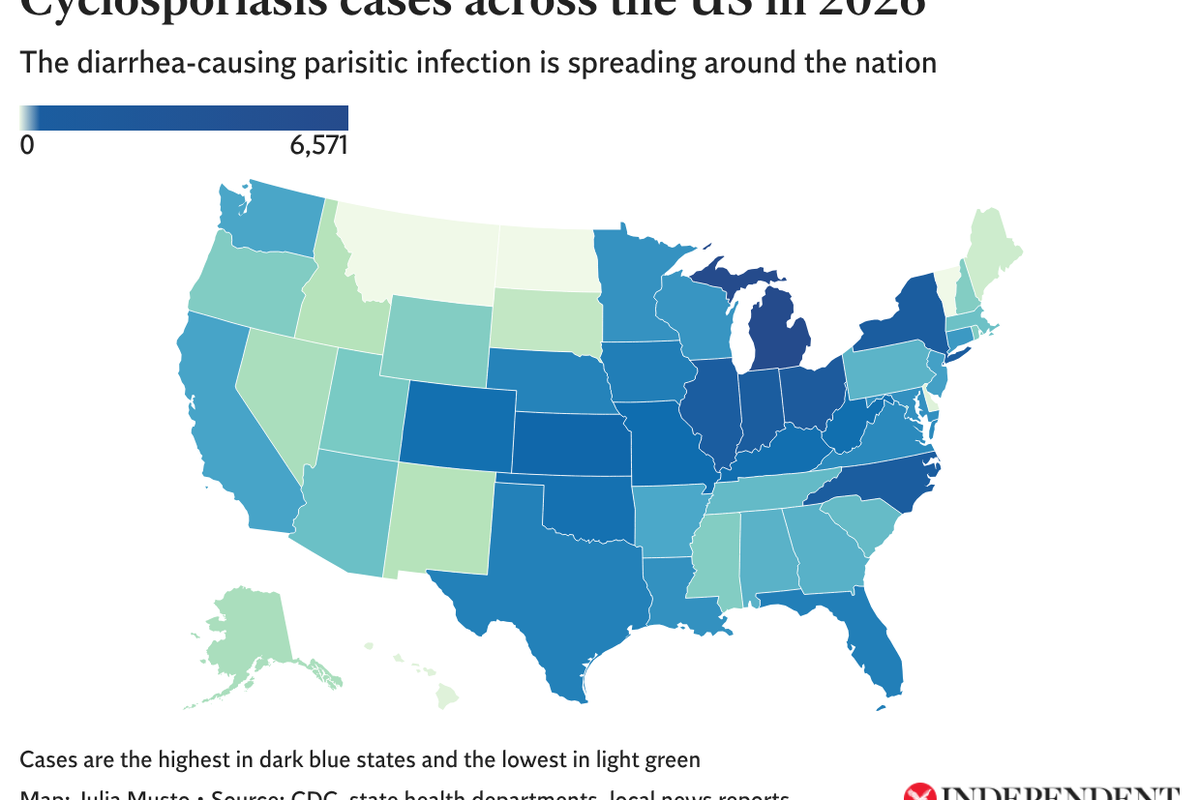
Thousands of people across the United States are dealing with a severe intestinal parasite outbreak, and current tracking numbers are climbing rapidly. The Centers for Disease Control and Prevention and state health departments have flagged thousands of confirmed and suspected cases of cyclosporiasis across more than 40 states. Michigan sits right at the epicenter with over 6,000 reported cases alone, while states like Ohio, Illinois, and North Carolina continue to see numbers tick upward.
If you think you're safe just by running your salad greens under tap water for five seconds, you need to reconsider your routine. This isn't a typical bacterial tummy bug like Salmonella or E. coli. It's a microscopic parasite called Cyclospora cayetanensis, and standard kitchen prep habits won't protect you from it.
What Cyclospora Actually Is and Why It Harder to Stop
Bacteria and viruses get most of the attention during summer food poisoning surges, but parasites operate on a completely different level. Cyclospora cayetanensis is a single-celled protozoan. Under a microscope, it looks like a tiny sphere, roughly 8 to 10 micrometers wide.
Because of its tough outer shell, it survives environmental conditions that would easily kill standard bacteria. The parasite gets passed through food or water contaminated with human fecal material.
You can't catch it directly from an infected person sitting next to you. When the parasite leaves the human body in stool, it isn't immediately infectious. It needs anywhere from several days to a couple of weeks in the environment to mature and become capable of infecting the next host. That key delay is why person-to-person transmission in households or workplaces almost never happens. Instead, the real danger comes from contaminated commercial agricultural supply chains, where microscopic oocysts cling to fresh produce before being distributed nationwide.
Why Washing Fresh Produce Isn't Enough
The most frustrating part of this outbreak is how resistant the parasite is to standard food safety measures.
Most people assume a quick rinse under cold water removes pathogens from fresh produce. With Cyclospora, that strategy frequently fails. The parasite produces a sticky outer surface that binds tightly to the crevices, microscopic folds, and rough surfaces of leafy greens, raspberries, snow peas, and fresh herbs.
Here is what you need to understand about cleaning methods.
- Hand sanitizers do nothing. Alcohol-based rubs do not break down the microscopic shell of a parasite oocyst.
- Chemical rinses fail. Chlorine washes and commercial veggie sprays used in kitchens regularly fail to inactivate or remove the parasite.
- Pre-washed labels aren't a guarantee. Bagged salads labeled triple-washed can still harbor the organism if contamination occurred at the farm or processing water source.
Heat is the only true dealbreaker for this organism. Cooking produce to an internal temperature of 158 degrees Fahrenheit kills the parasite instantly. If you are eating raw produce during a active regional outbreak, scrubbing under running water helps physically dislodge some pathogens, but it isn't an absolute shield.
Symptoms That Signal a Parasite Infection
Cyclosporiasis doesn't hit immediately. The incubation period usually lasts about one week, though symptoms can appear anywhere between two days and two weeks after ingesting contaminated food.
The primary symptom is severe, watery, and often explosive diarrhea. It isn't a quick 24-hour stomach bug. Without targeted treatment, the illness drags on for weeks or even months, often moving in a exhausting cycle where you feel better for a day or two before symptoms return with full force.
Common signs of infection include these indicators.
- Frequent watery diarrhea that persists beyond a couple of days
- Severe abdominal cramping and intense bloating
- Loss of appetite leading to noticeable, rapid weight loss
- Profound fatigue and persistent nausea
- Low-grade fever in a smaller percentage of cases
Dehydration is the biggest physical threat, particularly for young children, older adults, or anyone with a compromised immune system. Some patients end up losing up to ten percent of their body weight during prolonged infections, occasionally requiring hospital admission for IV fluids.
Getting the Right Diagnosis
If you go to an urgent care clinic and simply ask for a routine stool test, there is a high chance the lab will miss the parasite entirely.
Standard stool cultures search for common bacteria like Campylobacter or Salmonella. Routine ova and parasite examinations often fail to catch Cyclospora unless the technician specifically uses special staining techniques, like modified acid-fast staining, or runs a specialized GI multiplex PCR panel.
If you have suffered from persistent watery diarrhea for more than a few days during this outbreak, tell your doctor explicitly to order a specific test for Cyclospora.
Treatment also differs from typical gut infections. Over-the-counter anti-diarrheal medications can actually make things worse by trapping the parasite inside your digestive system. While many bacterial infections clear up on their own, Cyclospora usually requires a specific course of oral antibiotics—specifically trimethoprim-sulfamethoxazole, commonly known by brand names like Bactrim or Septra. If you have a sulfa allergy, your doctor will need to prescribe alternative therapeutic regimens like ciprofloxacin or nitazoxanide.
Practical Steps to Protect Your Kitchen Right Now
You don't need to panic or stop eating fresh vegetables entirely, but you do need to adjust how you buy, store, and prepare food while health agencies track down the source of the outbreak.
Focus on these practical kitchen habits today.
- Cook your greens when possible. Swapping raw spinach and kale for cooked preparations eliminates the risk completely.
- Scrub firm produce aggressively. Use a dedicated vegetable brush under clean, running water for items with thick skins like cucumbers and melons.
- Avoid delicate, hard-to-wash fruits. If your region is experiencing a massive spike in cases, hold off on raw raspberries and blackberries, which have deep crevices that trap microorganisms.
- Trim damaged areas. Cut away bruised or damaged parts of fruits and vegetables before eating, as parasites and bacteria colonize damaged plant tissues faster.
- Separate cutting boards. Prevent cross-contamination by keeping raw produce away from unwashed surfaces or raw meats.
Keep close tabs on local public health advisories from your state department of health. When official recall notices single out specific farms or distributor lots, check your refrigerator immediately and throw away matching products without tasting them.