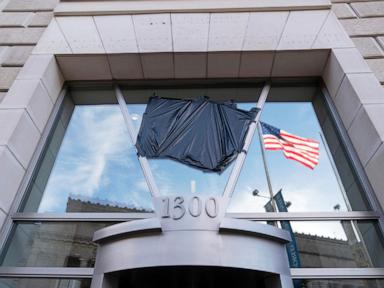
When the news broke that the U.S. Agency for International Development (USAID) was basically being dismantled overnight, the debate focused on the American budget. People argued about tax dollars and "America First" policies. But in the 870 subnational regions across Africa that relied on those funds, the conversation wasn't about politics—it was about survival. A new study published in the journal Science just confirmed what many aid workers feared. The abrupt exit didn't just save money; it triggered a massive spike in violent conflict.
We aren't talking about a slow decline. We're talking about a 10% increase in conflict events and combat deaths almost immediately after the cuts. This wasn't a gradual transition. It was an economic and security shock that left a vacuum. When you pull $60 billion out of fragile ecosystems with no notice, you don't get efficiency. You get chaos.
The Cost of a Sudden Vacuum
It’s easy to think of foreign aid as just "charity." But in places like northern Ivory Coast or Nigeria, those funds were the literal floor of the local economy. USAID wasn't just handing out bags of grain. They were funding contracts, paying local staff, and supporting the very people who kept extremist groups like Boko Haram or al-Qaida at bay.
The study, led by Austin Wright from the University of Chicago and a team of researchers, points out a crucial distinction. It wasn't necessarily the absence of aid that caused the violence, but the suddenness of the withdrawal.
Think about it this way. If you know your salary is going to be cut next year, you find a new job. If your boss locks the doors today and stops paying you for the work you already did, you're desperate. In a conflict zone, desperation is the best recruitment tool a jihadi group has. When the "outside option" of a stable job with an aid agency vanishes, picking up a gun starts to look like the only way to feed a family.
Breakdown of the Surge
The researchers combined two massive datasets: the Geocoded Official Development Assistance Dataset (GODAD) and the Armed Conflict Location & Event Data (ACLED). By mapping where the money went versus where the fighting started, the correlation became impossible to ignore.
- Riots and Protests: These spiked first as local economies buckled.
- Battles: Sustained armed combat between organized groups increased as state control weakened.
- Attacks on Civilians: Without the "buffer" of aid-funded programs, soft targets became more vulnerable.
Why Local Institutions Couldn't Step Up
A common argument for cutting aid is that it forces local governments to take responsibility. It sounds good in a stump speech. In reality, it's a disaster if the local government is already hanging on by a thread. The study found that while "stronger" institutions could somewhat mitigate the damage, "weaker" states saw a much more pronounced surge in violence.
In the Tigray region of Ethiopia, for example, recovery efforts from a brutal war were still in their infancy. They were leaning heavily on U.S. funds to rebuild. When that support vanished, the fragile peace didn't just wobble; it cracked. You can't ask a government that can't pay its own police to suddenly take over a multi-billion-dollar humanitarian portfolio.
The Loss of Institutional Memory
Nathaniel Raymond from Yale’s Humanitarian Research Lab made a point that often gets lost in the data. You can't just "turn the money back on" later and expect things to return to normal. When you shut down an agency like USAID, you aren't just deleting a line in a spreadsheet. You're firing the people who know the local chiefs. You're burning the contracts with the logistics companies that know how to get medicine through a jungle. That experience is gone. You're starting from zero, but now you're doing it in a war zone that you helped create.
The Spillover Effect
If you don't care about the humanitarian side, you should probably care about the security side. These cuts didn't just stay within the borders of the "aid-dependent" regions. ACLED reports that jihadis have been increasingly involved in violence across the board, targeting civilians at record rates over the last few years.
The programs that were cut often acted as "firewalls." They provided community-level resilience that prevented the spread of extremism from one region to another. Without those programs, we’re seeing "insurgency spillover." A problem that was contained in one province is now a regional crisis. It turns out that preventing a war is a lot cheaper than dealing with the global consequences of one.
What This Means for the Future of Aid
If there's one takeaway from this data, it's that "how" you cut is just as important as "how much." Sudden, no-notice withdrawals of support are effectively an economic attack on your allies.
If you're looking at these findings and wondering what happens next, keep an eye on these specific indicators:
- Contract Fulfillment: Watch if other donors (like the EU or Germany) try to pick up the abandoned USAID contracts or if those local organizations just collapse.
- Jihadi Recruitment Trends: Look for spikes in extremist activity in regions like northern Ivory Coast, which was a specific focus of U.S. counter-extremism funding.
- Local Wage Stability: When aid leaves, wages in the surrounding area usually crater. If local economies don't stabilize, the violence will likely persist for years.
Stop thinking of aid as a gift. In these regions, it was an investment in stability. When the U.S. pulled that investment without a transition plan, it didn't just leave the building—it set the building on fire. If you want to understand why Africa is seeing a surge in violence in 2026, don't just look at the groups holding the guns. Look at the empty offices where the peacebuilders used to sit.