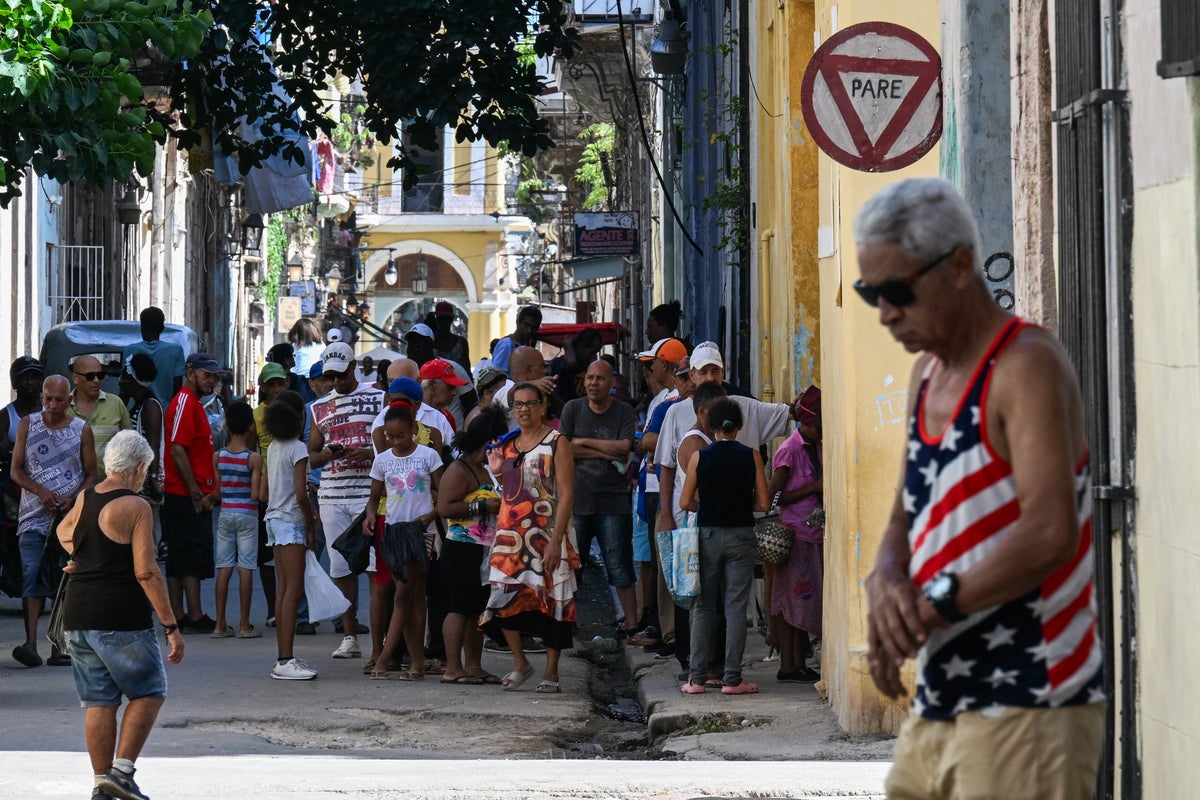
Mainstream media outlets are falling over themselves to celebrate the Cuban governments announcement of 176 economic reforms. They call it a historic transition to a market economy, a desperate but brave step away from the ghost of Fidel Castro, and a genuine embrace of private property. Then, right on cue, the narrative shifts to Washington. The lazy consensus states that the second Trump administrations aggressive tightening of sanctions and oil blockades will strangle this fragile capitalist flower in the cradle.
This narrative is completely wrong. It fundamentally misunderstands the mechanics of totalitarian survival.
The Cuban regime is not transitioning to a free market. It is externalizing its liabilities while maintaining absolute control over the country's actual wealth. For decades, the Communist Party of Cuba has used the United States embargo as a political shield to deflect blame from its own systemic incompetence. The latest round of privatization, private banking, and real estate legalization is not an ideological awakening. It is a desperate liquidity trap designed to extract hard currency from foreign investors and the Cuban diaspora to recapitalize a bankrupt ruling class.
The Survival Blueprint of a Bankrupt Regime
I have watched authoritarian states pull this exact maneuver when their central banks run completely dry. When an economic model faces absolute collapse—marked by severe electricity blackouts, an early end to the school year, and a massive flight of the workforce—the state does not suddenly believe in Adam Smith. It survival-shops.
The approved package allows private banks, real estate development, and the privatization of some state-owned enterprises. To the untrained eye, this looks like the liberalization of Vietnam or China in the late twentieth century. Look closer at the mechanics.
The Cuban military consortium, GAESA, still sits on top of the financial system. It controls the real revenue-generating sectors of the economy, including high-end tourism and international shipping. The state is not selling off GAESA. It is unloading the broken, capital-starved, unprofitable sectors of the economy onto the public.
Imagine a corporation spinning off its toxic assets, massive debts, and failing infrastructure into a separate entity, selling shares to unsuspecting retail investors, and calling it a corporate restructuring. That is Cuba's privatization. The regime wants private individuals to buy crumbling real estate, take on the financial risk of food logistics, and fund public services through a punishing new taxation system, all while the military elite holds the keys to the actual treasury.
Dismantling the Myth of the Stifled Transition
The common argument claims that U.S. sanctions, reinforced by the designation of Banco Financiero Internacional (BFI), are the sole reason these reforms will fail. The theory goes that by scaring away foreign capital, Washington is turning a transition into chaos.
This argument ignores a glaring economic reality: the Cuban state has been the primary destroyer of foreign investment long before Donald Trump re-entered the White House.
The structural self-sabotage embedded in Cuban law makes genuine investment impossible. Historically, when a private or foreign venture inside Cuba begins to generate substantial cash flow, the state moves the goalposts. They adjust currency exchange rules, restrict cash withdrawals from state-controlled banks, or introduce sudden regulatory hurdles to freeze assets. The track record of the Cuban government honoring its financial obligations to international partners is abysmal.
Furthermore, data completely undermines the idea of a total economic blockade. United States exports to Cuba have risen sharply. Trade between the two nations grew by 148 percent between 2021 and 2025, even as Cuba's total imports from the rest of the world dropped by nearly 37 percent. The Trump administration specifically permitted direct exports to Cuba’s private sector. If the goal was total economic isolation, those channels would not be expanding.
The bottleneck is not Washington. The bottleneck is Havana’s refusal to allow independent capital accumulation.
The Diaspora Liquidity Trap
The most cynical element of the 176 proposals is the invitation for Cubans residing abroad to invest in domestic agriculture, real estate, and small enterprises. This is a targeted psychological play aimed straight at the Cuban-American diaspora.
The regime needs U.S. dollars to pay for basic imports and maintain its security apparatus. By dangling the carrot of property ownership and private business equity, Havana hopes emotional ties will override cold financial logic.
Consider the legal framework under the Helms-Burton Act. Title III allows American nationals to sue entities that traffic in property confiscated during the 1959 revolution. Any diaspora investor pouring money into Cuban real estate or privatized state assets is walking directly into a legal minefield in U.S. courts. The Cuban government knows this. They are asking investors to take on massive legal risks in exchange for equity that can be revoked by a single decree from the National Assembly.
In every previous cycle of Cuban economic reform—whether during the post-Soviet Special Period or the Obama thaw—the pattern remained identical. The state opens the valve slightly when the crisis is acute, allows just enough private activity to stabilize the food supply, and clamps down the moment the immediate danger to the regime passes. This is not a roadmap to a free market. It is an economic breathing room tactic.
The Real Cost of the Capitalist Illusion
If the United States lifted every sanction tomorrow, the Cuban economy would not transform into a Caribbean Tiger. It would reveal the terminal rot inside the state-planned model. Without a functioning legal system, independent courts to protect property rights, and a transparent monetary policy, foreign capital will not stay.
The current reforms force private businesses to underwrite collapsing public services. The state is essentially告诉 entrepreneurs that they can have the freedom to operate, provided they pay the bills for a bankrupt socialist infrastructure that the government can no longer afford to maintain.
This is an extraction mechanism disguised as economic freedom. Investors who buy into the narrative of a historic Cuban transition are funding the survival of the very apparatus that crushed the economy in the first place. Stop looking at the superficial headlines of liberalization and start tracking where the hard currency flows. It flows straight up to the military elite, while the systemic risk is pushed entirely onto the citizens and foreign entities foolish enough to trust a dictatorship's balance sheet.