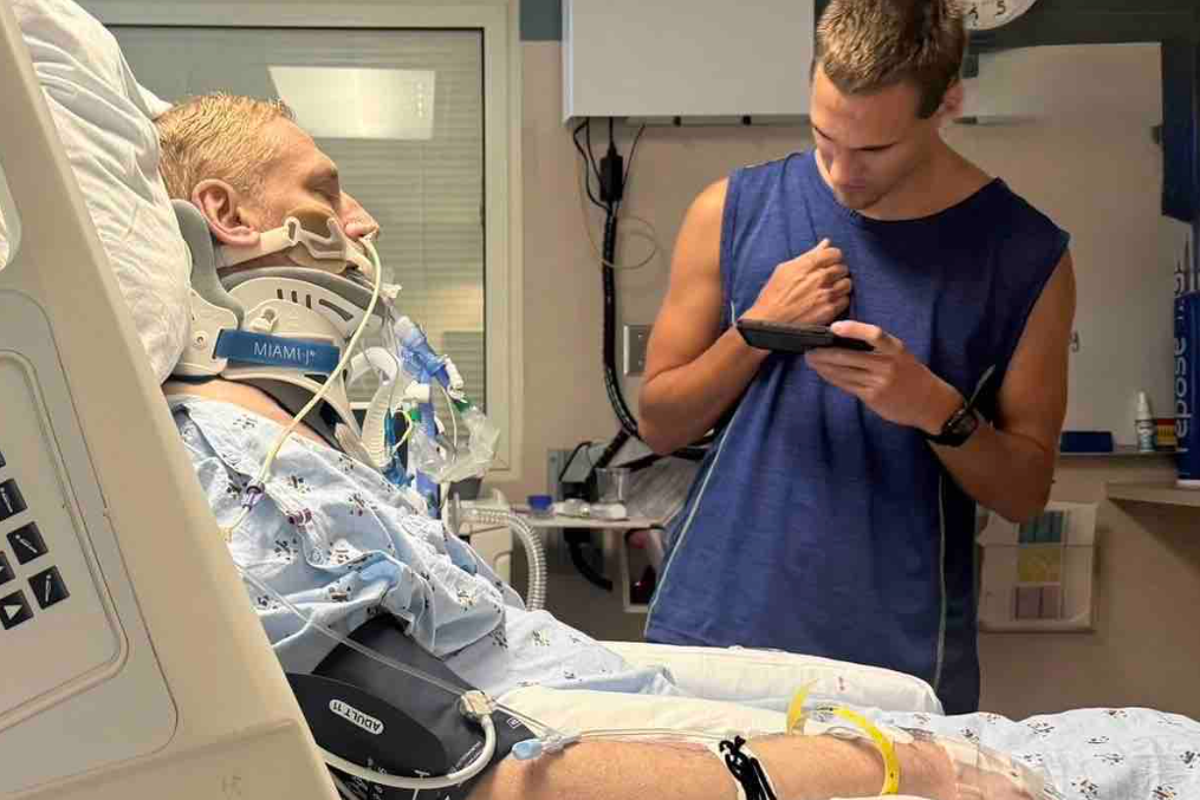
Every time a tragic headline hits the wire about a passenger meeting a grim end on a luxury cruise ship, the collective public reaction follows a predictable, lazy script. People shake their heads, mutter something about freak accidents, and blame bad luck. When a Minnesota pastor recently died following a severe spinal injury sustained on a ship celebrating his son’s wedding, the media treated it as a heartbreaking anomaly. A random wave. A cruel twist of fate at sea.
That narrative is a comforting lie designed to protect a multi-billion-dollar vacation machine.
Let us be brutally honest from the opening bell. This was not a freak accident. It was a statistical probability waiting to happen in an environment that heavily masks physical risk beneath endless buffets, neon lights, and staged tranquility. The cruise industry has successfully marketed itself as a floating paradise, a stress-free sanctuary where safety concerns vanish behind the horizon. In reality, modern cruise ships are complex logistical environments carrying thousands of aging, vulnerable travelers across unpredictable marine conditions, often operating miles away from definitive medical care.
I have spent over a decade auditing risk management frameworks for maritime hospitality operations. I have seen cruise lines cut corners on medical staffing, rely on undertrained security contractors, and push embarkation schedules regardless of hazardous sea states. When you cram four thousand people onto a floating steel block—many of them retirees with pre-existing mobility limitations—and mix in wet pool decks, poorly lit stateroom thresholds, and motion that challenges inner-ear equilibrium, you do not have a relaxing escape. You have an accident incubator.
The lazy consensus is that cruising is safer than driving down your local interstate. Statistically, per mile traveled, perhaps that holds true. But that metric is a deliberate statistical sleight of hand. People do not board a highway expecting a floating hospital with limited ICU capabilities. When a severe trauma occurs on land, an ambulance is minutes away. When a severe spinal injury occurs three hundred miles off the coast of Florida or in the middle of the Atlantic, you are at the mercy of shipboard doctors who are typically general practitioners managing everything from sunburns to norovirus outbreaks with limited surgical gear.
Let us dissect the core mechanisms of how the industry obfuscates these risks.
First, consider the medical infrastructure onboard. Major cruise lines are legally required to provide medical care, but international maritime law dictates very lax standards for what constitutes an adequate shipboard hospital. Many of these facilities resemble urgent care clinics rather than fully equipped trauma centers. If a passenger suffers a catastrophic spinal injury, a traumatic brain injury, or a massive cardiac event, the ship doctor's primary role is often stabilization and coordination for a costly emergency evacuation. That evacuation frequently involves a perilous helicopter hoist at sea or a grueling diversion to the nearest port—if weather permits. Every hour lost during that chain of events exponentially worsens the prognosis for spinal trauma, where rapid decompression and surgical intervention dictate whether a patient walks again or faces permanent paralysis.
Second, examine the environmental hazards that get excused away as mere "sea motion." Ships roll, pitch, and heave. Yet, the architectural choices onboard often prioritize aesthetic luxury over basic ergonomics for an aging demographic. Polished marble floors that become slick the moment a droplet of pool water hits them, heavy fire doors that require surprising upper-body strength to push through, and narrow stairwells with inadequate handrail continuity are standard features across vessels built twenty years ago and vessels launched last month. When a sudden rogue wave or rough patch of weather hits—phenomena that climate volatility is making increasingly unpredictable—passengers transition from leisurely strolls to navigating an unstable obstacle course.
The media loves to frame these incidents as isolated tragedies because it avoids asking the harder systemic questions. Asking those questions would require confronting the fundamental business model of the cruise industry: maximizing passenger density while outsourcing acute emergency risk to the open ocean.
If you are planning a cruise, especially if you are traveling with elderly parents or family members with compromised mobility, you need to abandon the illusion that you are entering a secure resort bubble. You are stepping onto a floating vessel governed by maritime legal loopholes, operating under profit-driven constraints, and staffed by multinational crews operating under intense operational pressure.
Here is what you actually need to do to protect yourself and your family, since the cruise lines will never do it for you.
Do not rely on the ship's medical insurance policies or assume standard travel insurance covers emergency maritime evacuations. Standard policies frequently cap medical evacuation payouts at ten or twenty thousand dollars. A helicopter airlift from international waters can easily eclipse fifty thousand dollars before you even touch ground at a trauma center. Purchase independent, high-limit emergency medical evacuation riders specifically tailored for remote travel.
Inspect your stateroom and immediate surroundings for environmental hazards the moment you board. Look at the bathroom thresholds, test the grip on the shower grab bars, and note where the nearest heavy fire doors are located. If you are traveling with older family members, insist on footwear with aggressive rubber traction rather than smooth-soled boat shoes or sandals. Slipping on a wet deck is the leading cause of catastrophic orthopedic and spinal injuries at sea, yet passengers treat flip-flops as standard uniform.
Acknowledge the physical reality of the ocean. It is an untamed, indifferent environment. No amount of onboard entertainment, Broadway-style revues, or all-inclusive drink packages changes the fact that you are miles away from a neurosurgeon. Treat the ship with the respect you would accord a remote mountain expedition, because when things go sideways on the water, rescue is not just around the corner.
Stop waiting for the industry to police itself or for regulators to enforce safer architectural standards across legacy fleets. They will only change when passengers stop accepting the sanitized marketing illusion and start voting with their wallets based on actual safety metrics rather than promotional brochure glossy photos.
Never mistake a floating resort for a safe harbor.