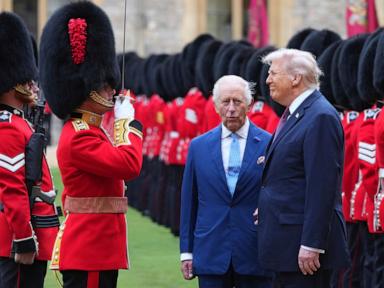
King Charles III is moving to cement the Special Relationship through a series of high-profile diplomatic engagements, signaling a continuation of the Elizabethan doctrine despite a volatile Middle East. This strategic pivot aims to insulate the UK-US alliance from the fractures caused by differing approaches to Iranian aggression. While the media focuses on the pageantry of state visits, the real work is happening in the quiet corridors of the Foreign Office, where officials are desperate to align London’s monarchical soft power with Washington’s hard-nosed security demands.
The timing is delicate.
As Iran ramps up its enrichment programs and its proxies threaten global shipping lanes, the British monarchy finds itself in its traditional role as the ultimate diplomatic lubricant. Charles is not merely following a script written by his mother; he is adapting a centuries-old tool of statecraft to a world where the United States is increasingly skeptical of European defense commitments. The King’s upcoming interactions with American leadership are designed to prove that the UK remains the indispensable bridge across the Atlantic, even when the geopolitical weather turns foul.
The Elizabethan Blueprint and the Charlesian Reality
For seven decades, Queen Elizabeth II treated the American presidency with a mix of grandmotherly warmth and inscrutable neutrality. She saw thirteen presidents come and go, providing a constant baseline for an alliance that survived the Suez Crisis, the Vietnam War, and the invasion of Iraq. Charles inherited a playbook that prioritizes stability over individual policy disagreements.
However, the current friction with Tehran introduces a variable the previous Queen rarely had to balance with such urgency. The UK remains a party to the tattered remnants of the JCPOA nuclear deal, while the US political apparatus remains deeply divided on whether to engage or isolate the Iranian regime. Charles must project a unified front with Washington while his own government struggles to define its "tilt" toward the Indo-Pacific without abandoning its interests in the Persian Gulf.
Soft Power in a Hard Power Era
We often mistake the monarchy for a relic. It is actually a specialized instrument of the British state. When the King hosts a world leader or travels to Washington, he isn't there to negotiate trade tariffs or military basing rights. He is there to create the psychological environment where those deals can happen.
In the context of Iran, this soft power is being deployed to remind the American public and its lawmakers that the UK is not just another European middle power. By emphasizing shared history and values—the "bonds" that headlines love to mention—the King provides cover for the Prime Minister to navigate the more treacherous waters of intelligence sharing and maritime security. It is a division of labor that has served the UK well since 1945.
The Tehran Divergence
The most significant threat to this carefully curated image is the widening gap between London and Washington on how to handle the IRGC. While the US has designated the Islamic Revolutionary Guard Corps as a terrorist organization, the UK has hesitated, citing the need to keep diplomatic channels open. This is the friction point that no amount of royal handshaking can entirely smooth over.
Insiders within the intelligence community suggest that the King’s role is to act as a "permanent representative." Politicians are transient. Presidents serve four or eight years. A King is a constant. By maintaining a rapport with the US leadership, Charles ensures that even when the White House and Downing Street clash over specific tactics in the Middle East, the foundational architecture of the alliance remains intact.
The Military Connection
It is easy to forget that the King is the head of the British Armed Forces. This isn't just a ceremonial title; it is a vital link to the Pentagon. The Royal Navy’s presence in the Strait of Hormuz is a concrete manifestation of the UK’s commitment to regional stability, often operating in tandem with US Carrier Strike Groups.
When Charles speaks of the "shared sacrifices" of the two nations, he is referencing a military integration that is deeper than most people realize. From the exchange of nuclear submarine technology to the joint development of stealth fighters, the UK-US defense relationship is the bedrock upon which the monarchy's diplomatic efforts are built. The King’s job is to keep that bedrock from cracking under the pressure of regional conflicts.
The Economic Stakes of Diplomacy
The Special Relationship is also a massive economic engine. The UK is the largest foreign investor in the United States, and vice versa. In times of global instability, especially when energy markets are threatened by tensions in the Gulf, the King’s role as a symbol of continuity is a reassurance to markets.
Stability is the currency of the monarchy. By showing that the UK is "open for business" and aligned with its primary security partner, Charles helps mitigate the perceived risks of investing in a country that is still finding its post-Brexit footing. The Tehran situation threatens to disrupt global trade; the King’s mission is to signal that the US-UK axis is a zone of predictability in an unpredictable world.
The Problem of Legacy
Charles is also fighting a battle for relevance. He knows that the Commonwealth is changing and that the monarchy's influence is being questioned both at home and abroad. By positioning himself as a key player in the US-UK relationship, he is asserting his value to the British state. This isn't just about following his mother's lead; it's about survival.
He has spent his life preparing for this, often focusing on issues like climate change and interfaith dialogue. These "softer" topics actually provide a useful entry point for discussions with an American administration that is increasingly focused on the intersection of security and environmental stability. It is a modernized version of the old diplomacy, tailored for a century where the threats are as much about resource scarcity as they are about rogue states.
Behind the Scenes at the Palace
The planning for these engagements is meticulous. Every toast, every gift, and every guest list is scrutinized for its diplomatic resonance. If the King is seen as too close to an American administration, he risks alienating the opposition. If he is too distant, he fails in his duty to the government.
The "Tehran tension" mentioned in competitor reports is the backdrop, but the King's focus is the long game. He is looking past the current crisis toward the next twenty years. The goal is to ensure that when the next flashpoint occurs—whether in the Middle East or the South China Sea—the first phone call the President makes is still to London.
The Risk of Miscalculation
There is, of course, a danger. If the UK government takes a hard turn on Iran that directly contradicts American policy, the King’s position becomes untenable. He cannot be a symbol of unity if the underlying policy is one of division. We saw glimpses of this during the lead-up to the Iraq War, where the monarchy had to navigate a deeply unpopular conflict while maintaining ties with the Bush administration.
Charles lacks the perceived neutrality that his mother spent decades cultivating. He has a history of speaking his mind, and though he has reigned in his "black spider" memos since taking the throne, the world knows where he stands on many issues. This makes his diplomatic maneuvers more transparent, and perhaps more vulnerable to criticism.
The Reality of Modern Statecraft
The idea that a King can solve geopolitical crises through dinner parties is anachronistic. What he can do is reinforce the cultural and historical glue that keeps the bureaucratic machinery of the two nations moving. When civil servants in the State Department and the Foreign Office hit a wall, the overarching "vibe" of the relationship—set at the top by the Monarch and the President—determines whether they find a workaround or walk away.
London knows that it cannot compete with the US in terms of raw military or economic power. Its strategy has always been to be the most useful ally. By deploying the King, the UK is playing its strongest card. It is a card that no other nation possesses, and Charles is playing it with a level of intentionality that suggests he understands exactly what is at stake.
The tension with Iran is not a hurdle to the King’s diplomacy; it is the reason for it. In a world of shifting alliances and rising powers, the UK is doubling down on its oldest and most powerful friend. The King is the face of that bet.
The focus must now shift to the concrete results of these royal overtures, specifically whether they lead to a more unified stance on the IRGC and a clearer maritime security strategy. Soft power is only as good as the hard power it supports. The King has set the stage; now the politicians must deliver the substance.
Stop looking at the crown and start looking at the naval charts. That is where the true temperature of the US-UK relationship is measured.