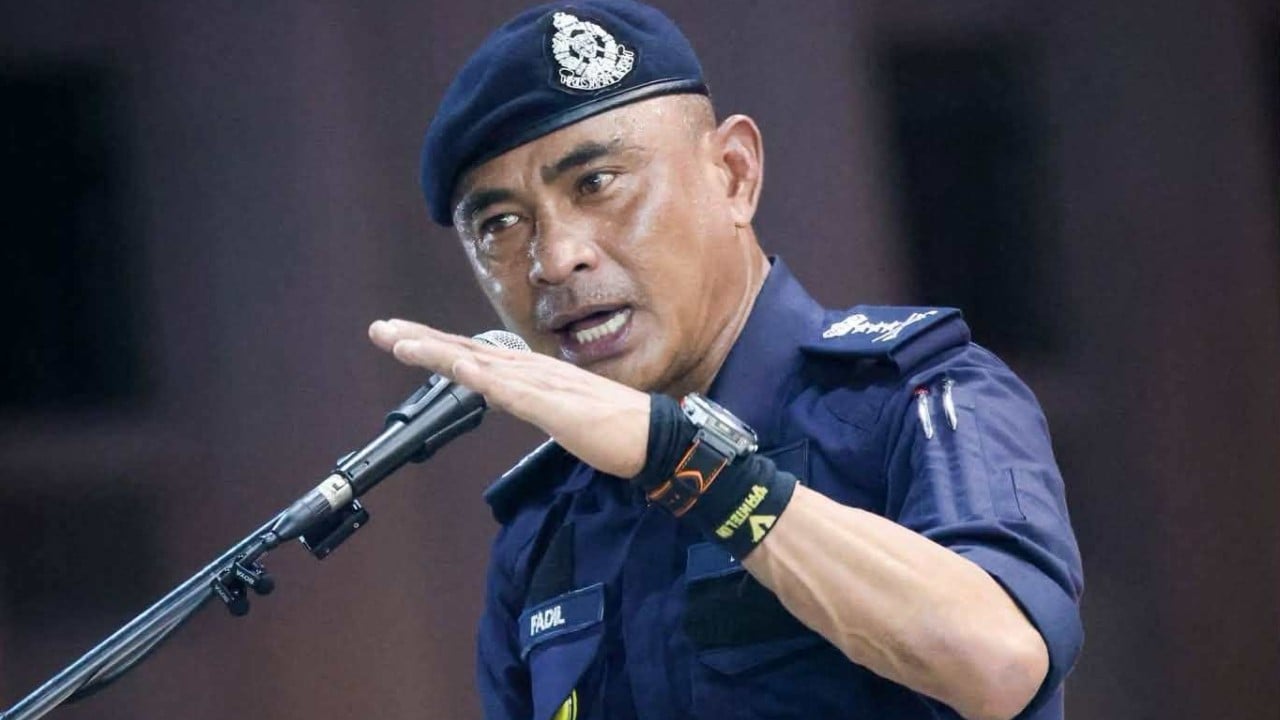
"If there is doubt, shoot."
Five words from Kuala Lumpur police chief Datuk Fadil Marsus have reignited one of Malaysia's oldest, sharpest debates about state power and accountability. Spoken in a stern operational audio message after a 26-year-old lance corporal had his right hand severed during a machete attack in Kepong on November 11, 2026, the directive sounds straightforward on the surface. Protect your own life. Don't hesitate when facing a blade.
Yet civil rights advocates, legal observers, and reform campaigners aren't reacting to a single emotional speech in a vacuum. They're looking at a decade-long track record where 327 suspects were shot dead by Malaysian police across 193 incidents between 2015 and 2025—and not a single officer faced criminal charges. When you lower the verbal threshold for pulling a trigger inside a system that already struggles with transparency and incomplete body-worn camera coverage, "doubt" stops being a tactical instruction and starts looking like a blank check.
What Actually Happened in Kepong and Why the Audio Went Viral
To understand why Fadil Marsus sounded so raw, you have to look at the brutality of the incident that triggered his order. On Wednesday night, November 11, 2026, Mobile Patrol Vehicle officers responded to a disturbance call at a residential apartment in Desa Aman Puri, Kepong.
A foreign national armed with two machetes confronted the responding personnel. During the violent altercation, the 26-year-old lance corporal suffered a catastrophic injury when his right hand was severed. First responders rushed him to Selayang Hospital before transferring him to Hospital Kuala Lumpur, where a specialist microsurgical team performed an emergency replantation operation lasting roughly seven hours to save the limb. Meanwhile, the suspect evaded initial capture before turning violent again during a second confrontation with officers, who opened fire and killed him.
Graphic images and footage of the injured officer spread across Malaysian social media within hours. Inside the Royal Malaysia Police, the shock was immediate. Fadil Marsus addressed his contingent in an operational message that soon leaked online, telling frontline personnel to keep their weapons ready and never wait until they suffer irreversible harm.
His exact phrasing is what set off alarm bells:
- "You must know how to draw your weapons: ready, draw, fire."
- "If there is any resistance, shoot. When in doubt, shoot. If there is concern or threat, shoot. Do not wait."
Honestly, anyone who has ever studied split-second policing understands the human instinct behind a commander wanting his subordinates to go home alive. Facing a suspect swinging two machetes in a cramped apartment corridor leaves zero room for slow deliberation. Prime Minister Anwar Ibrahim condemned the attack during a cabinet meeting, while Home Minister Saifuddin Nasution Ismail told ministers that existing standard operating procedures already permit officers to take necessary action to protect their personal safety.
Here's the problem. Operational commands from a state police chief carry institutional weight, and words matter when a service revolver or semi-automatic pistol is on every patrol officer's hip.
Why Doubt Is the Exact Opposite of the Legal Standard
In criminal law across Commonwealth jurisdictions—including Malaysia—deadly force isn't supposed to happen when an officer feels "doubt" or general "concern." It's supposed to happen when there is imminent certainty of death or grievous bodily harm, and no lesser option can stop the threat.
Human rights group Suaram was among the first to push back publicly. Executive director Azura Nasron warned that telling rank-and-file officers to shoot "when in doubt" risks being interpreted on the street as blanket authorization for lethal force. Once a commander frames hesitation as a fatal mistake and doubt as a trigger condition, the psychological burden shifts completely. Instead of asking whether a threat is genuinely lethal and unavoidable, an anxious officer on a dark street is incentivized to fire first and explain later.
Malaysia has been down this road before. Back in October 2013, then-Home Minister Ahmad Zahid Hamidi sparked a national uproar after telling a gathering that police should "shoot first" without giving warnings when dealing with violent criminals. Critics at the time—including senior figures within the ruling coalition—warned that shoot-first rhetoric erodes the rule of law and invites fatal mistakes against innocent bystanders or unarmed suspects.
Thirteen years later, the core tension hasn't changed at all. A commander's pep talk isn't formal legislation, yet on the ground, street-level officers take their cues from what their bosses reward and excuse. If a Kuala Lumpur police chief explicitly tells his contingent not to wait when they feel doubtful, nobody on patrol is going to parse the fine print of the Penal Code in the middle of an adrenaline spike.
The Numbers Behind Critics' Distrust
You can't separate this controversy from Malaysia's official record on fatal police shootings. In February 2026, Home Minister Saifuddin Nasution Ismail submitted a written parliamentary reply to the Dewan Rakyat revealing stark figures covering the decade from 2015 to 2025:
- 327 suspects were shot dead by police nationwide.
- Those deaths occurred across 193 separate shooting incidents.
- Zero police officers faced criminal charges in connection with any of those 193 cases.
Let that sink in for a second. Over ten full years, nearly two hundred fatal encounters left more than three hundred people dead, and not a single case resulted in a prosecution.
Police leadership and the Home Ministry maintain that every single shooting followed standard operating procedures and involved officers acting in self-defense against armed or dangerous suspects. Maybe many of them were textbook self-defense cases. Violent syndicates, armed robbers, and machete-wielding assailants are real hazards that Malaysian officers confront regularly.
Still, a 100 percent exoneration rate across 193 fatal incidents over a decade strains public credibility. Even in countries with robust independent oversight bodies, a ten-year stretch of lethal police encounters usually turns up at least a handful of bad shoots, negligent discharges, or disproportionate responses that end up before a criminal court. When internal police investigations consistently clear their own personnel without transparent public inquests, skepticism becomes the default public reaction.
That skepticism sharpened in 2025 and 2026 around cases like the November 2025 Durian Tunggal shooting in Melaka, where three men aged 21 to 29 were killed during a police operation, prompting lawyers for the victims' families to demand public accountability and question delays in formal inquest proceedings. Against that backdrop, an audio recording telling officers to shoot whenever they're in doubt lands like kerosene on dry wood.
The Missing Link of Bodycams and De-Escalation Training
Whenever fatal police shootings make headlines in Malaysia, officials point to technology and training as proof that modernization is underway. On paper, the numbers look encouraging. Beginning in October 2024, the Royal Malaysia Police rolled out 7,648 body-worn cameras across 157 district headquarters and 640 police stations nationwide, covering patrol units under the Crime Prevention and Community Safety Department. By February 2025, standard operating procedures governing body-worn camera usage took effect under Inspector-General of Police Directive No. 200, followed by lockup camera rules in August 2025.
In practice, critics point out major gaps that keep bodycams from delivering genuine accountability:
- Incomplete force-wide coverage: Out of a police force exceeding 130,000 personnel, 7,648 devices—even with plans announced in mid-2025 to procure another 10,000 units—leave vast numbers of plainclothes detectives, criminal investigation teams, and specialized strike units operating without cameras.
- Selective visibility of footage: Having a camera clipped to a uniform doesn't help public trust if recordings are treated strictly as internal police evidence rather than released promptly during disputes or inquests.
- Battery and operational limits: Police leadership itself acknowledged in early 2026 that longer battery life had to be prioritized in the next procurement phase after field feedback on the initial batch.
Meanwhile, non-lethal tools and tactical de-escalation remain under-emphasized compared to firearm readiness. As Suaram's Azura Nasron noted after the Kepong incident, frontline officers need rigorous scenario-based training in threat assessment, distance management, and non-lethal containment—not verbal encouragement to treat uncertainty as a cue to fire.
Think about the Kepong apartment encounter itself. Sending patrol officers into a tight residential corridor against a man dual-wielding machetes without adequate distance, shields, or less-lethal incapacitating tools puts both the officer and the suspect on a collision course where someone gets maimed or killed. Telling officers to shoot earlier doesn't fix the tactical flaw of walking straight into blade range without proper containment gear.
What Needs to Change Before the Next Fatal Encounter
Public sympathy for the injured lance corporal in Kepong is nearly universal, and rightly so. Nobody wants a 26-year-old public servant to lose a hand while answering a routine disturbance call. Supporting injured officers and demanding strict guardrails on lethal force aren't contradictory positions—they're two halves of basic policing competence.
If Malaysia's Home Ministry and police leadership want to protect both frontline personnel and civilian lives without eroding public trust further, four concrete reforms can't wait:
- Clarify the operational directive publicly: Inspector-General of Police leadership and the Home Ministry should explicitly reaffirm that Malaysian law permits lethal force only when faced with an imminent threat of death or serious injury—not mere doubt, obstruction, or suspicion.
- Mandate automatic inquests for every fatal shooting: Under Malaysia's Criminal Procedure Code, sudden deaths involving law enforcement require transparent judicial scrutiny. Making open coroner's inquests automatic—with mandatory disclosure of all available bodycam and dashcam footage—would end the perception that police investigate themselves in secret.
- Accelerate full bodycam deployment with strict activation rules: Expand body-worn camera coverage beyond standard patrol units to every tactical and investigative unit authorised to carry firearms in public operations, paired with disciplinary penalties whenever cameras aren't activated during an armed encounter.
- Invest in distance-control gear and scenario training: Equip frontline Mobile Patrol Vehicle units with effective non-lethal alternatives—such as conducted energy devices and ballistic shields—and train officers continuously on how to contain edged-weapon threats without closing into lethal melee range.
Until those guardrails are visibly enforced, every shoot-first soundbite from a senior commander will keep critics on edge—and leave ordinary Malaysians wondering whether "doubt" is all it takes to end a life on the street.
For a closer look at the official statements surrounding the Kepong attack and the directive to Kuala Lumpur officers, watch PM condemns Kepong attack; KL CPO orders officers to shoot in life-threatening situations, which features remarks from Prime Minister Anwar Ibrahim and police leadership explaining their response to the incident.


