A few drops of spilled espresso on a briefing paper do not usually change the course of geopolitics. But inside the Chigi Palace in Rome, the atmosphere had already turned cold long before the ink dried.
A year ago, political analysts drew straight lines between Washington and Rome. Donald Trump and Giorgia Meloni were the poster children of a new, nationalistic world order. They shared enemies, rhetoric, and a deep skepticism of old-world globalism. Meloni had even traveled to Washington as the lone European premier celebrating Trump's return to power. They looked like an unbreakable front.
Then came the Iranian conflict, and the theater of global brotherhood collapsed into petty grievance.
The breakdown did not start with a grand ideological debate. It started with a runway in Sicily.
In March, American military transport planes bound for the escalating theater in the Middle East requested immediate landing clearance at the Sigonella air base. The base, perched on the sun-baked flats of eastern Sicily, is an American naval air station, but it sits on Italian soil. Rome looked at the logs, noted that Washington had bypassed the formal protocol for prior authorization, and said no.
The American jets flew on, but the denial stung.
For Washington, the refusal was a betrayal from a friend during a hot war. For Rome, it was a necessary boundary. Italy refused to become an unconsulted launchpad for a conflict it did not choose. The rift widened when Iran blockaded the Strait of Hormuz, choking off the world's oil supply. Washington demanded a unified maritime front to reopen the channel. Meloni held back.
True friction rarely stays confined to boardroom policy. It bleeds into the personal.
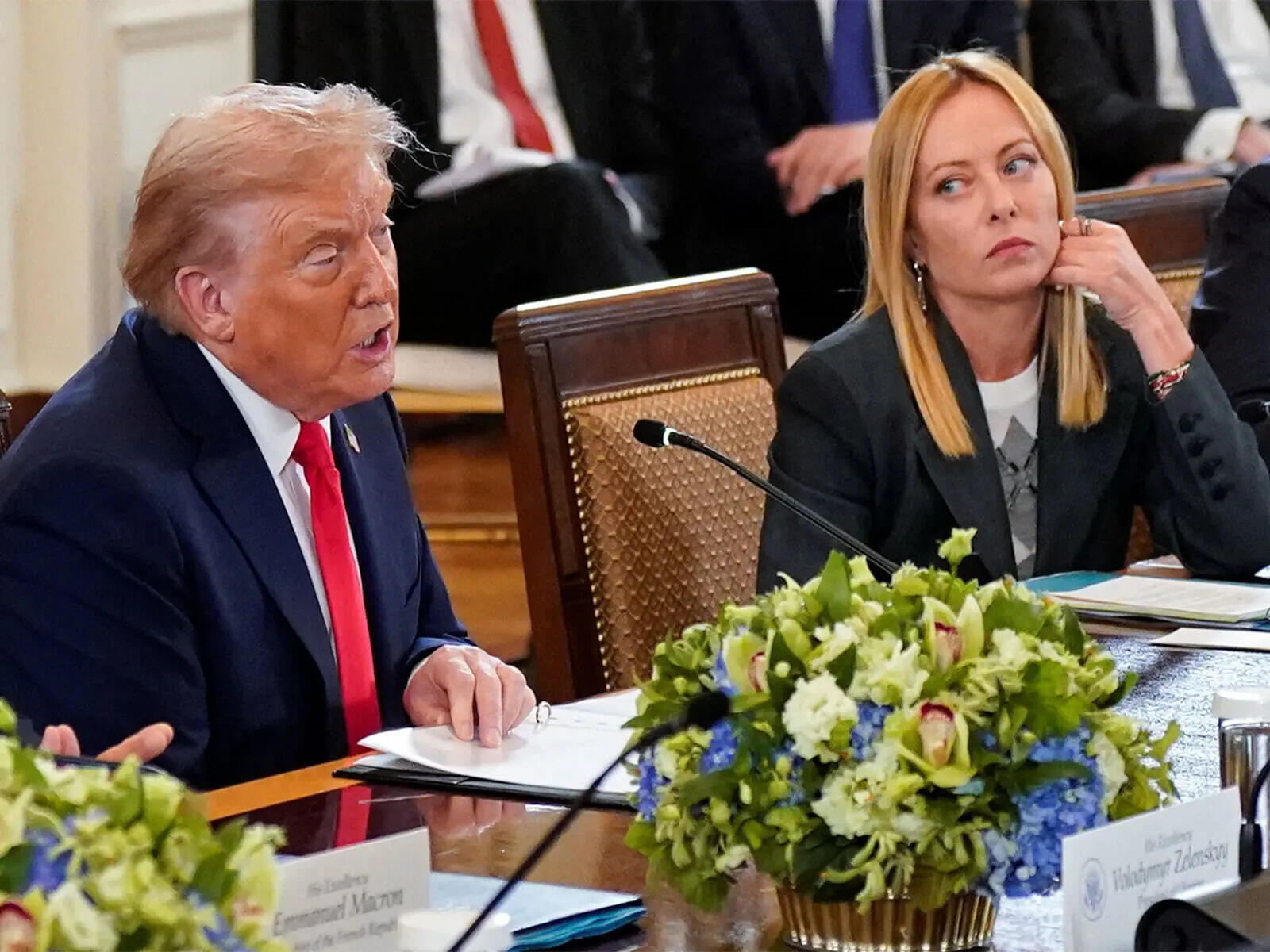
At a recent G7 gathering in France, the lingering tension became a public spectacle. Trump claimed to an Italian television network that Meloni had practically begged him for a photograph, suggesting he only complied because he felt sorry for her.
Meloni did not flinch. Her counter-strike was sharp, devoid of diplomatic fluff.
"Italy and I never beg," she fired back, describing the story as completely fabricated. She suggested Trump focus on his own sinking popularity rather than inventing high school drama on the world stage.
Then came the social media escalation. Trump shared a doctored image on Truth Social showing Meloni gazing up at him, stamped with a blunt caption: RESTRAINING ORDER NEEDED.
To the casual observer, it looks like a standard internet dustup. But look closer at the underlying anxiety. This is what happens when the intense, ego-driven dynamics of modern populism collide with the rigid realities of state sovereignty.
Standing before reporters at the NATO summit in Ankara, Trump finally laid bare the source of his irritation. His voice carried the familiar cadence of a disappointed manager.
"She refused to get involved, so it soured my relationship with her a little bit," Trump said, adjusting his posture. "But I like her. I think she's a nice person, actually. But I think she made a mistake."
The phrasing is telling. To Trump, international relations are built on personal fealty and transaction. A refusal to send troops or open airfields is not a calculated national interest; it is a personal slight from a "nice person" who simply lacks the vision to see things his way.
Meloni’s position is dictated by variables that social media posts cannot capture. She answers to an Italian electorate wary of Middle Eastern entanglements. She answers to a domestic economy highly vulnerable to shifting energy prices. And she answers to a moral constituency that includes Pope Leo, whose public condemnation of the Iran war she actively defended against Trump’s rebukes.
The Italian delegation in Ankara chose silence as their shield. Foreign Minister Antonio Tajani dismissed the social media posts, noting that transatlantic relationships run far deeper than individual comments. A source close to the Prime Minister hinted that Meloni would meet Trump not with anger, but with a calculated smile.
The alliance of steel has lost its luster. It turns out that shared ideology is a weak glue when the missiles start flying and the price of oil skyrockets.
Consider what happens next when these two leaders sit across from each other in the summit halls. The smiles will be practiced. The handshakes will be timed for the cameras. But the warmth is gone, replaced by the realization that in the high-stakes game of global conflict, even the closest political friendships are entirely transactional.
The cameras will flash, capturing two leaders standing side by side, perfectly composed, while beneath the floorboards, the foundation continues to splinter.